PNT

November 18, 2021

Galileo Authentication Signal Open for Testing; First Results

A research team at the Fraunhofer Institute for Integrated Circuits (IIS) in Germany authenticated Galileo’s live Open Service Navigation Message Authentication (OSNMA) signal on November 16. The team used a GNSS receiver jointly developed with TeleOrbit GmbH, the compact GNSS Receiver with Open Software Interface (GOOSE).

Read More >

By Inside GNSS
November 13, 2021

Embedded Timing Solution for Third-Party Hardware

ADVA introduced its OSA 5400 SyncModule  embedded timing solution, enabling technology suppliers to  integrate precise synchronization into their hardware. The M.2 form factor module offers equipment vendors a way to simply and cost-effectively add crucial timing capabilities with key functionality into their switches, routers, open compute servers and other IT devices.

Read More >

By Inside GNSS
[uam_ad id="183541"]
October 13, 2021

GNSS, Inertial to Keep Scooters Off Sidewalks

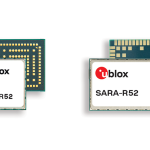
A maker of electric scooters has developed a GNSS- and inertial-based technology to keep its own products off of city sidewalks. Bird, a provider of environmentally friendly electric transportation, announced a smart sidewalk protection technology developed in partnership with u-blox.

Read More >

By Inside GNSS
[uam_ad id="183541"]
September 21, 2021

GNSS Foresight Heralds New Direction for Aviation, UAVs, Air Taxis and Entire PNT Industry

Spirent Communications has launched GNSS Foresight, a cloud-based solution that empowers GNSS users with advance knowledge about the strength and reliability of GNSS signals in exact locations within their operational areas. The service will have early application for aviation, unmanned and autonomous platforms, but Spirent VP Jeremy Bennington told Inside GNSS that its potential is far wider.

Read More >

By Inside GNSS

Smartphone-based GNSS Positioning – Today and Tomorrow

This article reviews some of the recent results analyzing the feasibility of carrier-phase based positioning with smartphone data and highlights limitations largely arising due to the poor antenna quality. It shows how they might be overcome by antenna calibration or coupling to the phone’s inertial sensors. The goal is to perform a successful RTK positioning with the smartphone-quality data.

Read More >

By Inside GNSS
1 40 41 42 43 44 53
IGM_e-news_subscribe