

TrustPoint Accelerates Defense-Grade, GPS-Independent PNT with Fifth Phase II SBIR Award in 18 Months
Contract strengthens the company’s growing portfolio of U.S. government-funded PNT initiatives.
By Inside GNSSContract strengthens the company’s growing portfolio of U.S. government-funded PNT initiatives.
By Inside GNSSProject establishes innovative test framework to help UK operators, providers and suppliers adopt best practice and benchmark success.
By Inside GNSSNew 7.10.00 firmware for OEM7 receivers is designed to improve tracking, PPP and RTK performance under scintillation, foliage and urban-canyon conditions.
By Inside GNSSFuruno has signed a memorandum of understanding (MoU) with Xona Space Systems to develop products that integrate Xona’s Pulsar low Earth orbit positioning, navigation and timing (LEO PNT) service, with a particular focus on timing and synchronization applications, the companies announced February 3.
By Inside GNSSEuropean Space Agency (ESA) NAVISP-funded project LOCFIT (‘Localization for IoT and tracking’), led by Thales Alenia Space France with partners Qascom, Kinéis and Traxens, has explored infrastructure-based position-bounding solutions that exploit satellite uplink measurements from connected devices.
By Peter GutierrezSystem enables full D3SOE operation on land, air and sea by integrating state-of-the-art positioning, navigation and timing technologies from VIAVI.
By Inside GNSSThe agreement ensures Europe’s satellite-based augmentation continues enhancing navigation for aviation and other critical users and lowering emissions.
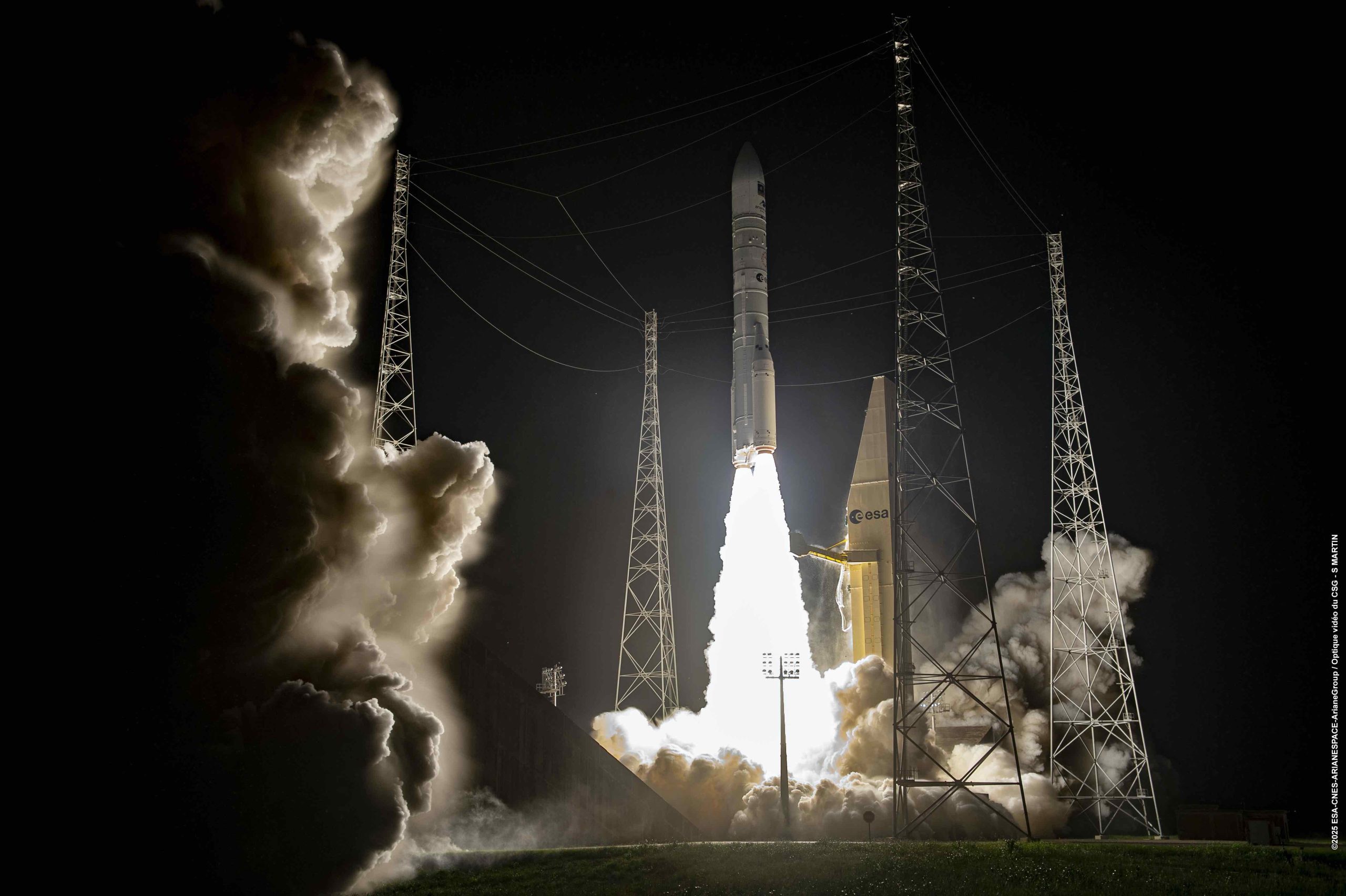
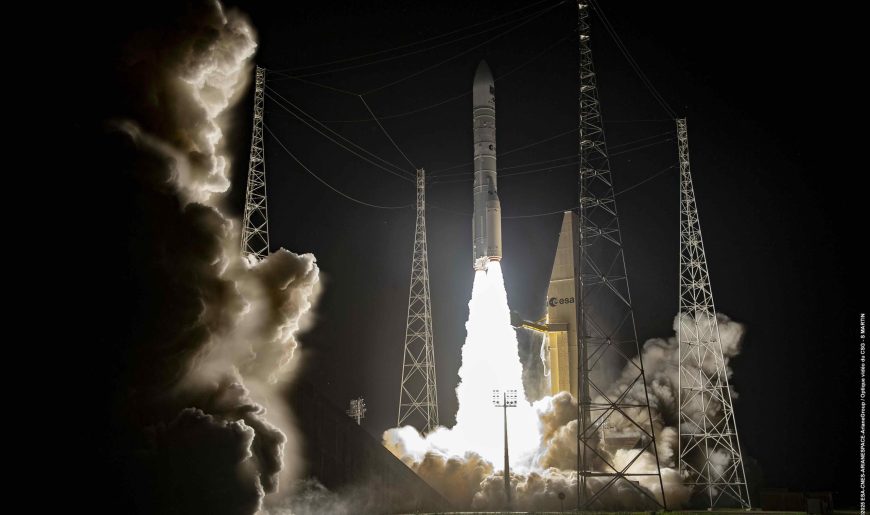
By Inside GNSSThe ninth GPS III satellite, named for Challenger astronaut Col. Ellison Onizuka, has ridden a Falcon 9 into medium Earth orbit after the U.S. Space Force traded the mission from ULA’s Vulcan under its flexible National Security Space Launch manifest.
By Inside GNSSCiting threats to safety, coastal nations of the Baltic and North Seas, along with Iceland, have proclaimed in an open letter they are done tolerating violations of international maritime law and norms.
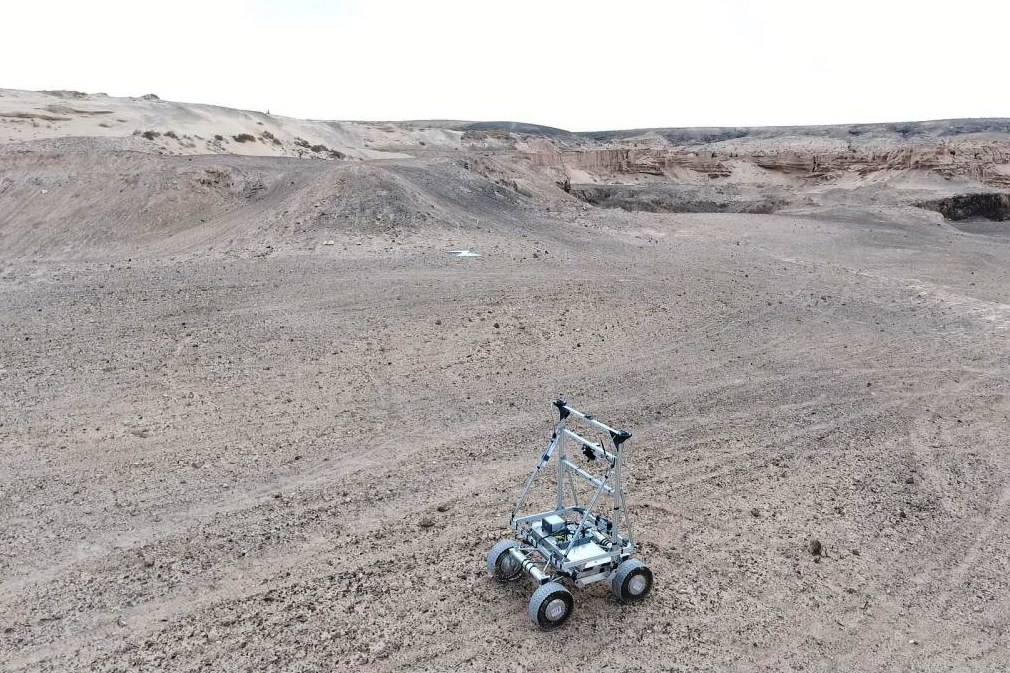
By Dana A. GowardAfter four years of Army and Marine Corps experiments, DARPA says its RACER autonomy stack is ready to move into DoD and commercial use, enabling off-road ground vehicles to operate at speed in complex terrain without GPS or detailed maps.
By Inside GNSSSafran Federal Systems announced the successful flight demonstration of its Blacknaute™ Inertial Navigation System (INS) aboard a U.S. Army UH-60 Black Hawk helicopter.
By Inside GNSSThe Pentagon’s APFIT program is providing $20 million in procurement funding to scale Anello’s silicon-photonics inertial navigation systems for GPS-contested and GPS-denied environments, the company said.
By Inside GNSSThe National Association of Broadcasters (NAB) is sharpening its focus on developing the Broadcast Positioning System™ (BPS) as a timing service and then progressing it into full positioning, navigation and timing (PNT). NAB is proposing BPS as a complementary terrestrial service to GPS.
By Dana A. GowardThe companies are introducing IroNav, an alternative navigation system that combines visual navigation with GNSS anti-jamming to keep small UAVs on mission when satellite signals are disrupted or unavailable, according to product information.
By Inside GNSSAfter years of development and large-scale testing, Galileo’s Open Service Navigation Message Authentication (OSNMA) is no longer an experimental signal but a fully declared service, confirming Galileo’s position as the world’s first civilian GNSS to provide cryptographically authenticated navigation data.
By Peter GutierrezResilient GPS (R-GPS), an experimental plan to add a proliferated layer of small navigation satellites on top of the core GPS constellation, has been terminated, according to reporting by SpaceNews. Early design work from multiple contractors will be used to inform future architecture decisions, but no on-orbit demonstrations are moving forward.
By Inside GNSSSatellite-based augmentation systems (SBAS) such as EGNOS, WAAS and MSAS have been quietly underpinning safety-critical navigation for decades, delivering correction and integrity data that enable more accurate and dependable GNSS positioning.
By Peter GutierrezThe European Space Agency (ESA)’s pioneering Low Earth Orbit Positioning, Navigation and Timing (LEO-PNT) demonstration mission, officially known as ‘Celeste’, has slipped past its original late-2025 launch target.
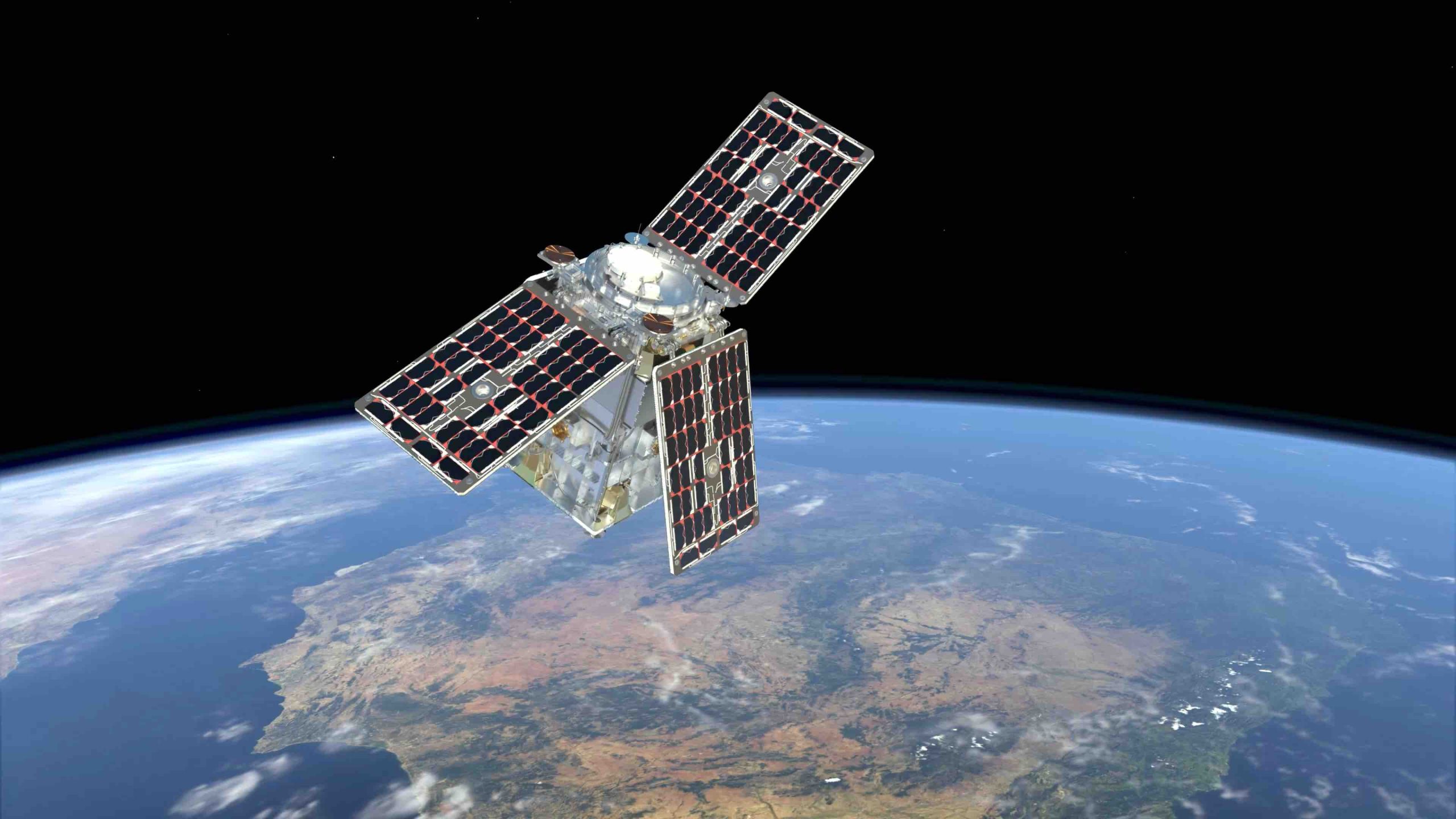
By Peter GutierrezLow Earth Orbit Navigation System (LEONS) milestone advances commercial LEO PNT and reduces satellites’ reliance on legacy GPS signals.
By Inside GNSSContract strengthens the company’s growing portfolio of U.S. government-funded PNT initiatives.
By Inside GNSSProject establishes innovative test framework to help UK operators, providers and suppliers adopt best practice and benchmark success.
By Inside GNSSNew 7.10.00 firmware for OEM7 receivers is designed to improve tracking, PPP and RTK performance under scintillation, foliage and urban-canyon conditions.
By Inside GNSSEuropean Space Agency (ESA) NAVISP-funded project LOCFIT (‘Localization for IoT and tracking’), led by Thales Alenia Space France with partners Qascom, Kinéis and Traxens, has explored infrastructure-based position-bounding solutions that exploit satellite uplink measurements from connected devices.
By Peter GutierrezSystem enables full D3SOE operation on land, air and sea by integrating state-of-the-art positioning, navigation and timing technologies from VIAVI.
By Inside GNSSThe companies are introducing IroNav, an alternative navigation system that combines visual navigation with GNSS anti-jamming to keep small UAVs on mission when satellite signals are disrupted or unavailable, according to product information.
By Inside GNSSSatellite-based augmentation systems (SBAS) such as EGNOS, WAAS and MSAS have been quietly underpinning safety-critical navigation for decades, delivering correction and integrity data that enable more accurate and dependable GNSS positioning.
By Peter GutierrezLow Earth Orbit Navigation System (LEONS) milestone advances commercial LEO PNT and reduces satellites’ reliance on legacy GPS signals.
By Inside GNSSThe European Space Agency (ESA)-funded project ‘Lithium niobate photonic integrated circuit based high-speed, low voltage modulators for microwave photonics’ has demonstrated a new class of ultra-high-performance optical modulators with direct relevance to future positioning, navigation, and timing (PNT) systems.
By Inside GNSSOver the past year, Brussels-based Agilica BV has completed major milestones in the ‘Safe autonomous integrated landing system for ships’ (SAILS) initiative.
By Peter GutierrezQualinx announced a €20 million investment led by Invest‑NL, with additional participation from existing investors FORWARD.one, InnovationQuarter Capital and Waterman Ventures, and brings Qualinx’s total funding to date to €40 million.
By Inside GNSSANELLO Photonics today announced the launch of the ANELLO Aerial INS, a compact, high-performance inertial navigation system built around the company’s Silicon Photonics Optical Gyroscope technology and integrated with multi-band GNSS receivers.
By Inside GNSSSwift’s new Starling SAL Plugin for NVIDIA DriveWorks provides automotive OEMs and developers with a seamless, drop-in path to high-integrity, centimeter-accurate vehicle positioning.
By Inside GNSSFunded under the European Space Agency’s NAVISP program, the ‘Deployable Satellite Navigation Antenna’ project has delivered a compact Ka-band antenna prototype for small satellite platforms.
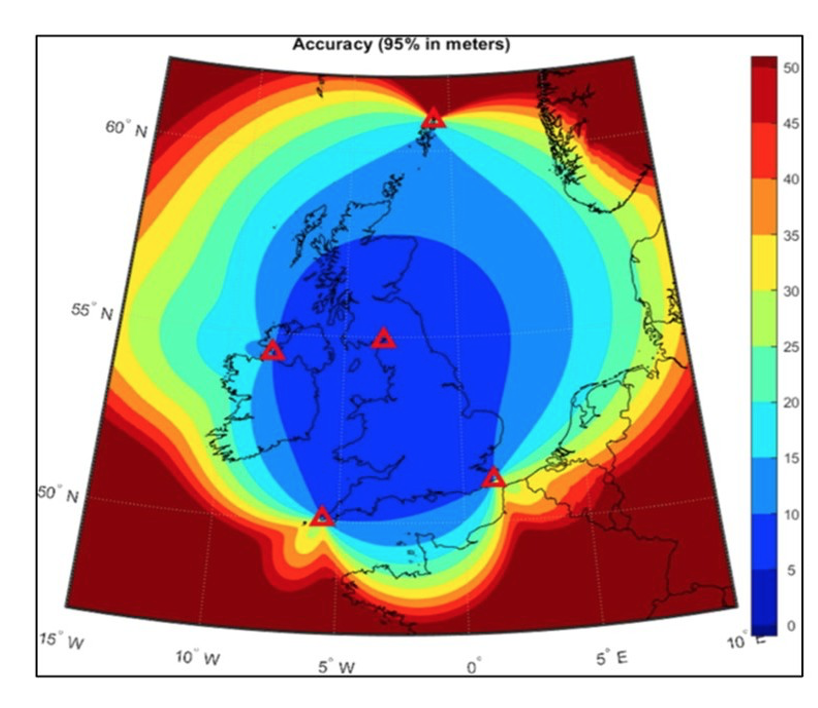
By Peter GutierrezThe UK government has unveiled a £155 million investment package to harden the country’s Positioning, Navigation and Timing (PNT) infrastructure, backing a mix of terrestrial, satellite-independent, and monitoring capabilities aimed at reducing dependence on vulnerable GNSS signals.
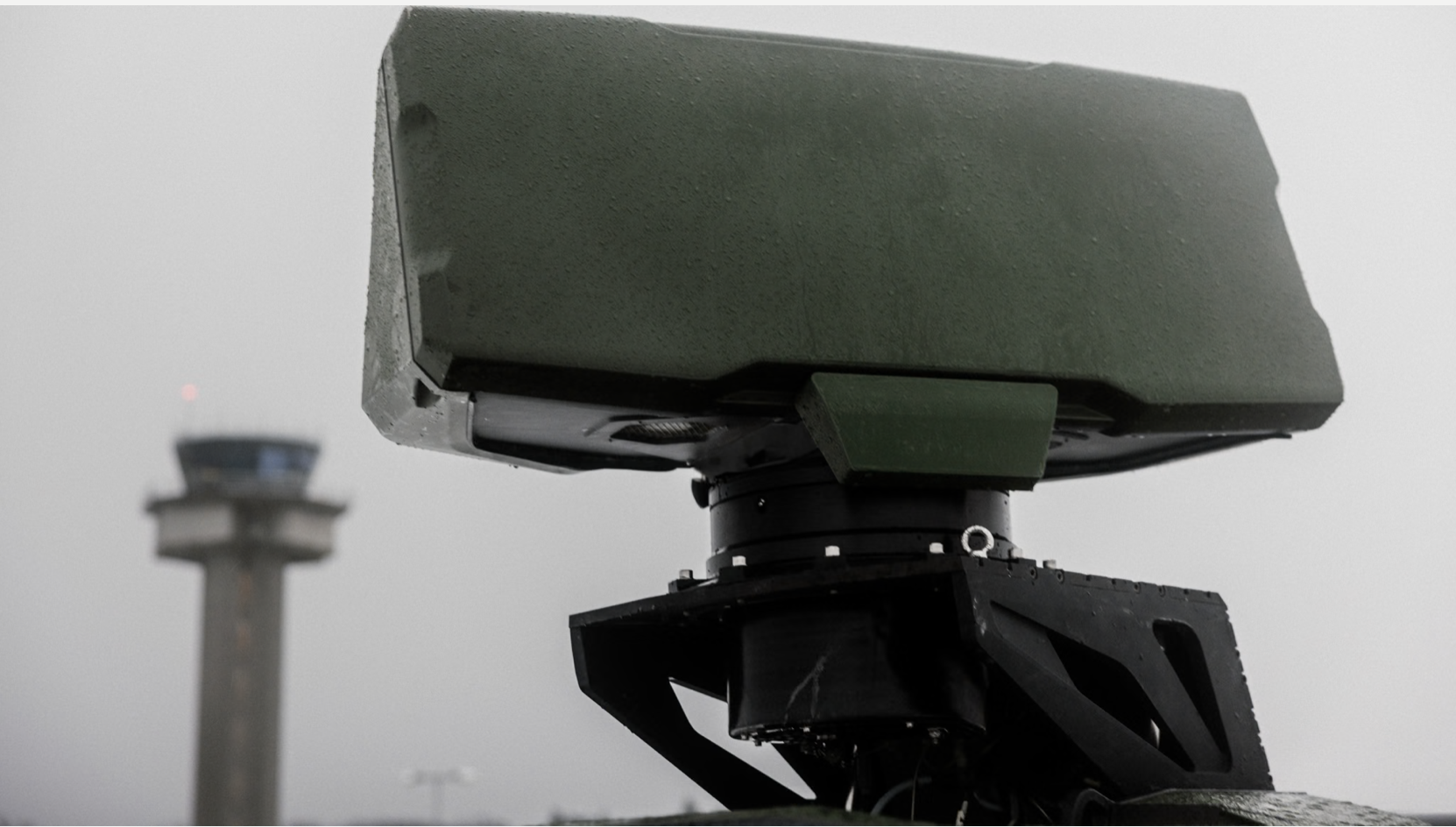
By Inside GNSSIndra Navia’s ground-based augmentation system (GBAS), developed in Norway, is installed at airports worldwide, enhancing satellite navigation accuracy for aircraft landings. Positioned at or near runways, it provides precise guidance and integrity data, enabling safer, more efficient, and flexible approaches.
By Peter GutierrezSpirent Communications, now part of Keysight Technologies, announced PNT Xe, a new global navigation satellite system (GNSS) simulation platform designed to extend high-performance GNSS testing to more users across the development lifecycle.
By Inside GNSSA project funded by the European Space Agency (ESA) and led by StatSat AS, in collaboration with Fugro Norway AS, has successfully completed a demonstration of precise point positioning (PPP) onboard the NorSat-TD satellite.
By Peter GutierrezEditor’s Note: Inside GNSS recently sat down with technical and executive experts from Iridium following the launch of the company’s new PNT ASIC.

By Inside GNSSSpeaking at the recent Munich Satellite Navigation Summit, Mark Brammer, Positioning Program Lead for the UK’s National PNT Office, outlined the United Kingdom’s bold vision for the future of positioning, navigation, and timing (PNT), a system built not on a single pillar, but on international cooperation, multi-technology fusion, and a clear-eyed view of GNSS resilience.
By Peter GutierrezAt the 2025 Munich Satellite Navigation Summit, Ramsey Faragher, Director and CEO of the UK Royal Institute of Navigation, delivered a sobering assessment of satellite navigation vulnerabilities based on findings of the ‘Operational Performance of Satellite Navigation Systems’ (OPS) report.
By Peter GutierrezAirbus is leading the development of the next generation of the European Geostationary Navigation Overlay Service (EGNOS), Europe’s satellite-based augmentation system (SBAS). EGNOS version three (V3) will provide a completely new DFMC service – dual frequency, multi-constellation – augmenting both GPS and Galileo signals.
By Peter GutierrezThe impact Ignacio Fernández Hernández, Galileo Authentication and High Accuracy Manager for the European Commission, has had on the EGNOS and Galileo programs, as he does his part to advance GNSS.
By Peter GutierrezThe Institute of Navigation recognizes Dr. John Raquet with prestigious Johannes Kepler Award at the ION GNSS+ 2024 Conference.
By Inside GNSSSteve Woolven’s early experience running his family’s resort coupled with his ambitious academic pursuits helped lay the groundwork for a successful career in the PNT industry and his current role as President of Trimble Applanix.
By Peter GutierrezTopcon Positioning Systems has announced that Ray O’Connor, president and chief executive officer, will retire in September 2025 after over three decades of exceptional leadership. O’Connor will transition to the role of Chairman of the Topcon Positioning Systems Board of Directors effective September 1, 2024, providing guidance and support to the executive leadership team during this important year of transition.
By Inside GNSSSilicon Sensing is to open its first US office, with a dedicated in-country team lead by the new head of sales – Americas, Kevin Swain. This new facility will help ensure the company efficiently supports the growing demand for their rugged, high performance inertial products across North and South America.
By Inside GNSSAt Xponential 2024 in San Diego, Inside GNSS sat down with Jamie Marraccini, CEO of Inertial Labs, to discuss the company’s advanced solutions for GNSS vulnerability and their role in enhancing navigation for UAS operations in GNSS-denied environments.

By Inside GNSSSpeaking to Inside GNSS at the recent InterGEO conference in Berlin, Olivier Casabianca, Vice President of Trimble Positioning Services, said “If you look at the way we work today, GNSS is still the key component, serving all of what we would consider the central geospatial industries, meaning construction, agriculture, transportation, etcetera. People talk about making a digital version of the world, and we understand that starts with knowing where you are, before, during and after, whatever job you’re doing. Precise positioning is fundamental.”

By Peter GutierrezIndustry veteran Mariam Sorond has taken over as the CEO of NextNav.
By Inside GNSSDr Mark Marshall takes on role as emerging inertial sensing technologies open new market opportunities.
Dr Mark Marshall has been appointed as Chief Engineer of Silicon Sensing Systems Ltd. Dr Marshall joined Silicon Sensing in 2017 as the lead engineer on numerous inertial programmes. Immediately prior to commencing as Chief Engineer he was the company’s Consultant Engineer and Electronics Discipline Manager. In this role he was responsible for the electronics and mechanical design of the company’s latest generation, tactical grade inertial measurement unit (IMU) – the DMU41.
By Inside GNSSCheryl Gramling knew early on what she wanted to do in life. Today, she is assistant chief for technology, mission engineering and systems analysis division, at NASA’s Goddard Space Flight Center, and she’s playing a key role in getting us back to the Moon.
By Peter GutierrezHelix is pleased to announce the appointment of Tom Beese as Chairman of its Board of Directors.
By Inside GNSSRx Networks announced today that Michael Longinotti, Chief Executive Officer and Chief Financial Officer, will retire from the company at the end of 2022, then continue to serve as a board member. John Carley, VP of Sales and Marketing, has been appointed by the Board of Directors to succeed Longinotti as Chief Executive Officer on January 1, 2023.
By Inside GNSSThe Institute of Navigation’s (ION) Satellite Division presented Dr. Boris Pervan with its Johannes Kepler Award September 23, 2022 during the ION GNSS+ Conference held September 19-23, at the Hyatt Regency Denver At Colorado Convention Center.
By Inside GNSSThe Institute of Navigation (ION) announced the recipients of the 2022 Fellow membership during the ION International Technical Meeting (ITM) and Precise Time and Time Interval Systems and Applications (PTTI) meeting held January 25- 27, 2022 at the Hyatt Regency Long Beach in Long Beach, California.
By Inside GNSSFocalPoint Positioning, founded in 2015, is, as they say, very happening. Its Supercorrelation is a chipset-level software product for mobiles, wearables and vehicles that is changing the positioning game in urban environments. Interesting and energetic, FocalPoint founder Ramsey Faragher came out of the defense industry and has a risen rapidly in the GNSS firmament.

By Peter GutierrezAs CEO Jean-Yves Courtois puts it, Orolia is focused on solving the hard problems. To do that, the France-based company, a global provider of resilient positioning, navigation and timing (RPNT) solutions, has become a technology integrator.
By Inside GNSSContract strengthens the company’s growing portfolio of U.S. government-funded PNT initiatives.
By Inside GNSSProject establishes innovative test framework to help UK operators, providers and suppliers adopt best practice and benchmark success.
By Inside GNSSNew 7.10.00 firmware for OEM7 receivers is designed to improve tracking, PPP and RTK performance under scintillation, foliage and urban-canyon conditions.
By Inside GNSSFuruno has signed a memorandum of understanding (MoU) with Xona Space Systems to develop products that integrate Xona’s Pulsar low Earth orbit positioning, navigation and timing (LEO PNT) service, with a particular focus on timing and synchronization applications, the companies announced February 3.
By Inside GNSSEuropean Space Agency (ESA) NAVISP-funded project LOCFIT (‘Localization for IoT and tracking’), led by Thales Alenia Space France with partners Qascom, Kinéis and Traxens, has explored infrastructure-based position-bounding solutions that exploit satellite uplink measurements from connected devices.
By Peter GutierrezSystem enables full D3SOE operation on land, air and sea by integrating state-of-the-art positioning, navigation and timing technologies from VIAVI.
By Inside GNSSThe agreement ensures Europe’s satellite-based augmentation continues enhancing navigation for aviation and other critical users and lowering emissions.
By Inside GNSSAfter four years of Army and Marine Corps experiments, DARPA says its RACER autonomy stack is ready to move into DoD and commercial use, enabling off-road ground vehicles to operate at speed in complex terrain without GPS or detailed maps.
By Inside GNSSSafran Federal Systems announced the successful flight demonstration of its Blacknaute™ Inertial Navigation System (INS) aboard a U.S. Army UH-60 Black Hawk helicopter.
By Inside GNSSThe Pentagon’s APFIT program is providing $20 million in procurement funding to scale Anello’s silicon-photonics inertial navigation systems for GPS-contested and GPS-denied environments, the company said.
By Inside GNSSThe National Association of Broadcasters (NAB) is sharpening its focus on developing the Broadcast Positioning System™ (BPS) as a timing service and then progressing it into full positioning, navigation and timing (PNT). NAB is proposing BPS as a complementary terrestrial service to GPS.
By Dana A. GowardThe companies are introducing IroNav, an alternative navigation system that combines visual navigation with GNSS anti-jamming to keep small UAVs on mission when satellite signals are disrupted or unavailable, according to product information.

By Inside GNSSAfter years of development and large-scale testing, Galileo’s Open Service Navigation Message Authentication (OSNMA) is no longer an experimental signal but a fully declared service, confirming Galileo’s position as the world’s first civilian GNSS to provide cryptographically authenticated navigation data.

By Peter GutierrezResilient GPS (R-GPS), an experimental plan to add a proliferated layer of small navigation satellites on top of the core GPS constellation, has been terminated, according to reporting by SpaceNews. Early design work from multiple contractors will be used to inform future architecture decisions, but no on-orbit demonstrations are moving forward.
By Inside GNSSSatellite-based augmentation systems (SBAS) such as EGNOS, WAAS and MSAS have been quietly underpinning safety-critical navigation for decades, delivering correction and integrity data that enable more accurate and dependable GNSS positioning.

By Peter GutierrezLow Earth Orbit Navigation System (LEONS) milestone advances commercial LEO PNT and reduces satellites’ reliance on legacy GPS signals.
By Inside GNSSOn 13 January 2026, Europe’s Copernicus Earth-observation program carried out a planned reconfiguration of the GNSS receiver aboard the Sentinel-3B satellite, a low-profile engineering activity that nevertheless illustrates how deeply Galileo-based positioning and timing now underpin European Earth-observation services.

By Peter GutierrezThe European Space Agency (ESA)-funded project ‘Lithium niobate photonic integrated circuit based high-speed, low voltage modulators for microwave photonics’ has demonstrated a new class of ultra-high-performance optical modulators with direct relevance to future positioning, navigation, and timing (PNT) systems.
By Inside GNSSNew multi-year initiative seeks long-endurance unmanned survey platforms to collect high-precision geomagnetic data and enable magnetic navigation across trans-oceanic routes.
By Inside GNSSMore than 50 years ago, the Department of Defense (DoD) began a PNT project to support deployed forces and “put five bombs in the same hole.” While not part of its original mission, signals from GPS are now accessed by and even more important to civil users.

By Dana A. GowardThe PNT industry must adapt to a changing landscape and find a way to provision for continual improvement. Why SDR architectures may be the answer.
By Logan ScottThought leaders recently gathered to discuss the growing threats to GPS, the most pressing challenges the industry faces and the best way forward. Here, we’ve put together a comprehensive view of all the critical issues tackled during the PNT Leadership Summit, a venue where the industry’s brightest minds could bring up their concerns, frustrations and recommend solutions.
By Inside GNSS