
November 21, 2022
Washington View: The Latest on Ligado
While an independent report from NASEM has validated some NTIA GPS interference claims, no real mitigation is in in sight.
By Dawn M.K. Zoldi (Colonel, USAF, Ret.)
Global Navigation Satellite Systems Engineering, Policy, and Design
While an independent report from NASEM has validated some NTIA GPS interference claims, no real mitigation is in in sight.
By Dawn M.K. Zoldi (Colonel, USAF, Ret.)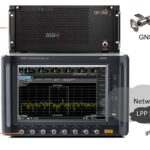
Keysight Technologies recently became the first to receive Global Certification Forum (GCF) validation of a 5G location based services (LBS) Assisted Galileo (A-Galileo) test case by combining 5G new radio (NR) and GNSS technology—an achievement that will accelerate the implementation of LBS in smartphones.
By Renee Knight
Through its recent acquisition of IoT firm Nestwave, NextNav can now combine its highly synchronized TerraPoiNT GPS backup system with Nestwave’s existing terrestrial LTE/5G signals to create near nationwide resilient PNT capabilities—lowering deployment costs by an estimated 75%, or more than $250 million, and allowing the company to scale sooner.
By Renee Knight
Oxford Technical Solutions Ltd (OxTS) is an established supplier of inertial navigation systems (INS), particularly to the automotive industry. Since 1998, its products have been providing critical data about where a vehicle is, how it’s oriented and how it’s moving. More recently the company has been making a big splash in the airborne mapping sector.
By Peter Gutierrez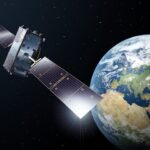
After years of studying the concept of using low-Earth orbit (LEO) navigation satellites to supplement the Galileo system, the European Space Agency (ESA) is ready to move forward with an in-orbit demonstration as part of its new FutureNAV program.
By Renee Knight
infiniDome has added a new device to its anti-jamming solutions that’s designed to defend small to medium tactical UAS: GPSdome 2, the latest generation of the company’s GPSdome.
By Inside GNSS
Better positioning for rideshare apps, vehicle navigation in autonomous motorsports and satellite navigation signals for earthquake detection are just a few of the topics student presenters tackled during the first day of the 16th Annual Stanford PNT Symposium.
By Inside GNSS
ESA’s Ariane 6 launch vehicle, on which the deployment of the EU’s Galileo GNSS satellite constellation now depends, has taken another step towards first flight. A fresh series of hot fire tests of the rocket’s upper stage and all-new Vinci engine is now underway at Germany’s DLR center for engine and stage testing in Lampoldshausen.
By Peter Gutierrez
ESA has awarded an €800,000 NAVISP (Navigation, Innovation and Support Program) contract to Celestia UK for the development of an innovative PNT solution, based on LEO satellite constellations for 5G networks and applications.
By Peter Gutierrez
The ION GNSS+ 2022 plenary session covered the challenges of achieving precise PNT to allow for exploration in two remote locations: at sea and on Mars.
By Renee Knight
The government of Australia recently awarded Lockheed Martin with a $1.18 billion contract to establish the Southern Positioning Augmentation Network (SouthPAN), which will enhance PNT for industries that rely on safety-of-life navigation and positioning in Australia and New Zealand.
By Renee Knight
Femtocell cellular base stations used by Global Medical Response (GMR) in their offices in Dallas, Texas, are receiving the high accuracy GPS location and timing signals they need to help provide emergency support services, thanks to RF over fiber links from ViaLite Communications.
By Inside GNSS
This new method makes it possible to decompose the Complex Cross Ambiguity Function of GNSS signals during malicious spoofing attacks.
By Inside GNSS