
Time For Action: We Must Fail Before We Can Succeed
The “Cargo Cults” of Washington D.C., while well intentioned, are slowing progress. To improve national PNT posture, we must start building, failing and learning from our mistakes.
By Inside GNSSThe “Cargo Cults” of Washington D.C., while well intentioned, are slowing progress. To improve national PNT posture, we must start building, failing and learning from our mistakes.

By Inside GNSSThe European Space Agency’s new navigation head, Francisco-Javier Benedicto Ruiz, has a lot to say about GNSS, both present and future. We recently spoke with him about his views on satellite navigation, signal vulnerability and authentication, and the agency’s working relationship, or not, with Russia. The technical team behind the Galileo authentication service and industry representatives developing alternative positioning, navigation and timing solutions also share insights.
By Peter GutierrezAs guest columnist Dino Smajlovic explains, testing allows for inertial error characterization and understanding, ensuring proper error budgets and more accurate navigation solutions. Rate tables are among the tools used, with some allowing testing, characterizing and modeling in one installation step.
By Inside GNSSPatricia Helen Doherty, a past ION president and current Satellite Division Chair, passed away on July 14 at the age of 72.
The well-known industry leader worked at Boston College for many years, serving as the director of the Institute for Scientific Research at the time of her passing, according to an In Memoriam article featured on the ION website.
By Inside GNSSRTCA is working to develop new standards to tackle GNSS growth and challenges. Here’s an update on the special committee’s progress, provided during a recent webinar.
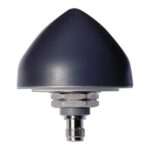
By Dawn M.K. Zoldi (Colonel, USAF, Ret.)Tallysman® Wireless recently introduced the housed TW3885T dual-band (L1/L5) Accutenna® technology timing antenna. The antenna supports GPS/QZSS L1/L5, Galileo E1/ E5a/b, BeiDou B1/B2/B2a, GLONASS G1/G3 and in the region of operation, satellite-based augmentation systems (SBAS): WAAS (North America), EGNOS (Europe), MSAS (Japan), or GAGAN (India), according to a news release.
By Inside GNSSBAE Systems recently delivered its Miniature Precision Lightweight GPS Receiver Engine – M-Code (MPE-M) to Germany, with the technology providing ground-based soldiers and vehicles with precise geolocation and positioning capabilities in complex and contested operational environments.
By Inside GNSSWorking with the National Maritime Safety Authority (NMSA) and with funding from the Asia Development Bank (ADB), Fugro has completed a hydrographic survey to determine a safe channel through the Star Reef Passage.
By Inside GNSSu-blox recently released the SAM-M10Q Antenna module to allow product developers to easily integrate u-blox M10 GNSS technology into their devices. Typical applications leveraging the technology include industrial tracking and telematics, automation and monitoring, and small drones.
By Inside GNSSThe partnership will reduce the cost and increase the availability of centimeter accurate solutions for Global AIoT Applications.
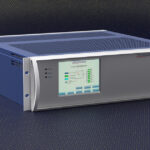
By Inside GNSSThe coreSync™ OSA 3300-HP optical cesium atomic clock from ADVA was developed to provide the resilience and accuracy needed for PNT assurance in critical infrastructure.
By Inside GNSSAt his keynote during the HxGN LIVE Global 2022 event in Las Vegas, Michael Ritter, president of Hexagon’s Autonomy & Positioning division, gave an overview of assured positioning and demonstrated how it provides the foundation for safe autonomy.
By Kevin JostThe Agency for Air Navigation Safety in Africa and Madagascar (ASECNA) and the European Space Agency (ESA) have signed an international cooperation agreement to deploy a satellite-based augmentation system (SBAS). Based on Europe’s EGNOS technology, the system will serve an area of more than 16.5 million km2, that is one and a half times the size of the area covered by Europe’s EGNOS.
By Peter Gutierrez