Laser-Optical Clock Space Station Experiment Can Improve Future GNSS Accuracy
Compact, highly stable laser-optical clocks can improve future generations of satellite navigation systems and form the basis for new GNSS architectures.
By Inside GNSS
Global Navigation Satellite Systems Engineering, Policy, and Design
Compact, highly stable laser-optical clocks can improve future generations of satellite navigation systems and form the basis for new GNSS architectures.
By Inside GNSS
For years, both the Executive and Congress have expressed concerns over PNT vulnerabilities and clamored for solutions. Yet little has changed. Three important reports emerged at the tail end of the old regime. As new leadership takes the helm, in which direction will it take the PNT enterprise?
By Dawn M.K. Zoldi (Colonel, USAF, Ret.)
KVH Industries has upgraded its TACNAV 3D tactical navigation system with photonic integrated chip (PIC) technology in the P-1775 inertial measurement unit (IMU).
By Inside GNSS
The Munich Satellite Navigation Summit 2021 convenes on the Internet from March 16—17. High-level sessions will provide the latest information on status and developments in wide-ranging PNT topics. One panel will focus on the Frontiers of GNSS Accuracy: achievements in RTK, PPP, and new combinations of the two advanced techniques.
By Inside GNSS
Spaceopal has signed a contract for the development of the reference algorithm for the users of the Galileo High Accuracy service (HAS) and for a full-fledged user terminal.
By Inside GNSS
The Department of Homeland Security (DHS) Science and Technology Directorate has published the Positioning, Navigation, and Timing (PNT) Integrity Library and Epsilon Algorithm Suite to protect against GNSS spoofing. These resources advance the design of PNT systems and increase resilience of critical infrastructure to PNT disruptions.
By Inside GNSS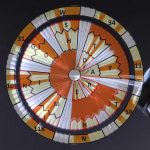
The parachute deployed during the descent of the Mars Perseverance rover carried a special message for anyone who happened to be looking up from the Red Planet’s surface on February 18, 2021.
By Inside GNSS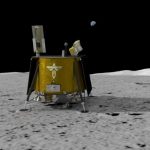
The National Aeronautics and Space Administration in partnership with the Italian Space Agency will position the moon starting in 2023. The two agencies plan to land the Lunar GNSS Receiver Experiment (LuGRE) on the Moon’s Mare Crisium basin. There, LuGRE is expected to obtain the first GNSS fix on the lunar surface.
By Inside GNSS
The Air Force Life Cycle Management Center (AFLCMC) recently awarded Integrated Solutions for Systems (IS4S) a $95M Phase 2 contract for the Resilient-Embedded GPS/Inertial Navigation System (R-EGI) development and prototype program.
By Inside GNSS
Innovative features of cellular fifth-generation (5G) signals enable the wireless system to play a major role in autonomous technologies. Test results of a ground vehicle navigating with signals from five 5G base stations (gNBs) over a trajectory of 773 m traversed in 110 seconds show a position root mean-squared error of 4.1 m.

Development of military Galileo user equipment (MGUE, a new variant) got underway on February 8 with the kick-0ff meeting in Brussels of the Galileo for EU Defence (GEODE) project.
By Inside GNSS
An international autonomous racing series with electric-powered vehicles will use Trimble’s Applanix POS LVX GNSS-inertial systems in all of its next-generation autonomous race cars in 2021, as part of an extensive technology and marketing partnership.
By Inside GNSS
Inertially-aided extended coherent integration makes a GNSS receiver more sensitive to directly received signals than to reflected signals whenever the receiver is moving. 3D-mapping-aided GNSS uses predictions of which signals are NLOS to enhance the positioning algorithms. Both techniques can improve positioning accuracy in dense urban areas by more than a factor of two. This article investigates the benefits of combining them.
By Inside GNSS