SpaceX Falcon 9 Launches 2 Galileo Satellites
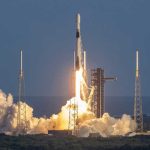
The SpaceX Falcon 9 rocket recently launched two Galileo satellites from the Kennedy Space Center into medium Earth orbit (MEO).
By Inside GNSSThe SpaceX Falcon 9 rocket recently launched two Galileo satellites from the Kennedy Space Center into medium Earth orbit (MEO).
By Inside GNSSA look at the performance of the Galileo E1-B Open Service Navigation Message Authentication (OSNMA) in various scenarios, elucidating its logic and workflow and shedding light on its functionality and intended purpose.
By Inside GNSSThe European Geostationary Navigation Overlay Service (EGNOS) has released its new Service Definition Document (SDD) v3.6 for the Safety of Life (SoL) service for aviation. The new document outlines and describes several changes designed to improve the precision, reliability, and safety of EGNOS satellite navigation-based operations.
By Peter GutierrezIn the summer of 2024, France’s Center for the Study of the Biosphere from Space (CESBIO), working in collaboration with the French Space Agency (CNES) and Toulouse-based geolocation specialists M3 Systems, launched an airborne data collection campaign leveraging GNSS reflectometry to estimate forest biomass and soil moisture.
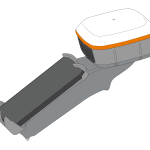
By Peter GutierrezThe long-range navigation (LORAN) system, introduced during World War II, continues its ascent as a potential complement to GNSS services, especially in indoor, urban and underground scenarios. The UK-based Roke company, with support from the European Space Agency (ESA), is working to bring enhanced LORAN (eLORAN) to a broader user base, developing a miniaturized eLORAN antenna for portable and even hand-held devices.
By Peter GutierrezGNSS jamming trials are being carried out on the Island of Andøya, in Northwestern Norway, during Jammertest 2024. The event features both simple and sophisticated, staged spoofing and jamming attacks, allowing participants to identify potential strengths and weaknesses in their GNSS-based systems.
By Peter GutierrezThree months after their launch from Cape Canaveral Florida by SpaceX, Galileo satellites 29 and 30 are fully operational at their target positions. The two new satellites are active and providing navigation signals to users, increasing the accuracy of the system and guaranteeing the availability and robustness of Galileo signals.
By Inside GNSSThe “National GNSS Competence Centre” will be developed and managed by Telespazio as the prime contractor of a team that includes universities, research centres and Italian companies.
By Inside GNSSResearchers funded by the European Space Agency (ESA) NAVISP program have developed a new EGNOS performance prediction model using state-of-the-art machine-learning (ML) techniques.
By Peter GutierrezThe EU-funded SAMVA project recently completed a series of successful electric vertical take-off and landing (eVTOL) aircraft flights at the first EGNOS-enabled ‘vertiport’, at Lleida–Alguaire International Airport in Catalonia, Spain.
By Peter GutierrezThe European Agency for the Space Program (EUSPA) recently marked the one year anniversary of its take-over of EU Space Surveillance and Tracking (EU SST) Front Desk operations.
By Peter GutierrezOn 30 July 2024, European navigators commemorated the 90th anniversary of Guglielmo Marconi’s first demonstration of microwave-guided navigation. In the Bay of Silence, off Sestri Levante, Italy, the historic vessel Leudo performed a blind navigation maneuver, crossing the space delimited by two buoys, guided by radio impulses transmitted from the shore. The operation was, in effect, a reenactment of radio pioneer Marconi’s demonstration of 30 July 1934.
By Peter GutierrezThe ICON project (‘Innovative cloud cooperative navigation’), led by GMV, has developed a concept demonstrator, enabled by high-speed, low-latency wireless communication networks and cloud-based data/signal processing.
By Peter Gutierrez