
Germany Becomes Second U.S. Ally to Receive M-Code MGUE
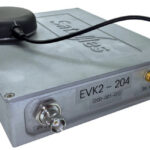
BAE Systems, Inc. received the first contract from the Space and Missile Systems Center’s Space Production Corps to deliver M-Code Military GPS User Equipment (MGUE) to Germany.
By Inside GNSSBAE Systems, Inc. received the first contract from the Space and Missile Systems Center’s Space Production Corps to deliver M-Code Military GPS User Equipment (MGUE) to Germany.
By Inside GNSSThe Air Force Strategic Development Planning & Experimentation Office demonstrated fused PNT technologies within an AgilePod during six successful Phase I sorties on an airborne testbed in Centennial, Colorado in April.
By Inside GNSSIridium Communications Inc. received a research and development contract worth up to $30 million from the United States Army to develop a payload to be hosted on small satellites that supports navigation systems, guidance and control for GPS and GPS-denied precision systems.
By Alan CameronNASA has awarded a contract to the University of Michigan for the Cyclone Global Navigation Satellite System (CYGNSS) for mission operations and closeout. A constellation of eight microsatellites, the system can view storms more frequently and in a way traditional satellites are unable to, increasing scientists’ ability to understand and predict hurricanes. The total value of the contract is approximately $39 million. The CYGNSS Science Operations Center is located at the University of Michigan.
By Inside GNSSThe U.S. Space Force brought broadcast of the modernized encrypted M-Code signal one step closer to global availability for authorized military users with the launch of the fifth GPS III satellite on June 17.
By Inside GNSSThe UK’s Royal Academy of Engineering presented its highest individual award to Dr Gladys West, whose mathematical modelling paved the way for the engineering innovation of GPS.
By Inside GNSSIn a demonstration of new services that NextGen TV can offer, BitPath, CAST.ERA and ONE Media publicly trialed “Enhanced GPS” broadcasts that could provide a tool for autonomous vehicle navigation and other applications.
By Inside GNSSçThe antennas contain high-filtering amplifiers that reject out-of-band interference, protecting GPS L1 and L2 signals from potential disruption in a crowded RF spectrum
By Inside GNSSA new tome — make that two new tomes — join the bookshelf of essential, authoritative references for GNSS users. They widen the information umbrella significantly to cover all PNT technologies, their sensors, integrations and applications.
By Alan CameronTRX Systems delivered its Dismount Electronic Warfare (EW) Kit to the U.S. Army Rapid Capabilities and Critical Technologies Office (RCCTO). The system is a prototype to extend Electronic Warfare (EW) and Signal Intelligence (SIGINT) for the dismounted warfighter.
By Inside GNSSThe Government Accounting Office (GAO) has issued a 51-page report examining the challenges the Department of Defense faces in developing and fielding new positioning, navigation and timing (PNT) technologies to complement, augment or replace GPS when it is unavailable. It found that the DOD is not doing enough in this regard.
By Inside GNSSSouth of Stockholm, Sweden, the new Haninge Bus Terminal has been equipped with SubWAVE GPS Coverage Extension from Syntony.
By Inside GNSSIridium Communications Inc. made a strategic investment in DDK Positioning (DDK), an Aberdeen, Scotland-based provider of enhanced GNSS accuracy solutions. DDK uses the Iridium network, provided by a low Earth orbit (LEO) constellation, to provide global precision positioning services that can augment GNSS accuracy
By Inside GNSS