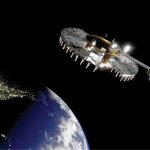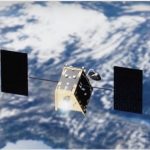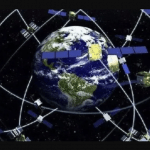

A group of Stanford Ph.D. and Masters graduates, with work experience among them at SpaceX, Ford Motor Systems, Blue Origin, Booz Allen Hamilton and other firms, has launched a start-up to start up a low-Earth orbit successor to GPS and other GNSS. The existing services, they say, are not up to the challenges of autonomy. They founded Xona Space Systems to supplant the venerable satnav systems.
The Position Authenticated Tachograph foR OSNMA Launch (PATROL) project is developing the first external GNSS facility for smart tachographs, using Galileo’s new Open Service Authentication (OS-NMA). The tachograph, a device fitted to a vehicle that automatically records its speed and distance, together with the driver’s activity selected from a choice of modes, uses Galileo authentication to verify that the navigation data received from satellites is genuine.
A great man has left us, left the international GNSS community. Dr. Javad Ashjaee passed away in Moscow on May 30 from the corona virus illness, a family member reported on social media.
Hexagon | NovAtel has released its first purpose-built driver, powered by Robot Operating System (ROS), to support its OEM7 family of GNSS receivers. The driver, developed by NovAtel engineers, provides an optimized interface enabling users to accelerate autonomous development projects
We trace back through time to witness the progress in anti-spoofing solutions and describe how we arrived at the designs being implemented today; principally GPS’ CHIMERA, Galileo’s OSNMA, and ICAO’s SBAS data scheme.
Critical infrastructure has a compelling need to infer the assurance of PVT estimates—as do users in general. However, traditional PNT platforms do not offer a principled way to infer assurance from multiple anti-spoofing (A-S) techniques, situational awareness (SA) information, and other auxiliary sources such as network data. Here we introduce, a PNT Trust Inference Engine (PNTTING) that can assess PNT trust according to probabilistic models with rigorous semantics.
The Federal Communications Commission ignored a technical standard defining radio-frequency interference. The five commissioners licensed powerful terrestrial broadcast next to the satellite band, exposing national defense and critical infrastructure to harm.
Order-of-magnitude advances in inertial technology seem to take place roughly every 20 years, and the industry is poised at such a point now. New developments in photonic technology make high-performance inertial measurement accessible at lower size, weight and power. Many applications from driverless cars to UAVs can now take advantage of positioning that can independently bridge GPS outages from 2 minutes up to 10 minutes.
Britain’s own satellite navigation system, envisioned to fill the country’s Galileo void created by Brexit, may never see the light of day. Government officials don’t want to spend tax revenues to meet projected increasing costs.
A new mobile app, Galileo Green Lane, facilitates the free movement of freight, reduces waiting times at European Union borders, and prioritizes essential goods during pandemic response. The app uses Galileo positioning services to address the needs of border control authorities and truck drivers, with two intuitive user interfaces. The app was developed by the European GNSS Agency (GSA) in collaboration with the European Commission.
The MEMS-based inertial measurement unit (IMU) represents the single biggest positioning and navigation advance of the last 20 years. That assertion is made during the first of three panels in the webinar “Inertial Technology for Robotics, UAVs and other Applications,” freely available on May 6. The 1.5 hour presentation examines how this breakthrough plays in the fields of autonomy, high dynamics and challenging environments, including on the frontiers of space.
Three experts takes a close-up look at contemporary and emerging inertial sensor technologies and applications, from the laboratory to the factory to the field. Register here to attend. The webinar is sponsored by Sensonor.
MEMS (micro-electromechanical sensors) make possible a miniaturization of size, weight, power requirements and cost never thought achievable before. When MEMS inertial navigation pairs with GPS for navigation, the key factor is the error budget of each sensor and how that plays into the accuracy of the solution. Attendees will learn how the new inertial sensors’ reduced error budgets translate into higher system performance.
The presentation begins with the current state of the inertial art, delivered by a recognized expert. The second speaker describes a high-accuracy tactical-grade inertial measurement unit (IMU) with increased accelerometer performance to support demanding guidance and navigation applications.
This knowledge is taken to the field to examine the IMU’s role in successful satellite launch missions during the third panel. The attitude determination and control system (ADCS) rises to the challenge of an extremely demanding environments and set of requirements. A satellite moving at a speed of 7,500 meters/second over ground requires precise maneuvering, stabilization and point in order to obtain imagery at 1-meter resolution.
Questions from the audience are actively encouraged and will be addressed by the three speakers in the final portion of the webinar.
Webinar speakers:
Ralph Hopkins, Draper Lab
Ralph Hopkins is a Distinguished Member of the Technical Staff and Group Leader in the Positioning Navigation and Timing (PNT) Division at Draper, a leading research & development organization. He is responsible for the design and development of inertial instruments and sensors. Ralph has served as Technical Director of advanced inertial instrument development programs including strategic, navigation and tactical grade gyroscopes and accelerometers. He holds an ME in Engineering Mechanics from Columbia University, and an MS in Engineering Management from The Gordon Institute of Tufts University.
Reidar Holm, Sensonor
Reidar Holm is a Product Development Manager at Sensonor, a producer and developer of high-precision, light-weight gyros and IMUs. He works MEMS R&D and design, ASIC design, low-stress package design, system design, assembly and calibration, and high-volume production for automotive, MEMS pressure sensors, accelerometers, gyros and IMUs. He has a Degree in Electrical Engineering and Electronics from University of Manchester Institute for Science and Technology (UK) in 1982.
Ryan Robinson, LeoStella
Ryan Robinson is the Lead Guidance, Navigation and Control Engineer at LeoStella, a small satellite design and manufacturing company, He is responsible for the design, development, test, and delivery of ADCS subsystems on LeoStella satellites. He received a Ph.D. in Aerospace Engineering from the University of Maryland, College Park. Technical areas of interest include attitude determination and control systems design, sensing and actuation, nonlinear dynamics, and autonomy.
Register here for the free webinar, “Inertial Technology for Robotics, UAVs and other Applications.” The webinar will also be available for subsequent download, for those registrants unable to attend at the appointed time.
In its order allowing Ligado Networks to use satellite frequencies for on-the-ground wireless, the Federal Communications Commission set conditions on the firm’s operations, but only at the very tail end. Those conditions are there to help protect GPS receivers from interference — interference the FCC acknowledges as being quite possible.
“Ligado’s planned usage will likely harm military capabilities, particularly for the U.S. Space Force, and have major impact on the national economy,” two ranking Senators and a Representative wrote. The timing could not be worse, they said to allow what “is fundamentally a bad deal for America’s national and economic security.”