From Lab to Road Test
From left, François Peyret, Valerie Renaudin, Miguel Ortiz, David BétaillePART I: Using a Reference Vehicle for Solving GNSS Localization Challenges
By Inside GNSS
From left, François Peyret, Valerie Renaudin, Miguel Ortiz, David BétaillePART I: Using a Reference Vehicle for Solving GNSS Localization Challenges
By Inside GNSS
The Department of Homeland Security (DHS) will soon be taking new applications for its unmanned aircraft assessment program — a project that gives potential government customers at local, state, and federal levels an impartial evaluation of the strengths and costs of different systems.
By Inside GNSS
Two British companies, QinetiQ and Nottingham Scientific Ltd (NSL), have partnered to demonstrate an Internet “cloud”-based technology that enables a wide range of high-volume, low-cost satellite navigation applications using Galileo’s Public Regulated Service (PRS).
The NSL-QinetiQ application allows a service provider to host secure navigation on one server in a back office, capture data from multiple locations and units, and subsequently verify the location of a remote user.
By Inside GNSS
USAF Col. Bernie Gruber, GPS Directorate. Air Force photoLast month, USAF Col. Bernard Gruber stepped down after three years of running the Global Positioning Systems Directorate at Los Angeles Air Force Base.
The GPS Directorate, originally established in 1974 as the NAVSTAR GPS Joint Program Office, is responsible for development, acquisition, fielding and sustainment of all GPS space segments: the modernized operational control segment (OCX), the next-generation GPS III satellites, and modernized GPS user equipment (MGUE).
By Inside GNSSI was sitting on a train recently and a guy said to me, “What does GPS have to do with trains? Trains run on tracks, don’t they? How can they get lost or go the wrong way?”
The fact is trains have all kinds of things to do with GNSS. Most important are safety-related applications, including satellite navigation as a means of precisely determining train position. Being able to anticipate approaching curves and bends is important for tilting trains, for example.
By Inside GNSS
The spoofed route of the White Rose of Drachs was not detected on the ship’s navigation monitors. Photo courtesy of University of Texas at AustinIn a startling experiment a research team from the University of Texas successfully spoofed a ship’s GPS-based navigation system sending the 213-foot yacht hundreds of yards off course — without raising alarms or triggering a hint of the course change on the onboard monitors.
By Inside GNSS
Dudley Barnfield, director, Boeing GPS ProgramsDudley Barnfield has joined the Boeing Government Space Systems (GSS) leadership team as director of the GPS programs. He will have oversight for the entire GPS portfolio, which includes the GPS IIF program and alternate architecture initiatives.
By Inside GNSS
In a Tuesday (July 23, 2013) hearing on two fatal school bus/truck collisions, the National Transportation Safety Board (NTSB) recommended adoption of “connected vehicle technology” on all newly manufactured highway vehicles as a way to reduce such accidents.
Such collision-avoidance systems — similar to those used in civil aviation — would typically depend on real-time transmissions of the GNSS-derived locations of nearby vehicles to provide enhanced “situational awareness” to drivers.
By Inside GNSS
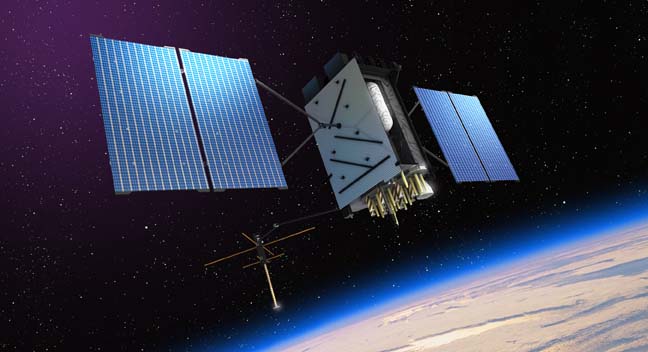
The GPS III Non-Flight Satellite Testbed (GNST) completed pathfinding activities at Lockheed Martin’s GPS III Processing Facility outside of Denver prior to it shipping to Cape Canaveral Air Force Station. Lockheed Martin photo Lockheed Martin has delivered a full-sized, functional prototype of the next generation GPS satellite to Cape Canaveral Air Force Station.
The GPS III Non-Flight Satellite Testbed (GNST) arrived at the Cape on July 19 where it will be used to test facilities and pre-launch processes in advance of the arrival of the first GPS III flight satellites, which will undergo similar testing. The first flight GPS III satellite is expected to arrive at Cape Canaveral in 2014, ready for launch by the U.S. Air Force in 2015.
By Inside GNSSIn a part of the world where frustrated drivers will park anywhere, including squarely on a sidewalk, a local newspaper is using location data to shame car owners into shaping up.
The Village, a Russian online publication serving Moscow, St. Petersburg and Kiev; created a free app that notes a badly parked vehicle’s make, color, and license plate information when users snap its picture.
By Dee Ann DivisFederal officials are working to fill a funding shortfall nearly certain to occur next year given that both the House and Senate have cut an already halved budget request for GPS civil funding.
Sources confirm the Federal Aviation Administration (FAA) and the Department of Defense (DoD) are in talks about finding money to make up for the dramatic reduction. One source familiar with the situation said the FAA was searching its accounts for resources to address the loss.
By Inside GNSS
A new GPS-based technology designed to warn drivers in time to avoid collisions has anonymizing elements in its design to keep the location of vehicles private, according to the Department of Transportation (DoT).
DoT has focused a lot of effort on reducing motor vehicle accidents — a leading cause of death in the United States. Nearly 34,000 people died in collisions in 2010, the latest year for which data is available, according to the Centers for Disease Control. CDC estimates the lifetime costs of crash-related deaths and injuries in 2005 alone were $70 billion.
By Inside GNSS
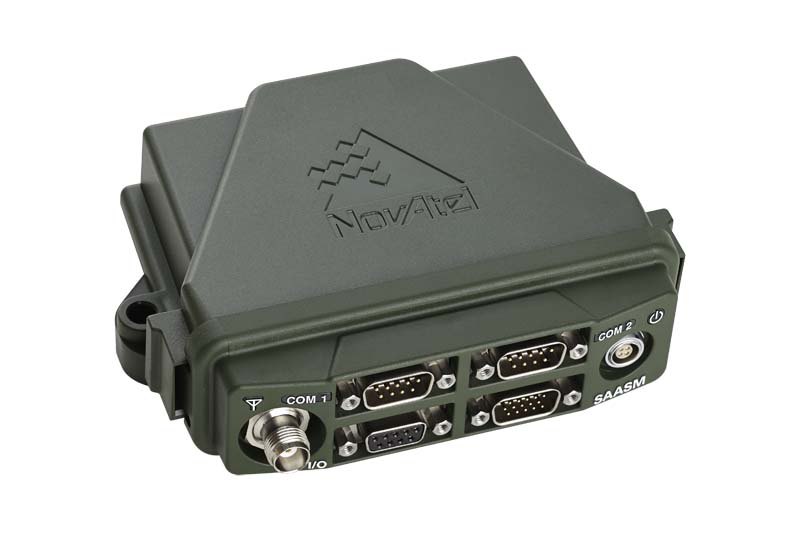
NovAtel OEM638NovAtel Inc. has announced the addition of the two receivers and two antennas to its GNSS product lines: the OEM638 GNSS receiver card, ProPak6 enclosure, SMART6 integrated antenna, and AG-STAR antenna.
By Inside GNSS