Ultra-Small M-Code Military GPS Receiver Emerges at JNC-ION
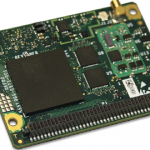
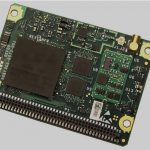
BAE Systems, Inc. unveiled its ultra-small MicroGRAM-M GPS receiver compatible with next-generation M-Code military GPS signals that are resistant to jamming and spoofing.
By Inside GNSSBAE Systems, Inc. unveiled its ultra-small MicroGRAM-M GPS receiver compatible with next-generation M-Code military GPS signals that are resistant to jamming and spoofing.
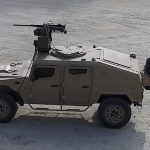
By Inside GNSSKVH Industries received a $7.9 million fiber optic gyro (FOG) order from Escribano, a Spanish defense contractor, for its new Guardian 30 remotely controlled turret.
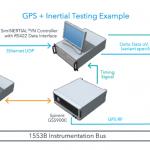
By Inside GNSSSpirent Federal Systems, a provider of PNT/GNSS test equipment, announced plans to fully validate the inertial interface between Spirent GNSS simulators and both Northrop Grumman legacy and modernized inertial systems under the EGI-M program.
By Inside GNSSMicrochip Technology Inc. has released the SA65 chip-scale atomic clock (CSAC) for precise timing accuracy and stability in extreme environments. The product is designed primarily for advanced military platforms, ocean-bottom survey systems and remote sensing applications.
By Inside GNSSDeepwave Digital has release a new Artificial Intelligence Radio Transceiver (AIR-T) Edge Series model, the AIR8201.
By Inside GNSSThe future-oriented Navigation Technology Satellite-3 (NTS-3) spacecraft has taken one more step towards its in-space demonstration, scheduled for 2023. The satellite bus that will carry it has arrived at L3Harris Technologies of Palm Bay, Florida, delivered by Northrop Grumman Corporation.
By Inside GNSSBAE Systems selected Spirent Federal Systems to provide a controlled reception-pattern antenna (CRPA) test system to support M-Code military GPS technology development.
By Inside GNSSBAE Systems, Inc. received the first contract from the Space and Missile Systems Center’s Space Production Corps to deliver M-Code Military GPS User Equipment (MGUE) to Germany.
By Inside GNSSNew frontiers have opened up for line-of-sight communication, targeting, autonomous navigation, intelligence, surveillance and reconnaissance (ISR) and more, with the astonishing advances in inertial technology.
By Inside GNSSWork on the Galileo EU Defence (GEODE) program began earlier this year when a consortium of 30 organizations from 14 European Union (EU) member states met to initiate “the biggest Galileo application development project ever launched” and “one of the most ambitious defense cooperation projects launched under the umbrella of the European Defence Industrial Development Programme (EDIDP),” according to consortium leader FDC.
By Inside GNSSThe U.S. Space Force brought broadcast of the modernized encrypted M-Code signal one step closer to global availability for authorized military users with the launch of the fifth GPS III satellite on June 17.
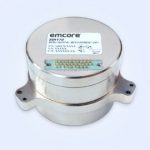
By Inside GNSSEMCORE Corporation, a provider of advanced mixed-signal products for aerospace, defense and broadband communications markets, introduced its new SDI170 quartz micro-electromechanical Systems (MEMS) tactical grade inertial measurement unit (IMU).
By Inside GNSSThe first M-code enabled receiver cards were delivered to a U.S. ally in February 2021. Canada took possession of an unspecified number of Military Code-capable GPS receiver cards for the purposes of laboratory and field testing.
By Inside GNSSKVH Industries has upgraded its TACNAV 3D tactical navigation system with photonic integrated chip (PIC) technology in the P-1775 inertial measurement unit (IMU).
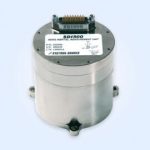
By Inside GNSSEMCORE Corporation announced that its dual-use SDI500/SDI505 Revision F inertial measurement units (IMUs) have received a U.S. Department of State determination that they are not subject to International Traffic in Arms Regulations (ITAR).
By Inside GNSS