u-blox Introduces Tiny Multi-GNSS Module

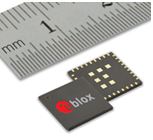
Swiss-based u‑blox launched its new EVA‑M8M stand-alone positioning module today (November 6, 2014), bringing concurrent multi-GNSS capabilities into the company’s compact EVA footprint.

Swiss-based u‑blox launched its new EVA‑M8M stand-alone positioning module today (November 6, 2014), bringing concurrent multi-GNSS capabilities into the company’s compact EVA footprint.
Technology to counter the threat of GNSS jamming is now available at Dover and along the east coast of the United Kingdom as the island nation continues to implement an enhanced Loran (eLoran) system that is setting an example for the world.
By Inside GNSS
Rep. Duncan Hunter, chairman House Subcommittee on Coast Guard and Maritime TransportationProdded by Congress, the federal government is reexamining its decision to abandon eLoran, a network of ground stations capable of supplying essential timing and positioning data to power, phone, and other critical networks if something happed to GPS.
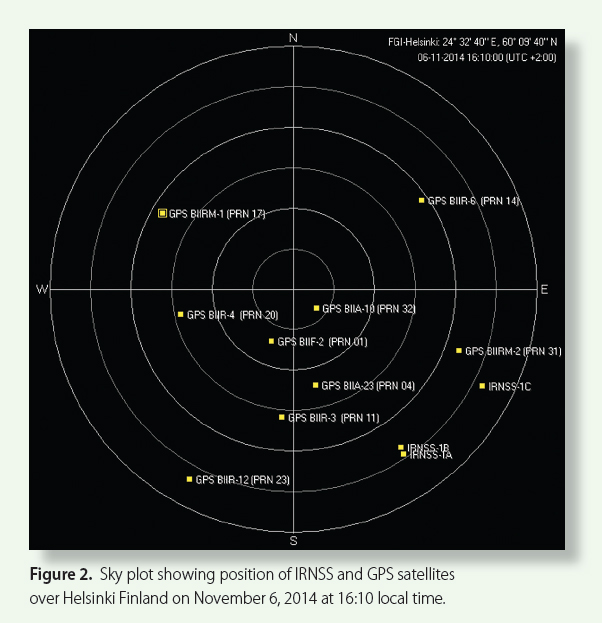
By Inside GNSSISRO’s Polar Satellite Launch Vehicle, PSLV-C26, successfully launched IRNSS-1C, the third satellite in the Indian Regional Navigation Satellite System (IRNSS), from Satish Dhawan Space Center last Thursday (October 16, 2014 local time).
By Inside GNSS
The 2015 JNC – Joint Navigation Conference will take place June 22-25, 2015 at the Renaissance Orlando at SeaWorld in Orlando, Florida. The U.S. ONLY CLASSIFIED sessions will be held June 25 at Shades of Green Walt Disney World.
The abstract submission deadline has passed.
Early bird registration ends May 20, 2015.
By Inside GNSSThe IGNSS 2015 symposium on GPS/GNSS and industry exhibition will take place at the Outrigger Hotel in Gold Coast, Queensland, Australia from July 16 to 18, 2015. The conference venue is one block from the famous Surfer’s Paradise Beach.
The deadline for abstracts is February 9, 2015.
Registration will be open at the end of March, 2015. Early bird registration ends May 18, 2015.
By Inside GNSS
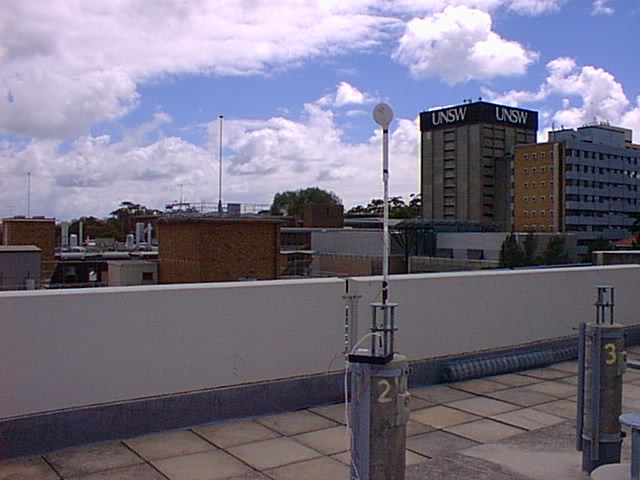
GPS pseudolite used in experiment at University of New South Wales Satellite Navigation and Positioning LabInternational aviation officials have asked U.S. experts to consider updating standards for GNSS aviation receivers to improve their ability to withstand interference from repeaters, pseudolites, and jammers.
Repeaters — generally used to extend navigation signals inside buildings where they would otherwise be blocked — rebroadcast GNSS satellite signals and therefore operate in the same frequency band. Although useful within a building, care must be taken to confined the repeater’s signal lest it confuse other receivers operating nearby.
By Inside GNSS
IRNSS-1B satellite in clean room. ISRO photoA signal-in-space (SIS) interface control document (ICD) for the standard positioning service (SPS) of the Indian Regional Navigation Satellite System (IRNSS) is available for download from the Indian Space Research Organization (ISRO) website.
By Inside GNSSAviation officials Thursday (September 25, 2014) for the first time approved the use of unmanned aircraft for commercial filming in the United States, opening the door to what is expected to be a slow-building gold rush to the skies.
Six companies received exemptions from the existing rules, which generally ban the commercial use of unmanned aerial systems or UAS. The exemptions were granted to RC Pro Productions Consulting LLC dba Vortex Aerial, Aerial MOB LLC, Astraeus Aeria, HeliVideo Productions LLC, Pictorvision Inc., and Snaproll Media LLC.
By Inside GNSS
The first Satellite Masters Conference will cover space-based business applications for Copernicus and Galileo in Europe. It will take place on October 23 and 24 at the German Federal Ministry of Transport and Digital Infrastructure (BMVI).
The event is free, but registration before October 10 is required.
By Inside GNSS
The high-precision GNSS industry should expect to see industry consolidation and a scramble for new markets and innovations as prices for high-end chips and modules continue to slide, experts told attendees at a ION GNSS+ panel discussion in Tampa, Florida, last week (September 11, 2014).
The falling prices could strain R&D budgets, they noted, but could also create opportunity as high-end receivers come within reach of emerging industries like self-driving cars, unmanned aerial vehicles, and are even incorporated into consumer products.
By Inside GNSS
Trimble Dimensions, the 2014 International User Conference, will take place at the Mirage and Treasure Island hotels in Las Vegas, Nevada from November 3 through 5.
Online registration is now open. The deadline for abstracts has passed.
By Inside GNSSIn the past 20 years GPS has simultaneously revolutionized both our modern infrastructure (by providing real-time navigation, mapping, and timing support) and our geodetic/surveying capabilities (by providing millimeter/centimeter-level positioning). At this point, most of the GNSS innovations we expect to see in the next decade will come from calculating positions more accurately and faster, while expanding from GPS to use of all available GNSS signals.
By Inside GNSS