
Main Categories

November 4, 2016

Munich Satellite Navigation Summit 2017

View of the Isar River, Munich, Germany

The Munich Satellite Navigation Summit and exhibition will take place at the Residenz Muenchen in Munich, Germany on March 14 – 16, 2017.

Register here. Early bird rate until January 17, 2017.

The theme for this year’s summit is “GNSS: Is It Time for Backup?”

The technical program includes plenary discussions and updates on the
main activities in worldwide satellite navigation systems, including:

Read More >

By Inside GNSS
November 2, 2016

SDX GNSS Simulator Covers Four Satellite Navigation Systems

SDX GNSS Simulation with Four Simultaneous Constellations

With the addition of BeiDou B1 and B2 signals, Longueuil, Canada-based
Skydel’s (SDX) GNSS simulator now covers the four global navigation
satellite systems, the company said. SDX also added Galileo signals E5a
and E5b.

With these new updates, SDX said it is now possible to create a GNSS
simulation with a four-constellation, dual-frequency test scenario on a
single software-designed radio (SDR). The SDX GNSS simulator is ideal
for engineers, designers, and research institutes, the company said.

Skydel now offers these satellite signals:

Read More >

By Inside GNSS

AUVSI XPONENTIAL 2017

The Winspear Opera House and the Meyerson Symphony Center in the Downtown Dallas Arts District

AUVSI’s XPONENTIAL 2017, All Things Unmanned will take place at the Kay Bailey Hutchison Convention Center in Dallas, Texas, U.S.A. from May 8 – 11, 2017.

Online registration is open. Early bird registration ends November 30, 2016. Onsite registration will be available.

Read More >

By Inside GNSS
[uam_ad id="183541"]
November 1, 2016

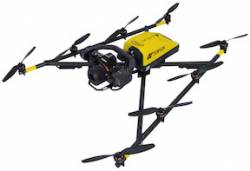
Topcon to Distribute Intel Falcon 8+ UAS in North America

Topcon’s Intel Falcon 8+

Topcon Positioning Group will distribute Intel Corporation’s Falcon 8+ System, a V-shaped, eight-rotor unmanned aerial system (UAS) in North American markets.

Announced at Intergeo 2016 in Hamburg, Germany, the Intel Falcon 8+ features triple-redundant AscTec Trinity autopilot capability and has full electronic system redundancy, the company said. It also includes the Intel Cockpit ground control and Powerpack smart battery system.

Read More >

By Inside GNSS

NovAtel and Stanford Sign Autonomous Vehicle Study Agreement

NovAtel has signed a contract with Stanford University for a study to determine how GNSS technology can deliver a positioning system that meets safety and accuracy requirements for autonomous land vehicles, the company said.

NovAtel said the study, to be conducted at Stanford’s GPS Research Laboratory, will build on similar aircraft research. In addition, the research will include concepts for high integrity carrier-phase algorithms, threat models, and safety monitors for improving autonomous vehicle transportation, the company said.

Read More >

By Inside GNSS

RTCA to Weigh Ligado Proposal

Federal aviation officials have asked the RTCA, Inc., standards organization to comment on a plan designed to help prevent a proposed wireless broadband network from interfering with the certified GPS receivers used by aircraft.

Read More >

By Dee Ann Divis
[uam_ad id="183541"]
October 28, 2016

GNSS Notes from InterGEO

Rob Hranak, Swift Navigation vice president of business development, talks about Piksi Multi at InterGEO

This year’s InterGEO in Hamburg, Germany, featured the latest in geospatial wizardry including new navigation and positioning components and boards not only driving progress in the surveying and mapping industries, but also feeding into the wider GNSS user community.

San Francisco-based Swift Navigation came into InterGEO brandishing the all-new Piksi Multi, described as the world’s first affordable multi-band and multi-constellation receiver.

Read More >

By Inside GNSS
October 17, 2016

ITAR Controls on Military GNSS Receivers Updated

The State Department last week published its final rule that updates export controls on military GNSS receivers through the U.S. Munitions List (USML).

The State Department-controlled USML, governed by the International Traffic in Arms Regulations (ITAR), moves GNSS receivers out of the USML spacecraft systems and related articles category. Instead, GNSS receivers are now controlled under the guidance and navigation systems category.

Read More >

By Inside GNSS
IGM_e-news_subscribe