
Main Categories

December 27, 2016

Air Force Continues to Test GPS III Satellite

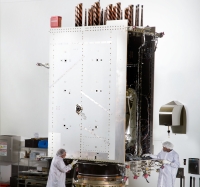
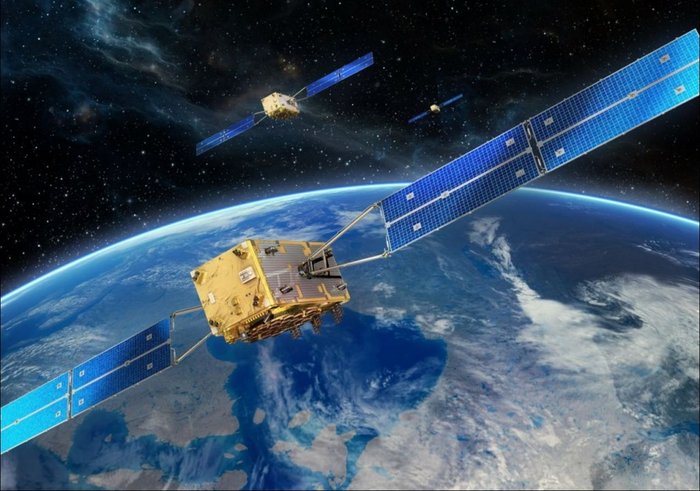
GPS III satellites in production. Image Source: Lockheed Martin.

The U.S. Air Force Space and Missile Systems Center (SMC) says it continues to work on GPS III ceramic capacitor testing and plans to have an updated launch schedule published late next month.

As Inside GNSS reported, the first GPS III satellite’s delivery, originally scheduled for August, was delayed by four months because of a Lockheed Martin subcontractor’s failure to test a ceramic capacitor.

Read More >

By Inside GNSS

December 22, 2016

Hemisphere GNSS Names Halsey New President and CEO

Halsey named Hemisphere GNSS President and CEO.

Hemisphere GNSS has named industry veteran Farlin Halsey as its president and chief executive officer, effective January 2, 2017. Halsey replaces interim president and CEO Xinping Guo, who has served in that position for eight months.

In addition, Halsey has been appointed to the company’s board of directors. Guo, chairman and general manager of Beijing UniStrong Science & Technology, which owns 100 percent of Hemisphere GNSS, will continue to serve on the company’s board of directors.

Read More >

By Inside GNSS
December 21, 2016

u-blox GNSS Module Featured in Tracking Device

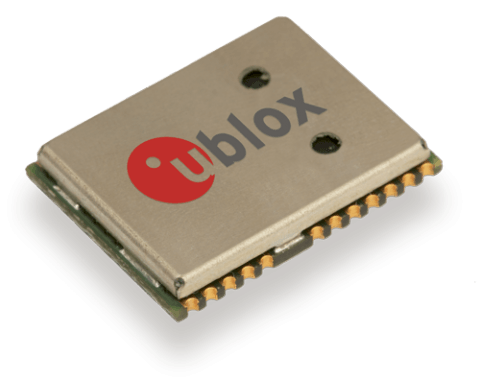
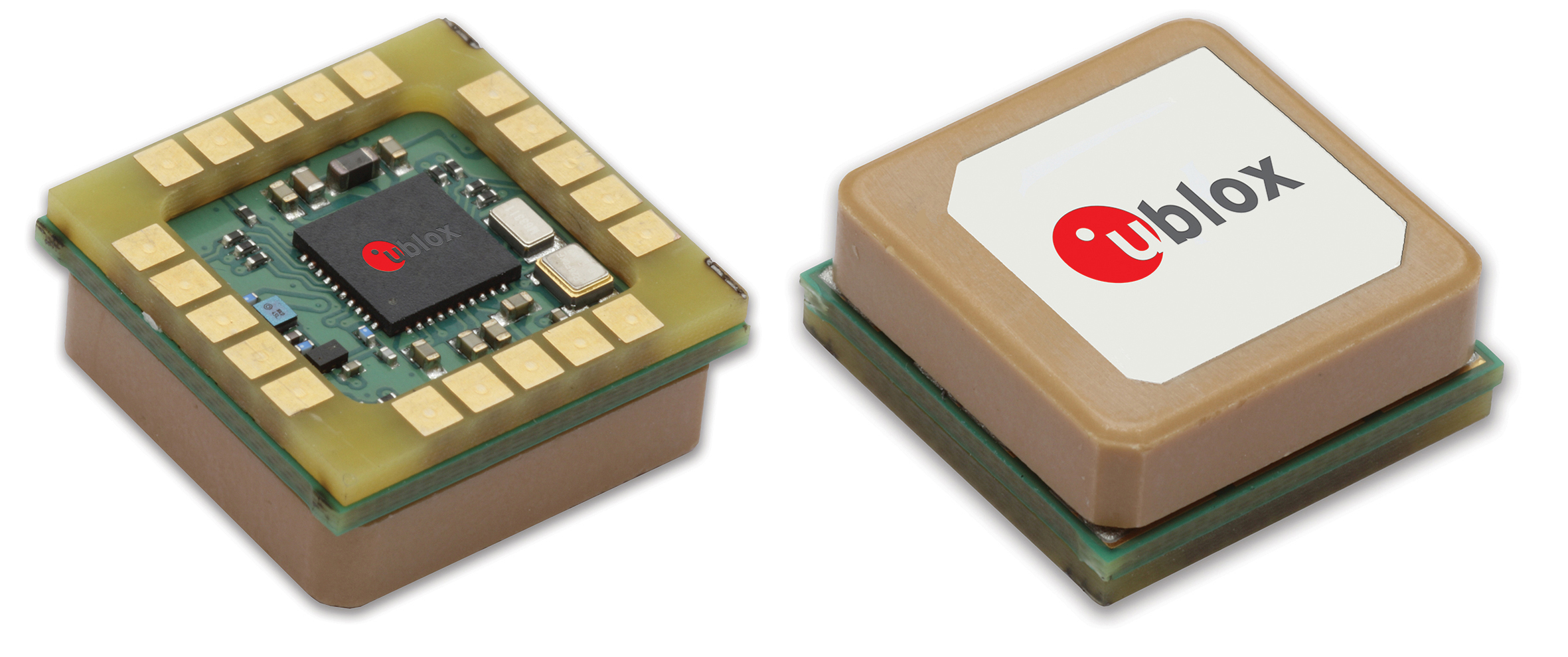
NEO-M8P GNSS module. Photo Source: u-blox.

Thalwil, Switzerland-based u-blox has announced that two of its products have been used by Cobilsys to create a small, battery-powered asset tracking device.

Cobilsys’ ATPACK tracker measures 53 by 48 by 15 millimeters and can be used to track the location of cars, motorcycles, and pets, the company said. The product uses a u-blox EVA-M8M, the industry’s smallest GNSS module, which works with GPS, Galileo, GLONASS, and BeiDou, the company said.

Read More >

By Inside GNSS
[uam_ad id="183541"]
December 20, 2016

New Report Says Broadcom and Qualcomm Top GNSS IC Vendors

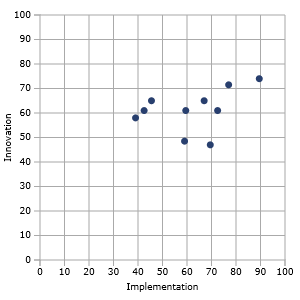
GNSS IC Vendor Competitive Assessment Vendor Matrix. Image Source: ABI Research.

A new reports says that the GNSS market landscape is growing because of rapid growth of satellite technology-enabled wearables, unmanned aerial vehicles (UAVs), new innovation opportunities, and low-cost precision receivers.

ABI Research’s new GNSS integrated circuit (IC) vendor competitive analysis says that Broadcom and Qualcomm remain the two top companies for the fourth straight year.

Read More >

By Inside GNSS

December 15, 2016

NASA Launches CYGNSS Space-Based Hurricane Watch

NASA successfully launched eight Cyclone Global Navigation Satellite System (CYGNSS) microsatellites this morning (December 15, 2016) from Cape Canaveral Air Force Station in Florida.

The CYGNSS spacecraft rode into orbit onboard an Orbital ATK air-launched Pegasus XL rocket. Orbital ATK’s modified L-1011 aircraft deployed the Pegasus XL and its CYNGSS payload at 39,000 feet, the agency said.

Read More >

By Inside GNSS
December 13, 2016

Air Force Approves Lockheed Martin’s GPS Ground Control Design

GPS III satellites in production. Image Source: Lockheed Martin.

The U.S. Air Force has approved Lockheed Martin’s current GPS satellite ground control system upgrade to enable it to operate with more powerful and accurate GPS III satellites, the company said.

The Air Force’s Critical Design Review (CDR) for the Contingency Operations (COps) contract, completed on November 17, allows Lockheed Martin to proceed with the modification of the existing Architecture Evolution Plan (AEP) Operational Control Segment. The AEP, maintained by Lockheed Martin, controls the 31 GPS IIR, IIR-M and IIF satellites in orbit.

Read More >

By Inside GNSS
December 9, 2016

Septentrio Rolls Out High-Precision Firmware for Its GNSS Receivers

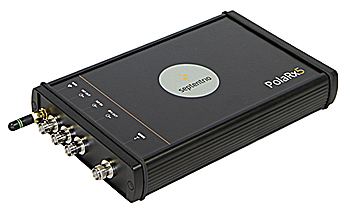
Septentrio’s PolaRx5 GNSS receiver. Image source: Septentrio.

Septentrio has released its 5.1.0 firmware for the PolaRx5 product line of GNSS reference receivers. The PolaRx5 GNSS reference receivers include the PolaRx5 for Continuously Operating Reference Station (CORS) and network operations, time and frequency transfer, and space weather applications.

The 5.1.0 firmware includes new features for file management, usability, security, and seismic monitoring, the company said.

Read More >

By Inside GNSS
[uam_ad id="183541"]
December 8, 2016

Two More Galileo Satellites Transmitting Navigation Signals

After months of testing, the European Space Agency (ESA) has announced that Galileo satellites 13 and 14 are transmitting healthy navigation signals and ready to relay distress calls to emergency services.

The satellites, launched from Europe’s Spaceport in French Guiana on May 24, went through lengthy testing that included receiving and uplinking signals through specialized antennas, ESA said. Some of the tests included navigation and search and rescue payloads methodically switched on, the agency said.

Read More >

By Inside GNSS
December 7, 2016

Ligado Networks and Topcon Reach Spectrum Use Agreement

Ligado Networks has announced a cooperation agreement with Topcon Positioning Systems that removes another barrier to the wireless broadband company’s proposed 5G network rollout.

According to a November 29 letter to the Federal Communications Commission (FCC), the agreement calls for future coordination prior to network development and for any mitigation efforts. Topcon also urged the FCC to grant Ligado’s modification applications to enable ground-based services on its mid-band spectrum.

Read More >

By Inside GNSS
December 1, 2016

Lockheed Martin Advances GPS Ground Control System for U.S. Air Force

The Air Force’s Global Positioning Systems Directorate contracted the CUP2 upgrade.

Lockheed Martin has announced a major upgrade to modernize the GPS ground control system, the company said. The commercial-off-the-shelf (COTS) upgrade no. 2 (CUP2) project, which became operational in mid-October to manage the 31 GPS satellites, is the latest step in the U.S. Air Force’s plan to refresh technology and transform the legacy operational control segment, also known as the Architecture Evolution Plan (AEP), the company said.

Read More >

By Inside GNSS

u-blox Releases Integrated Antenna GNSS Receiver

u-blox SAM-M8Q GNSS receiver.

Thalwil, Switzerland-based u-blox has released its SAM-M8Q GNSS receiver with integrated antenna. The compact SAM-M8Q module speeds time to market for GNSS system developers who have limited experience in radio frequency (RF) and antenna design, the company said.

SAM-M8Q, housed in a 15.5 by 15.5 x 6.3 millimeter package, can be embedded in small devices that require location information, the company said. These include asset tracking, telematics systems, and generic automotive after-market applications.

Read More >

By Inside GNSS
November 30, 2016

GPS, GLONASS, Galileo, and BeiDou for Mobile Devices

The navigation sensors for location-based services (LBS) are complex technical systems. Modern technical science can answer most questions about the optimality of particular position determination methods, signal processing algorithms, electronic circuits or similar well-defined problems, but the rigorous answer to the questions concerning the optimal LBS positioning sensor are still a big problem.

Read More >

By Inside GNSS

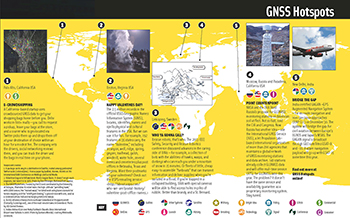
GNSS Hotspots | November 2016

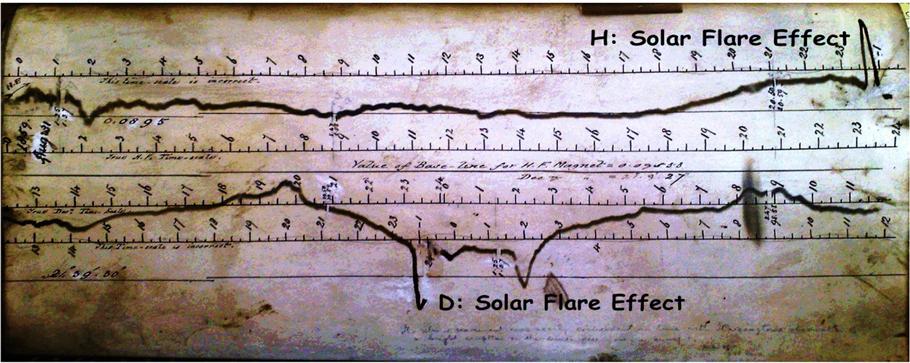
One of 12 magnetograms recorded at Greenwich Observatory during the Great Geomagnetic Storm of 1859
1996 soccer game in the Midwest, (Rick Dikeman image)
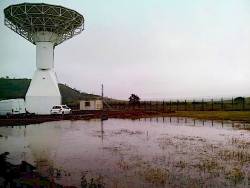
Nouméa ground station after the flood
A pencil and a coffee cup show the size of NASA’s teeny tiny PhoneSat
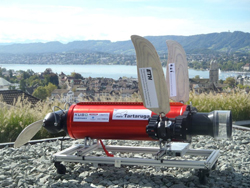
Bonus Hotspot: Naro Tartaruga AUV
Pacific lamprey spawning (photo by Jeremy Monroe, Fresh Waters Illustrated)
“Return of the Bucentaurn to the Molo on Ascension Day”, by (Giovanni Antonio Canal) Canaletto
The U.S. Naval Observatory Alternate Master Clock at 2nd Space Operations Squadron, Schriever AFB in Colorado. This photo was taken in January, 2006 during the addition of a leap second. The USNO master clocks control GPS timing. They are accurate to within one second every 20 million years (Satellites are so picky! Humans, on the other hand, just want to know if we’re too late for lunch) USAF photo by A1C Jason Ridder.
Detail of Compass/ BeiDou2 system diagram
Hotspot 6: Beluga A300 600ST

Highest altitude fix for a GPS signal, GNSS timing signals and hacking the Grid, Eagles act as drone countermeasures and rumors of a GNSS-nano-chip contributes to cash crisis in India

Read More >

By Inside GNSS
IGM_e-news_subscribe