
GPS

February 10, 2017

Galileo’s Commercial Service Implementing Decision Adoption to Bring Added Value to Users

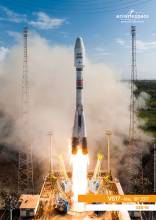
Two Galileo satellites now transmitting navigation signals. Image source: ESA. 

This week’s announcement of the adoption of the Galileo Commercial Service Implementing Decision represents an opportunity for Galileo to differentiate itself from other systems and offer users an added value to the standard positioning services already available, says the European GNSS Agency (GSA).

Read More >

By Inside GNSS
[uam_ad id="183541"]
February 8, 2017

NavatechGPS Spring GNSS and GPS+INS Courses

NavatechGPS, a leader in GPS/GNSS training for more than 30 years, announces its spring GNSS and GPS+INS Courses, which will be held May 8-12 in San Diego, California.

The courses include Inertial Systems, Kalman Filtering, and GPS/INS Integration (Instructors: Dr. Alan Pue and Mr. Michael Vaujin); GPS/GNSS Operations for Engineers and Technical Professionals (Instructor: Dr. Chris Hegarty); and GNSS Fundamentals and Enhancements (Instructor: Dr. Chris Hegarty).

For more information, contact Carolyn McDonald at cm*******@********ps.com

Read More >

By Inside GNSS

Mobile World Congress

The Mobile World Congress, described as the world’s largest gathering for the mobile industry, is organized by the GSMA and held in the Mobile World Capital Barcelona, Spain from Feb. 27 to March 2, 2017.

Read More >

By Inside GNSS
[uam_ad id="183541"]

NASA Workshop: “Emerging Technologies for Autonomous Space Navigation”

Photo source: NASA

NASA’s Space Communications and Navigation (SCaN)/Human Exploration and Operations Mission Directorate (HEOMD) announces a workshop on February 16 on “Emerging Technologies for Autonomous Space Navigation” to inform the U.S. industry on evolving positioning, navigation and timing (PNT) technologies and techniques being developed to enhance the operational efficiency and flexibility of future missions.

Read More >

By Inside GNSS

EndRun Releases GPS-Synchronized RTM3205 Precision Timing Module

RTM3205 Precision Timing Module. Photo source: EndRun Technologies.

Santa Rosa, California-based EndRun Technologies, a provider of precision time and frequency solutions, announced last week at the International Technical Meeting-Precision Time/Time Interval (ITM-PTTI) meeting, the release of the RTM3205 Precision Timing Module for portable time and frequency applications. The second generation RTM3205 is optimized for size, weight, and power (SWaP), but can exceed the stability of a standard cesium atomic frequency reference, according to the company.

Read More >

By Inside GNSS
January 30, 2017

GPS Data Release to Boost Space-Weather Science

‘Unprecedented’ data key to understanding radiation threats to satellites and infrastructure, and expected to provide a boost to space-weather science is now available, announced a joint release from the American Geophysical Union (AGU) and the Los Alamos National Laboratory on January 30.

As of today, more than 16 years of space-weather data is publicly available for the first time in history. The data comes from space-weather sensors on board the nation’s GPS satellites.

Read More >

By Inside GNSS
January 26, 2017

GPS Data Used by ATRI to Name Top 100 Truck Bottlenecks

The American Transportation Research Institute (ATRI) released on January 25 its annual list highlighting the most congested bottlenecks for trucks in America.

Congestion chokepoints hurt the economy and the environment, so the ATRI uses GPS data collected each year to help identify times and locations that truckers will want to avoid.

Read More >

By Inside GNSS

GNSS Hotspots | January 2017

One of 12 magnetograms recorded at Greenwich Observatory during the Great Geomagnetic Storm of 1859
1996 soccer game in the Midwest, (Rick Dikeman image)
Nouméa ground station after the flood
A pencil and a coffee cup show the size of NASA’s teeny tiny PhoneSat
Bonus Hotspot: Naro Tartaruga AUV
Pacific lamprey spawning (photo by Jeremy Monroe, Fresh Waters Illustrated)
“Return of the Bucentaurn to the Molo on Ascension Day”, by (Giovanni Antonio Canal) Canaletto
The U.S. Naval Observatory Alternate Master Clock at 2nd Space Operations Squadron, Schriever AFB in Colorado. This photo was taken in January, 2006 during the addition of a leap second. The USNO master clocks control GPS timing. They are accurate to within one second every 20 million years (Satellites are so picky! Humans, on the other hand, just want to know if we’re too late for lunch) USAF photo by A1C Jason Ridder.
Detail of Compass/ BeiDou2 system diagram
Hotspot 6: Beluga A300 600ST

Tracking illegal logging in Romania, autonomous mining, ancient calendars and Canadian cows

Read More >

By Inside GNSS

No Sudden Moves

As with the notion of “disruption,” unpredictability can be useful. A move in chess or go, for instance. Or in the case of cuisine — say, when usurping Taco Thursday with chicken tagine. Even in negotiations, an unanticipated gambit can change the outcome positively.

Sometimes, of course, unpredictability is in the immanent nature of things. Despite advances in meteorological technology and science, weather continues to prove fickle. Foreknowledge of earthquakes remains difficult to pin down in space and time.

Read More >

By Inside GNSS
1 59 60 61 62 63 157
IGM_e-news_subscribe