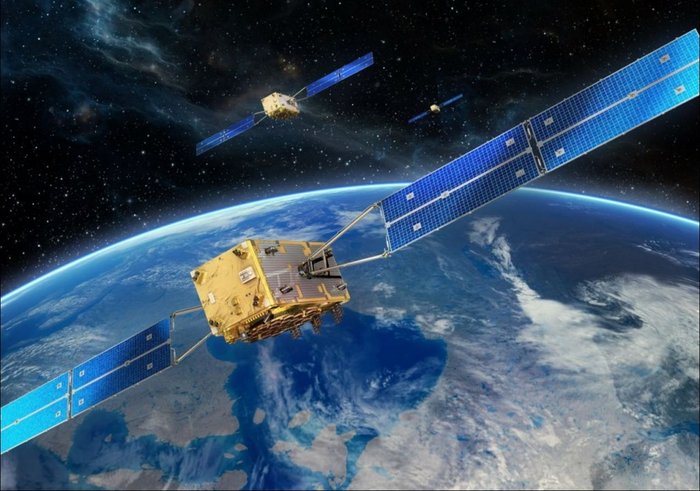
Combined Architecture

Working Papers explore the technical and scientific themes that underpin GNSS programs and applications. This regular column is coordinated by Prof. Dr.-Ing. Günter Hein, head of Europe’s Galileo Operations and Evolution.

Working Papers explore the technical and scientific themes that underpin GNSS programs and applications. This regular column is coordinated by Prof. Dr.-Ing. Günter Hein, head of Europe’s Galileo Operations and Evolution.

Q. What are the fundamentals of an effective GNSS test plan?
A. One aspect of GNSS development that engineers often find challenging is the lack of common testing standards and procedures. This can make life difficult for the engineer tasked with constructing a test plan for a new GNSS-enabled system. How much testing is proportionate, at which stages of development? What are the key performance parameters to measure? What apparatus is best suited to the application, and what are the appropriate pass/fail criteria?
By Inside GNSSThe satellite-based NextGen program is in trouble — no question about it.
The Federal Aviation Administration (FAA) air traffic modernization effort will likely cost triple its original $40-billion program budget and need an extra decade — until 2035 or beyond — to reach completion, according to 2014 testimony by Department of Transportation (DoT) Inspector General Calvin Scovel.
By Dee Ann DivisThe Royal Institute of Navigation will host a one-day event on The Future of GNSS with speaker Prof. Terry Moore on April 21, 2016 at the Warsash Maritime Academy in Southampton, England.
The speaker will outline the future of GNNS and its systems, anticipated changes and the impact of these developments.
This meeting which is joint with the NI and UK Hydro Society will be followed by the RIN Solent branch AGM.
This event is free. Prior booking not required, guests are welcome.
By Inside GNSS
The Royal Institute of Navigation will host a one-day International Forum on Aviation and Space Weather on March 17, 2016 at the DGAC (Direction Générale de l’Aviation Civile) in Paris, France.
Registration is available here.
The Forum hopes to bring foremost experts together to discuss space weather and aviation.
By Inside GNSS
At the 2015 symposiumThe German Institute of Navigation’s (DGON) 2016 symposium on inertial sensors and systems, ISS, and gyro technology will take place in Tulla Hall at the Karlsruhe Institute of Technology (KIT) on September 20 and 21.
As modern systems for navigation, localization and guidance are increasingly making use of supporting data from non-inertial sensors, the conference particularly appreciates papers on hybrid systems, those that fuse inertial with GNSS, visual, infrared, radar or other sensors.
By Inside GNSS
NASA image: effects of space weather on technologyNOAA’s Space Weather Prediction Center will hold it’s annual Space Weather Workshop at the Omni Interlocken Hotel in Broomfield, Colorado (10 minutes from Boulder) from April 26 to 29, 2016.
Billed as "The Meeting of Science, Research Applications, Operations and Users," what began as a small conference in 1996 is now a major event addressing the diverse impacts of space weather on critical technology, including communications, navigation, spacecraft operations, aviation and electric power.
By Inside GNSS
The Saint Louis Cathedral, New Orleans, LouisianaAUVSI’s Unmanned Systems conference and trade show is now XPONENTIAL.
XPONENTIAL 2016 will take place at the Ernest N. Morial Convention Center in New Orleans, Louisiana, U.S.A. from May 2 – 5, 2016.
By Inside GNSS
The fourth IEEE international conference on Ubiquitous Positioning, Indoor Navigation and Location-Based Services (UPINLBS 2016) will take place on November 3 – 4, 2016 in Shanghai, China.
UPINLBS 2016 will feature technical papers and presentations on a variety of topics such as:
By Inside GNSS
Baudis conference center, ToulouseThe 5th Toulouse Space Show will take place June 28 – 30, 2016 at the Pierre Baudis Congress Centre in Toulouse, France.
Online registration is available.
The trade show / B2B forum is entirely focused on the space supply chain, space applications and space infrastructures. The event program includes an international exhibition, conference and prearranged B2B meetings, with technical parallel sessions and networking events.
By Inside GNSS
The Hague, The NetherlandsThe second Unmanned Systems Expo (TUSExpo) will take place February 2 – 4, 2016 at the World Forum in The Hague, The Netherlands.
Online registration is available.
The TUSExpo will include a conference, trade exhibition, business platform and matchmaking program, with the aim of bringing together European and global companies from the entire Unmanned Systems supply chain with customers and end-users.
By Inside GNSSSBAS and RNSS: The Unsung Heroes of GNSS
Okay, if I had wanted to pander to GNSS fans, I might have called this, “Making Great Greater.”
But there are only so many superlatives that can be lathered on this remarkable technology before simple praise turns into hagiography.
So, it’s time once more to give a little love to those unsung heroes of GNSS: the augmentations and regional navigation satellite systems.
By Inside GNSS
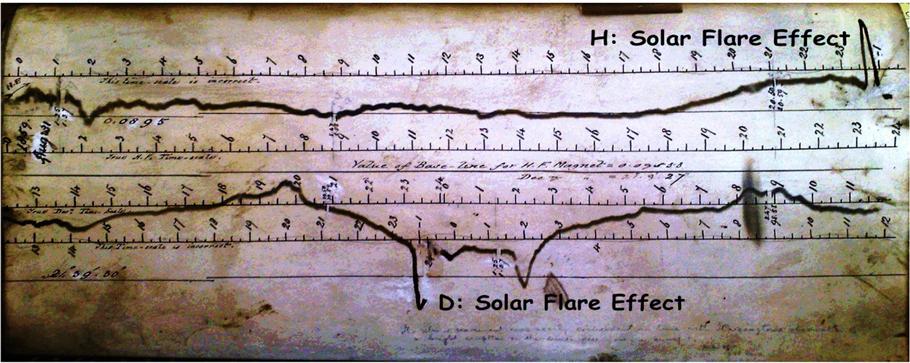
One of 12 magnetograms recorded at Greenwich Observatory during the Great Geomagnetic Storm of 1859
1996 soccer game in the Midwest, (Rick Dikeman image)
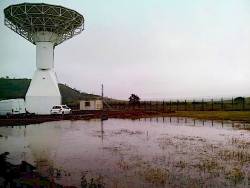
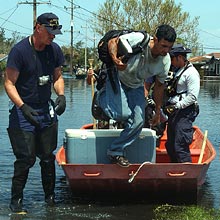
Nouméa ground station after the flood
A pencil and a coffee cup show the size of NASA’s teeny tiny PhoneSat
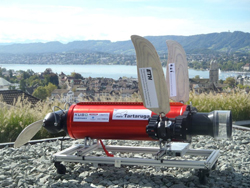
Bonus Hotspot: Naro Tartaruga AUV
Pacific lamprey spawning (photo by Jeremy Monroe, Fresh Waters Illustrated)
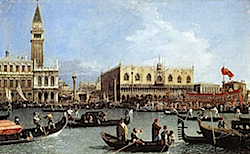
“Return of the Bucentaurn to the Molo on Ascension Day”, by (Giovanni Antonio Canal) Canaletto
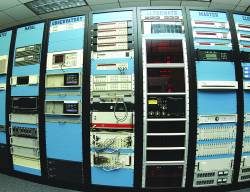
The U.S. Naval Observatory Alternate Master Clock at 2nd Space Operations Squadron, Schriever AFB in Colorado. This photo was taken in January, 2006 during the addition of a leap second. The USNO master clocks control GPS timing. They are accurate to within one second every 20 million years (Satellites are so picky! Humans, on the other hand, just want to know if we’re too late for lunch) USAF photo by A1C Jason Ridder.
Detail of Compass/ BeiDou2 system diagram
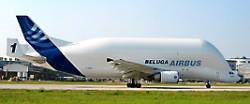
Hotspot 6: Beluga A300 600ST

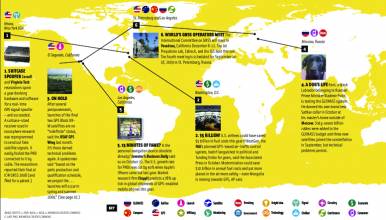
Catching thieves in California, Galileo satellites test Einstein, Russian space agency remodel, and 911 training for operators who can’t read maps.
By Inside GNSS