Military GPS at the Core
Building assured PNT for the fight we are actually in.
By Inside GNSSBuilding assured PNT for the fight we are actually in.
By Inside GNSSAs small autonomous aircraft move into more demanding operating environments, the PNT challenge is shifting from nominal accuracy to system coherence. Hyfix argues that tighter integration across positioning, timing, estimation, and control can reduce hidden error, improve integrity, and make autonomy stacks more resilient under degraded conditions.
By Inside GNSSAs jamming, spoofing and GNSS denial become operational realities, VIAVI’s transcoder is emerging as a practical bridge between legacy vehicle systems and the next generation of assured positioning, navigation and timing.
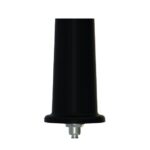
By Inside GNSSCalian has announced two new pole mount controlled reception pattern antennas — the CR8894PXF+ and CR8854PXF+ — expanding its CRPA line with installation options suited to communications towers, vessels, monitoring stations, and critical infrastructure.
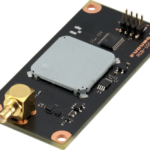
By Inside GNSSVIAVI Solutions has introduced the µPNT GDO-1000, a GNSS-disciplined oscillator built in the M.2 B-key form factor measuring 22mm by 42mm and weighing under four grams — designed for defense, airborne, and unmanned platforms where traditional timing modules are too large or power-hungry to integrate.
By Inside GNSSColorado-based Xairos Systems has completed two-kilometer free-space range testing with its Ares Quantum Optical Terminal, establishing simultaneous quantum and optical links from a single integrated unit.
By Inside GNSSTRX Systems will present new enhancements to its Dismounted Assured PNT System GEN II at the Joint Navigation Conference, held June 1–4 at the Northern Kentucky Convention Center.
By Inside GNSSThe House Armed Services Committee’s chairman’s mark of the fiscal year 2027 National Defense Authorization Act, released May 26, includes a provision that would establish a designated Pentagon official to oversee the Defense Department’s positioning, navigation and timing enterprise — including alternative PNT programs alongside the existing GPS architecture.
By Inside GNSSHe spoke with Inside GNSS about what Xona’s Pulsar means for the future of resilient PNT.
By Inside GNSSIn 2017, the main message at the Munich Satellite Summit was clear: GNSS needs a backup. Nearly 10 years later, the message hasn’t changed; we may have more tools available but very little progress has been made—while the threat to GNSS only continues to grow.
By Dana A. GowardGNSS interference is no longer a distant concern or a technical edge case. As jamming, spoofing and autonomy requirements expose the limits of today’s PNT architectures, LEO is emerging as one of the most important alternatives to understand.
By Zak M. KassasOver the next six issues, Dr. Güenter W. Hein will critically review the development of Galileo, drawing on more than two decades of direct experience with Europe’s satellite navigation system. But this series is not simply a look back. Galileo’s history is also a study in geopolitics, technical ambition, institutional complexity, international cooperation, spectrum management and interoperability—issues that remain central to today’s global PNT aspirations.
By Günter W. HeinColorado Springs-based Apogee has been awarded a five-year, $103.6 million task order to provide positioning, navigation, and timing contractor support services for the Department of Defense, supporting modernization, acquisition, and sustainment planning across the global PNT enterprise.
By Inside GNSS