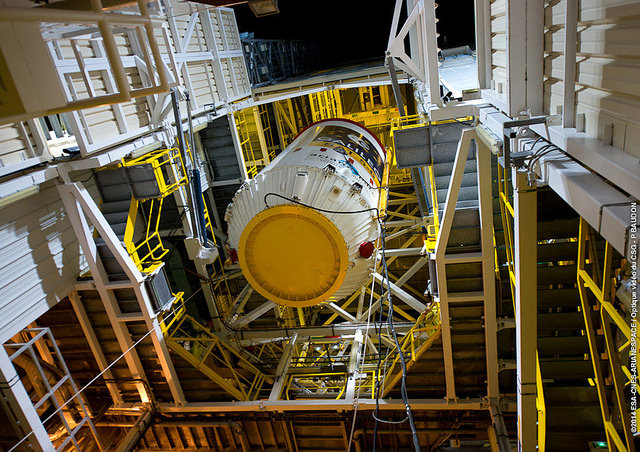
Galileo

November 10, 2014

ESA Will Attempt to Improve Orbits of Errant Galileo Satellites

The European Space Agency (ESA) announced plans today (November 10, 2014) to implement a series of maneuvers to reposition one of two Galileo full operational capability (FOC) satellites left in the wrong orbit this summer, as a prelude to its health being confirmed.
 
The aim is to raise the lowest point of the satellite’s orbit — its perigee — to reduce the radiation exposure from the Van Allen radiation belts surrounding Earth, as well as to put it into a more useful orbit for navigation purposes.

 

Read More >

By Inside GNSS

Airbus GNSS Engineers Win Top ESNC 2014 Prize

The European Satellite Navigation Competition (ESNC) has gone Big Time.

Unlike past years, when product designers and engineers from small- and medium-sized enterprises (SME) have walked away with the top prize, this year’s overall winner was Airbus Defence & Space (Airbus DS GmbH), a division of the Airbus Group (formerly EADS). Headquartered in France and generating annual revenues of €14 billion, Airbus DS was established last year by the merger of the parent company’s Airbus Military, Astrium, and Cassidian units.

Read More >

By Inside GNSS
[uam_ad id="183541"]
October 23, 2014

New Home (or Not) for Galileo in European Commission

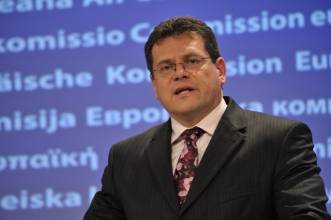
Daniel Calleja Crespo, Director-General of DG Enterprise. EC photo

The European Parliament voted yesterday (October 22, 2014) to accept President-elect Jean-Claude Juncker’s “last-chance” leadership for the European Commission (EC).

But the 11th-hour reshuffling of posts appears to leave Galileo without a clear-cut leader, at least at the political level — even as the Commission and its European Space Agency (ESA) partner have decided to give up the prospect of a December launch of two satellites.

Read More >

By Inside GNSS
October 22, 2014

IGNSS 2015: International GNSS Society Symposium

The IGNSS 2015 symposium on GPS/GNSS and industry exhibition will take place at the Outrigger Hotel in Gold Coast, Queensland, Australia from July 16 to 18, 2015. The conference venue is one block from the famous Surfer’s Paradise Beach.

The deadline for abstracts is February 9, 2015.

Registration will be open at the end of March, 2015. Early bird registration ends May 18, 2015.

Read More >

By Inside GNSS
October 16, 2014

GNSS+: PNT Heads for the Great Indoors

A confluence of technology, policy, and applications is turning indoor venues into the next big frontier for positioning and navigation.

Recent market studies have heralded the prospects for positioning, navigation, and tracking inside buildings where GNSS signals are often attenuated or blocked entirely. Many products and conceptual designs combine the indoor technologies with GNSS to provide “ubiquitous” positioning.

Read More >

By Inside GNSS

ICAO, RTCA Seek New Protections for GNSS Aviation Receivers

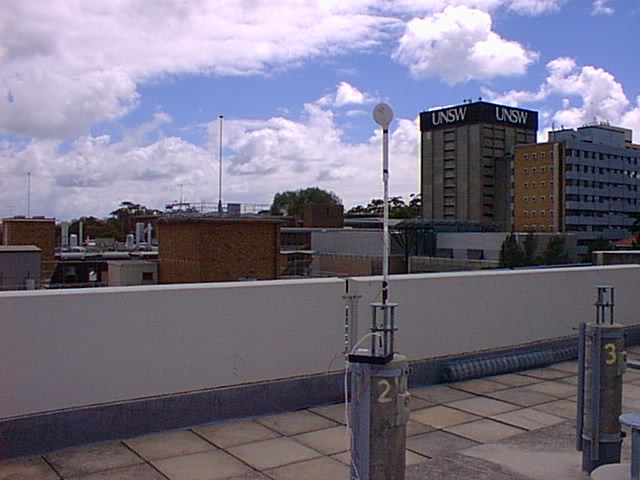
GPS pseudolite used in experiment at University of New South Wales Satellite Navigation and Positioning Lab

International aviation officials have asked U.S. experts to consider updating standards for GNSS aviation receivers to improve their ability to withstand interference from repeaters, pseudolites, and jammers.  

Repeaters — generally used to extend navigation signals inside buildings where they would otherwise be blocked — rebroadcast GNSS satellite signals and therefore operate in the same frequency band. Although useful within a building,  care must be taken to confined the repeater’s signal lest it confuse other receivers operating nearby.

Read More >

By Inside GNSS
[uam_ad id="183541"]
October 9, 2014

European Commission GSA Sign Agreement on Galileo Service Provision

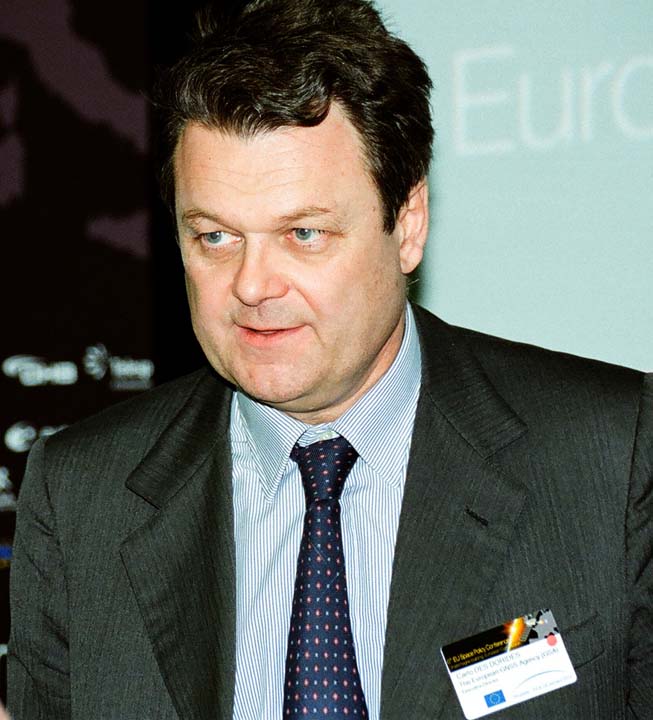
GSA Executive Director Carlo des Dorides

The European GNSS Agency (GSA) and the European Commission (EC) have concluded an agreement that delegates a range of exploitation tasks for Galileo to the GSA, providing a framework and budget for the development of services and operations through 2021.

The signing of the Galileo Exploitation Delegation Agreement serves as an initial step towards the full Galileo Exploitation Phase.

Read More >

By Inside GNSS
October 8, 2014

UAVs at INTERGEO: Applanix, Others Announce GNSS-Guided Systems

Unmanned aerial vehicles (UAVs) are getting a lot of attention this week at the INTERGEO conference and exhibition in Berlin, Germany, where a special session on Tuesday (October 7, 2014), “UAVs in Practice,” focused on their use in airborne surveying and mapping, environmental monitoring, and other commercial or civil applications.

Read More >

By Inside GNSS

Arianespace Inquiry Identifies Source of Galileo Launch Anomaly; Next Attempt Could Come in December

In a report issued Tuesday (October 7, 2014), an Independent Inquiry Board formed to analyze the cause of the August 22 launch anomaly that placed two Galileo into the wrong orbits has concluded that frozen fuel lines caused a misfiring of attitude control thrusters on the launcher’s Fregat module.

According to the report, the problem can be remedied on the rockets in time for another launch in December, much sooner than some observers had speculated.

Read More >

By Inside GNSS
October 6, 2014

IFCS/EFTF 2015: IEEE International Frequency Control Symposium and European Frequency and Time Forum

Denver Millennium Bridge at the end of the 16th Street Mall.

The biennial Joint Conference of the IEEE International Frequency Control Symposium (IFCS) and European Frequency Time Forum (EFTF) will be held at The Colorado Convention Center in Denver, Colorado, USA on April 12 -16, 2015.

The deadline for abstracts is January 9, 2015. Online submission is open.

Among the sessions for the IFCS/EFTF working group, Group 5 is of particular interest to readers of Inside GNSS. It covers:

Read More >

By Inside GNSS
September 27, 2014

A Learning Experience

My favorite bumper sticker this month: “Oh, no! Not another learning experience!”

After 20 years of putting together a European GNSS program, disappointment over the skewed launch of the first fully operational Galileo satellites is palpable and widely felt. For end users, it is uniformly bad news, and no system provider that sincerely wants to achieve interoperability and robustness in a system of GNSS systems can relish the European program’s current difficulties.

Read More >

By Inside GNSS
1 44 45 46 47 48 82
IGM_e-news_subscribe