April 23, 2021
Anti-spoofing System Detects Anomalies, Issues User Alerts
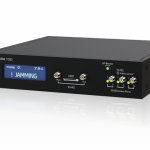
GPSPATRON has developed a system to monitor GNSS signals around specific areas of operation and issue user alerts to the presence of spoofing.
By Inside GNSS
Global Navigation Satellite Systems Engineering, Policy, and Design
GPSPATRON has developed a system to monitor GNSS signals around specific areas of operation and issue user alerts to the presence of spoofing.
By Inside GNSS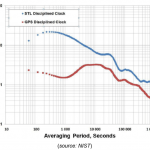
A study by the U.S. National Institute of Standards and Technology (NIST), the U.S. Government agency responsible for maintaining national time scale, shows that Satelles’ Satellite Time and Location (STL) provides a signal that is independent of GNSS with exceptional timing stability and reach that extends indoors, beyond the range of GNSS signals.
By Inside GNSS
ColdQuanta received two development contracts from U.S. Government agencies worth $2.55M in total, based on the company’s Quantum Core technology that uses atoms cooled to a temperature of nearly absolute zero, and lasers to manipulate and control the atoms with extreme precision. According to the Boulder, Colorado-based company, cold atom quantum technology can be used for secure global navigation, quantum timekeeping, and communications.
By Inside GNSS
u-blox announced its first multi-band high accuracy timing solutions to concurrently support the L1 and L5 GNSS signals. The ZED-F9T-10B and LEA-F9T-10B timing modules and the RCB-F9T-1 timing card deliver nanosecond-level timing accuracies required to synchronize cellular network base stations and smart power grids.
By Inside GNSS
Microchip Technology Inc. has integrated its BlueSky technology GPS signal-anomaly detection software into the SyncServer S600 Series network time server and instruments, to protect network timing applications in banking, stock trading, electric utilities, aerospace and defense and other applications.
By Inside GNSS
Trimble introduced its first dual-frequency — GPS L1 and L5 — embedded timing module providing next-generation wireless networks with 5-nanosecond accuracy.
By Inside GNSS
Compact, highly stable laser-optical clocks can improve future generations of satellite navigation systems and form the basis for new GNSS architectures.
By Inside GNSS
Jackson Labs Technologies, Inc. announced availability of the STL-2600 Satellite Timing and Location (STL) receiver designed in partnership with Satelles, Inc., the service provider of STL. This commercial receiver provides a completely GNSS-independent, low-cost capability to generate UTC nanosecond timing and meters-accurate positioning anywhere in the world
By Inside GNSS
The Department of Transportation (DOT) submitted its “National Timing Resilience and Security Act: Roadmap to Implementation” report to Congress in mid-January. Following a competitive application process, demonstrations and review of 11 candidate technologies to back up GPS capabilities, the DOT concluded that “none of the systems can universally backup the positioning and navigations capabilities provided byGPS and its augmentations.” However, “all vendors demonstrated some PNT performance of value, but only one vendor, NextNav, demonstrated in all applicable use case scenarios.”
By Inside GNSS
TeleOrbit GmbH of Nuremberg, Germany, announced that it has implemented testing capability for Galileo’s Open Service Navigation Message Authentication (OSNMA) aboard the company’s GNSS Receiver with Open Software Interface (GOOSE).
By Inside GNSS
The White House issued a January 15 policy directive addressing U.S. dependence on GPS and the need to prepare for GPS disruptions. It may also signal an intent to authenticate GPS signals in the future.
By Inside GNSS
The European GNSS Agency (GSA) released a new Galileo Open Service Signal in Space Interface Control Document (OS SIS ICD), the second issue of this document geared towards GNSS receiver manufacturers. Although the modified signals are not yet broadcast by Galileo satellites, the ICD will allow GNSS receiver manufacturers to prepare for the improved signals, set for debut in 2023.
By Inside GNSS
ADVA launched a set network synchronization devices with enhanced capabilities for next-generation applications such as 5G. The latest Oscilloquartz products provide timing accuracy and resilience to edge networks. The OSA 5412 and 5422 offer precise phase, frequency and time-of-day synchronization and can be used for time-as-a-service applications.
By Inside GNSS