New NASA Space Clock Could Hold Promise For GPS
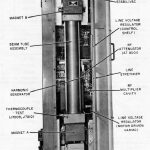
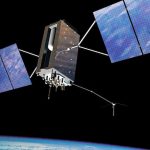
KENNEDY SPACE CENTER, FLORIDA — NASA is poised to demonstrate an advanced atomic clock that could someday markedly improve satellite navigation.
By Dee Ann DivisKENNEDY SPACE CENTER, FLORIDA — NASA is poised to demonstrate an advanced atomic clock that could someday markedly improve satellite navigation.
By Dee Ann DivisUPDATE: A week after this story appeared the news broke that Fred Kennedy had quit as the head of the Air Force’s new Space Development Agency after just four months on the job. News reports suggested that issues with his boss, Undersecretary of Defense for Research and Engineering Mike Griffin, were at the heart of the resignation. — Dee Ann Divis
The director of the Department of Defense’s new Space Development Agency (SDA) said Friday that one of his priority projects is to create an alternate GPS capability using frequencies different from those of the current constellation.
By Dee Ann DivisOur digital economy depends on keeping data safe from hackers, and cybersecurity is a priority for the Government of Canada. The Canadian Space Agency’s Quantum EncrYption and Science Satellite (QEYSSat) mission will test quantum technology that protects communications in space.
By Inside GNSSPassengers stranded at airports is not an uncommon occurrence, but when weather does not appear to be an issue, anxious travelers can get restless searching for answers.
Over the last day or two, a number of U.S. flights were canceled as aircraft were grounded and passengers were left scratching their heads.
By Stan GoffThe Air Force Research Laboratory (AFRL) is considering a contract for research and development of celestial-aided navigation technologies. The primary focus is to develop a Star Tracker that can reliably perform celestial sightings for sensor altitudes between 30,000 feet and 80,000 feet. The goal is to reduce the risks to guidance, navigation and control in GPS-denied environments, especially for operations over feature-poor terrain such as desert, water, snow and ice where existing terrain-aided methods may not be used for position, navigation, and timing (PNT) updates.
By Inside GNSSCEDAR RAPIDS, Iowa (May 22, 2019) – Collins Aerospace Systems, a unit of United Technologies Corp., has received the Global Positioning Systems Directorate (GPS-D) security certification from the U.S. Air Force Space and Missile Systems Center (USAF SMC) for its Military Code (M-Code) Common GPS Module (CGM). Security certification validates compliance to the stringent Military GPS User Equipment (MGUE) hardware and software security design specification. With security certification, the U.S. Department of Defense (DOD) can significantly expand MGUE receiver integration and testing locations supporting the operational deployment of M-Code.
By Inside GNSSThe European GNSS Agency (GSA) together with air traffic management organization EUROCONTROL jointly held the 16th meeting of the RNP Approach Implementation Support Group (RAISG) together with the Aviation Grants program workshop at the GSA’s Prague headquarters.
By Inside GNSSSatellite navigation has become a global utility, but one that is vulnerable to interference. The European Space Agency’s new NAVISP research and development program is prioritizing research into countering jamming and spoofing of satnav signals, with partner companies exploring varied approaches.
By Inside GNSSWhen the National Space-Based Positioning, Navigation, and Timing (PNT) Advisory Board meets June 6 and 7 in Virginia they will be hearing about an experimental enhancement to GPS signals that could thwart spoofing and make life harder for computer hackers.
By Inside GNSSIn a response to an inquiry by House Transportation and Infrastructure Chairman Peter DeFazio, the U.S. Department of Transportation (DOT) provided an outline of its process to implement a terrestrial timing system to complement and backup GPS signals.
By Dana A. GowardThe Department of Homeland Security (DHS) has designated positioning, navigation, and timing services (PNT) a “National Critical Function.” That is PNT is now officially a capability so vital to the United States that its “disruption, corruption, or dysfunction would have a debilitating effect on security, national economic security, national public health or safety.”
By Dee Ann DivisWashington, DC, May 6, 2019 – Orolia, a provider of Resilient Positioning, Navigation and Timing (PNT) solutions, announced today that its SecureSync time and synchronization servers have been selected to support enroute radar systems across the U.S.
By Inside GNSSThe Copernicus Masters 2019 competition is now open for submissions. This international competition awards prizes to innovative solutions, developments and ideas for business and society that use Copernicus data.
By Stan Goff