Aerospace and Defense

Air Traffic Control Modernization: FAA, NextGen, GNSS, and Avionics Equipage

Mike Dyment, General Partner, NextGen Equipage Fund LLC

» Air Traffic Control Modernization (PDF)

In between partisan confrontations around the 2011 federal budget and raising the U.S. debt limit, prospects are improving for federal legislation that would provide the Federal Aviation Administration (FAA) with a regular full-year budget for the first time since Fiscal Year 2007 — including support for completing the transition to a GNSS-driven air traffic control (ATC) system known as NextGen and a “public-private partnership” to equip aircraft with the needed avionics.

Read More >

By Inside GNSS
April 28, 2011

FY11 Budget Battle Over, GPS Looks Ahead to FY12

Resolution of the between Congressional Republicans and Democrats that threatened a shutdown of the federal government has clarified the picture for military GPS programs in the coming year, although prospects for the civil side remain uncertain.

On April 15, 2011, President Obama signed the Department of Defense and Full-Year Continuing Appropriations Act, 2011 (H.R. 1473, Public Law 112-10), the last in a series of government-wide funding measures for Fiscal Year 2011 (FY11).

Read More >

By Inside GNSS
April 18, 2011

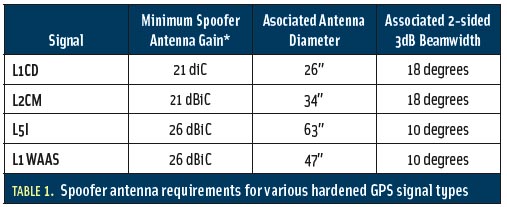
Keeping the Spoofs Out

The demand for techniques capable of authenticating the GNSS signals and detecting simulation attacks (spoofing) has increased exponentially in the last years, mainly targeted to financial and safety critical applications.

Associated proposals and developments addressing these issues focused on two different approaches: user segment authentication services that leveraged existing services in order to detect signal spoofing and that integrated signal authentication services into the GNSS system itself.

Read More >

By Inside GNSS
[uam_ad id="183541"]

Modernization Times

Enterprise Baseline Schedule

Col. Bernie Gruber, commander of the GPS Directorate since June 2010, works in a busy place.

Through its various incarnations since being established in 1974 — as Joint Program Office, Air Force Wing, and now Directorate — the GPS program at the Space and Missile Systems Center (SMC), Los Angeles Air Force Base, California, has been at the center of the action.

Read More >

By Inside GNSS
March 15, 2011

Lockheed’s GPS III Team completes Key Flight Software Milestone

GPS III satellite. Lockheed Martin illustration

Lockheed Martin announced today (March 15, 2011) that the team it leads in developing the U.S. Air Force’s next-generation GPS III satellites has successfully completed the program’s first major flight-software integration milestone at the company’s software integration laboratory in Newtown, Pennsylvania.

Read More >

By Inside GNSS
January 25, 2011

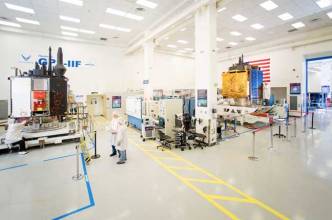
Lockheed Martin to Test GPS III in Virtual World

Collaborative Human Immersive Laboratory (CHIL) illustration (Lockheed Martin)

GPS III contractor Lockheed Martin has integrated several virtual reality technologies in a new Collaborative Human Immersive Laboratory (CHIL) in Littleton, Colorado, which will be used to validate and test next-generation GPS and other space programs.

With CHIL, Engineers and technicians can explore satellite designs and functions, troubleshoot and fine-tune them in a virtual world before building them in physical space.

Read More >

By Inside GNSS
[uam_ad id="183541"]
January 18, 2011

Symmetricom Launches CSAC Product for Precise Timing and Synchronization

After eight years of successful participation in the Defense Advanced Research Projects Agency (DARPA) chip scale atomic clock (CSAC) initiative, Symmetricom, Inc., announced today (January 18, 2011) the general availability of what it says is the world’s smallest, lowest power atomic oscillator: a 16 cubic-centimeter unit weighing less than 35 grams (about 1.25 ounces) and operating on only 115 milliwatts of 3.3 VDC power.

Read More >

By Inside GNSS
January 9, 2011

Indian Regional Navigation Satellite System

FIGURES 1, 2 & 3

For the complete story, including figures, graphs, and images, please download the PDF of the article, above.

In satellite navigation, a GNSS receiver must account for several sources of error such as relativistic effects, atmospheric propagation delay, offset of satellite clocks from system time and satellite ephemeris. In order to accurately compute user position, velocity, and time (PVT), these errors need to be predicted/estimated precisely.

Read More >

By Inside GNSS
January 4, 2011

GPS Programs Push Ahead

The GPS program continues progress on several fronts — in space and on the ground.

During fall 2010, the U.S. Air Force and the Raytheon Company team developing the GPS Advanced Control Segment (OCX) successfully carried out an integrated baseline review (IBR) for the next-generation system on schedule.

When completed in 2015 under the current schedule, GPS OCX will deliver control segment enhancements designed to provide secure, accurate and reliable navigation and timing information to military, commercial and civil users.

Read More >

By Inside GNSS
December 31, 2010

Handicapping the GNSS Horse Race

Horses racing by Margret Hofheinz-Doering 1956

Return to "GNSS Year in Review"

We’ve come a long ways from the attitudes of the Cold War environment in which the Global Positioning System and GLONASS programs arose.

But that doesn’t mean that GNSS competition is a thing of the past. Indeed, the second most-read item on the Inside GNSS website during this year was a March 2009 article entired “GPS, GLONASS, Galileo, Compass: What GNSS Race? What Competition?”

Read More >

By Inside GNSS
December 30, 2010

GPS Directorate Completes Annual AGER Review

Col. Bernard Gruber

The GPS Directorate completed its second Annual GPS Enterprise Review (AGER) on December 17, concluding that the program has achieved major milestones in developing and deploying modernized GPS capabilities.

Col. Bernard Gruber, GPS program director at the Space and Missile Systems Center, Los Angeles Air Force Base, led his team through a Defense Acquisition Board (DAB) review chaired by Frank Kendall, deputy undersecretary of defense for acquisition, technology and logistics, and attended by other senior Department of Defense (DoD) officials.

Read More >

By Inside GNSS
1 56 57 58 59 60 68
IGM_e-news_subscribe