Protecting the UK Infrastructure
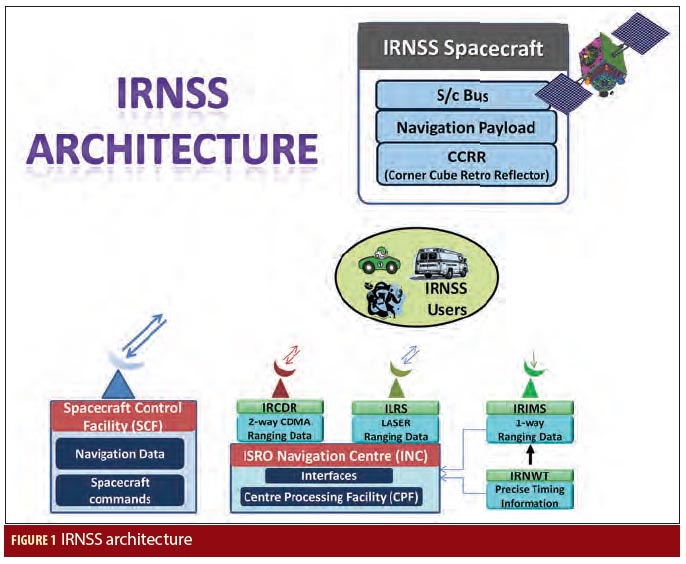
FIGURE 1: Simplified probe architectureGNSS vulnerability is rightly one of the most talked about topics of 2011.
By Inside GNSS
FIGURE 1: Simplified probe architectureGNSS vulnerability is rightly one of the most talked about topics of 2011.
By Inside GNSS
FIGURE 1: GPS III On OrbitIn May 2008, Lockheed Martin Space Systems Company received a contract from the U.S. Air Force to develop a new, third generation of GPS satellites. The GPS III space vehicle (SV) has been designed (Figure 1, see inset photo, above right) and is now being built to bring new future capabilities to both military and civil positioning, navigation, and timing (PNT) users throughout the globe.
By Inside GNSS
Raytheon Corporation illustrationMembers of the Advanced Control Segment (OCX) team led by Raytheon Corporation are working through a series of issues that has delayed approval of a recent preliminary design review (PDR) on the key GPS modernization program.
By Inside GNSS
One of 12 magnetograms recorded at Greenwich Observatory during the Great Geomagnetic Storm of 1859
1996 soccer game in the Midwest, (Rick Dikeman image)
Nouméa ground station after the flood
A pencil and a coffee cup show the size of NASA’s teeny tiny PhoneSat
Bonus Hotspot: Naro Tartaruga AUV
Pacific lamprey spawning (photo by Jeremy Monroe, Fresh Waters Illustrated)
“Return of the Bucentaurn to the Molo on Ascension Day”, by (Giovanni Antonio Canal) Canaletto
The U.S. Naval Observatory Alternate Master Clock at 2nd Space Operations Squadron, Schriever AFB in Colorado. This photo was taken in January, 2006 during the addition of a leap second. The USNO master clocks control GPS timing. They are accurate to within one second every 20 million years (Satellites are so picky! Humans, on the other hand, just want to know if we’re too late for lunch) USAF photo by A1C Jason Ridder.
Detail of Compass/ BeiDou2 system diagram
Hotspot 6: Beluga A300 600ST

1. AQUARIUS
Buenos Aires, Argentina and Vandenberg AFB, California, USA
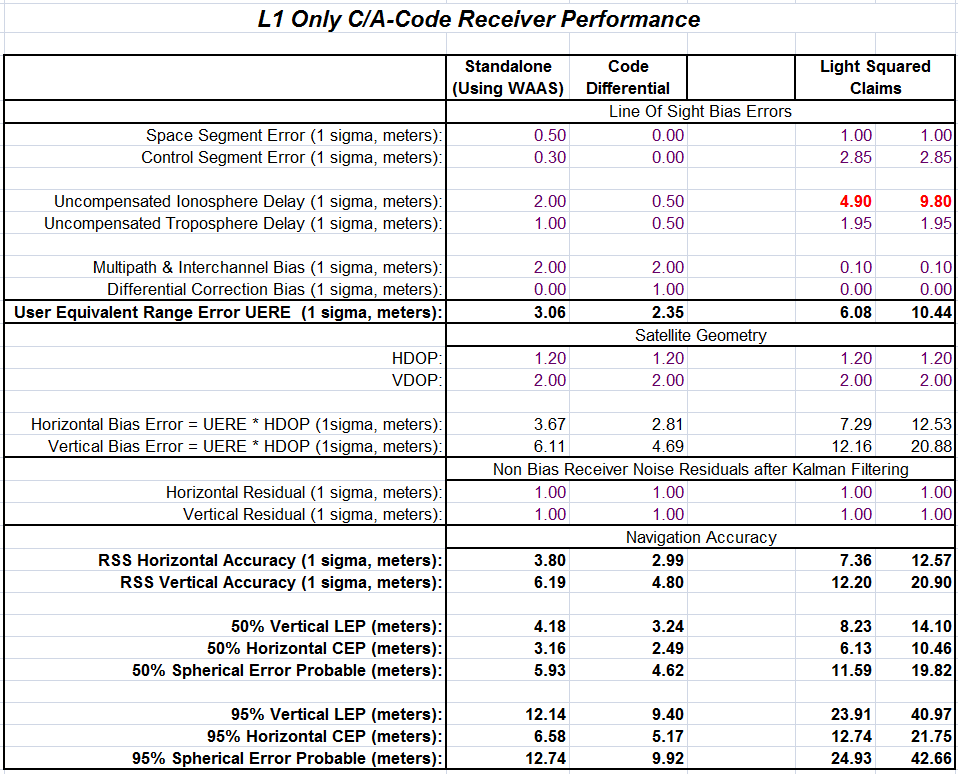
What have we learned from the LightSquared fiasco?
Aside from the fact that someone gambling with other people’s money, with friends in high places benefiting from his largesse, can make the law stand on its head and our hair stand on end.
But then, we already knew that.
Just because the forces behind the broadband cellular company, Philip Falcone and Harbinger Investments, made their money by betting against the housing bubble doesn’t take away from the fact that they represent the same crew who helped take down the world economy in 2007.
By Inside GNSS
GPS III satellite. Lockheed Martin illustrationLockheed Martin has announced the successful, on-schedule completion of a system design review (SDR) for the second-phase of next-generation GPS satellite development, the IIIB increment.
The company’s Space Systems division in Newtown, Pennsylvania, is under contract to produce the first two of a planned eight GPS IIIA satellites, with first launch projected for 2014. The contract includes a Capability Insertion Program (CIP) designed to mature technologies and perform rigorous systems engineering for future GPS III increments.
By Inside GNSS
FIGURE 1: System architectureCooperative vehicle safety applications should preferably have two-meter horizontal accuracy and six-meter vertical accuracy, all with a 95-percent availability. The solution must be developed to incorporate lower-cost sensor options, specifically, lower-cost inertial measurement units that can be generally characterized by the gyro drift of 100 degrees per hour and an accelerometer bias force of twice its mass times gravity (two milligals).
By Inside GNSS
The House Appropriations Committee approved its version of the Fiscal Year 2012 (FY12) Department of Defense Appropriations Act (H.R.2219) on June 14, cutting funds from the next-generation GPS space (GPS III) and operational control (OCX) segments, while adding money to the current GPS IIF satellite allocation.
By Inside GNSS
Lockheed Martin Space Systems Company, which is developing the GPS IIIA generation of satellites,
announced today (June 14, 2011) a 7.5 percent reduction in its
workforce designed to “address affordability” and improve the company’s
“competitive posture.”

The recent release of the 2010 Federal Radionavigation Plan (FRP) marks the passage of a recurring milestone for the U.S. positioning, navigation, and timing (PNT) community.
By Inside GNSS
Mike Dyment, General Partner, NextGen Equipage Fund LLC» Air Traffic Control Modernization (PDF)
In between partisan confrontations around the 2011 federal budget and raising the U.S. debt limit, prospects are improving for federal legislation that would provide the Federal Aviation Administration (FAA) with a regular full-year budget for the first time since Fiscal Year 2007 — including support for completing the transition to a GNSS-driven air traffic control (ATC) system known as NextGen and a “public-private partnership” to equip aircraft with the needed avionics.
By Inside GNSS
Resolution of the between Congressional Republicans and Democrats that threatened a shutdown of the federal government has clarified the picture for military GPS programs in the coming year, although prospects for the civil side remain uncertain.
On April 15, 2011, President Obama signed the Department of Defense and Full-Year Continuing Appropriations Act, 2011 (H.R. 1473, Public Law 112-10), the last in a series of government-wide funding measures for Fiscal Year 2011 (FY11).
By Inside GNSSThe demand for techniques capable of authenticating the GNSS signals and detecting simulation attacks (spoofing) has increased exponentially in the last years, mainly targeted to financial and safety critical applications.
Associated proposals and developments addressing these issues focused on two different approaches: user segment authentication services that leveraged existing services in order to detect signal spoofing and that integrated signal authentication services into the GNSS system itself.
By Inside GNSS