A: System Categories

April 17, 2010

GAGAN Delayed Again

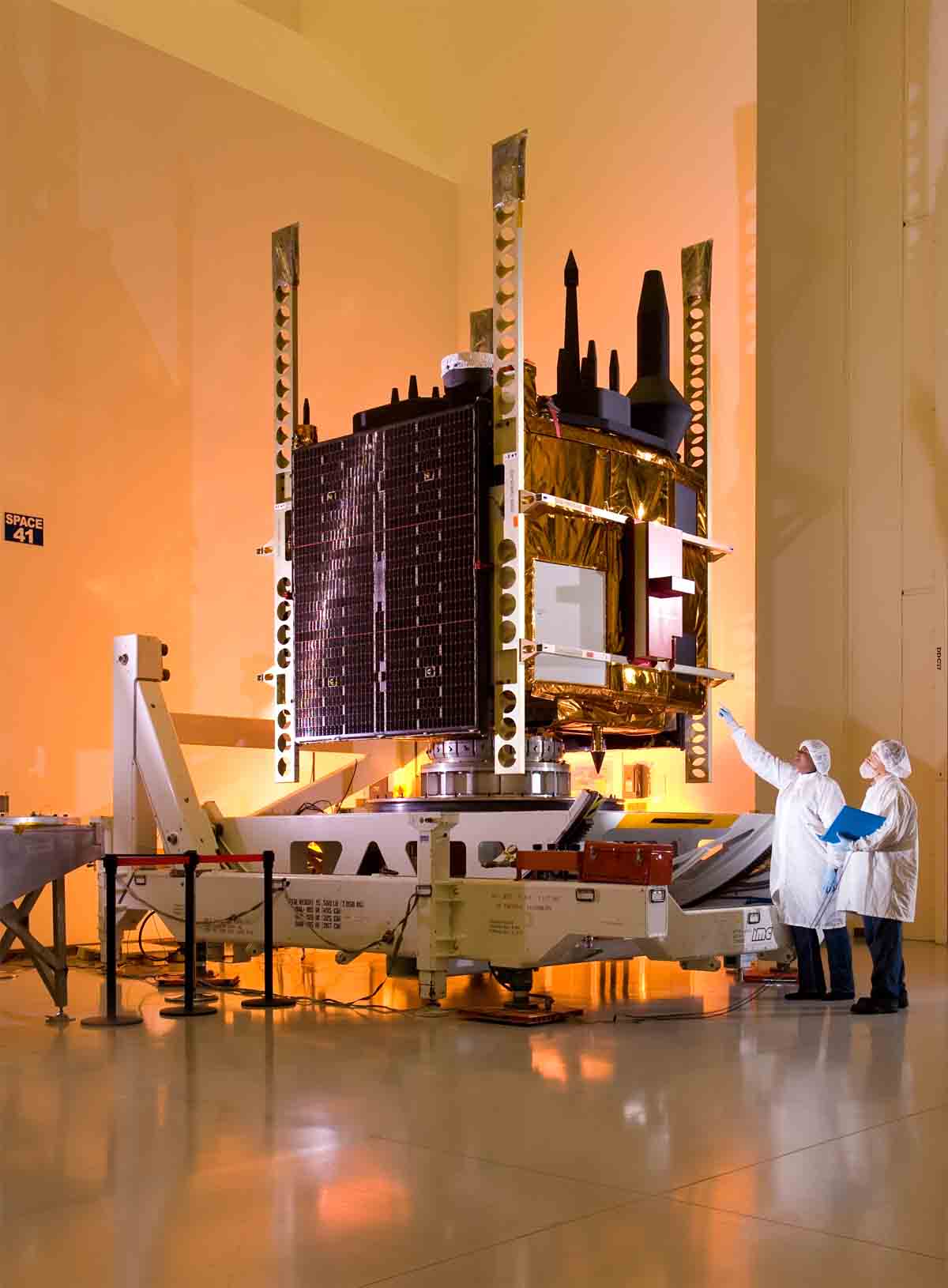
ISRO GSAT-4 satellite

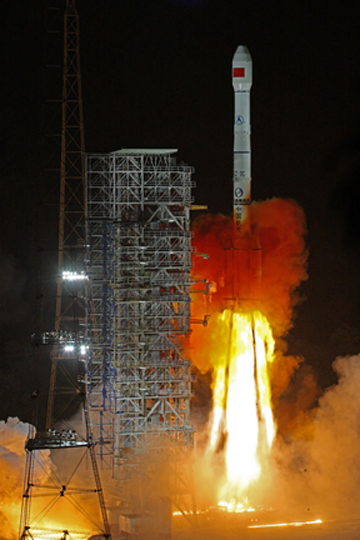
India’s first GPS/SBAS payload, the GAGAN (GPS-Aided Geo-Augmented Navigation system) transmitter on the GSAT-4 geostationary satellite, disappeared into the Bay of Bengal on April 15 when its ill-fated GSLV-D3 launch vehicle veered off course.

The Indian Space Research Organization’s GSAT-4 satellite carried a communication payload of multi-beam Ka-band pipe and regenerative transponder and a navigation payload in C, L1 and L5 bands.

A key part of India’s GPS augmentation plan, the failure will further delay civil aviation modernization.

Read More >

By Inside GNSS
April 14, 2010

EC Liberates Galileo ICD Signal Specification

Today’s (April 13) release of an updated “Galileo Open Service Signal-In-Space Interface Control Document” (OS SIS ICD) freed the key specification document in two senses of the word: receiver manufacturers, application developers and service providers may now use the ICD as an official — not draft — guide to their work, and they may do so at no cost

The t’s have been crossed and the i’s dotted to the satisfaction of lawyers and politicians — and the relief of designers and system integrators eager to begin work on Galileo-capable products without fear of having substantive changes in the specifications and legal or financial difficulties for moving ahead.

Read More >

By Inside GNSS
[uam_ad id="183541"]

FAA Predicts Erosion of GPS WAAS Service Due to Intelsat GEO Failure

Galaxy 15 satellite under construction. Orbital Sciences photo

[updated April 13] Federal Aviation Administration (FAA) officials say that loss of control over an Intelsat geostationary (GEO) carrying a GPS Wide Area Augmentation System (WAAS) transponder could subject users in the National Air Space (NAS) to temporary outages for the rest of this year, beginning within the next two to four weeks as the GEO drifts out of a useable orbit.

Intelsat S.A. announced the anomaly in Galaxy 15 (G-15) on April 8. Although the communications services provided by G-15, located at 133 degrees west longitude (WL), have not been affected, according to Intelsat, the satellite apparently is not responding to commands by controllers. The anomalous condition began on April 3, according to the FAA.

The Luxembourg-based Intelsat is moving an older spacecraft (G-12) that serves as a backup for G-15 from its location at 123 degrees WL. However, G-12 does not have an L-band transponder, which is needed for WAAS transmissions.

Read More >

By Inside GNSS

GPS Partnership Council Meeting 2010

The tenth GPS Partnership Council meeting will take place at the Space and Missile Systems Center, Los Angeles Air Force Base, on May 4 and 5, 2010.

The theme is "Advancing PNT Changes Today…Securing the World’s Needs Tomorrow." Conference sessions will take place at the Gordon Conference Center (Building 270).

Read More >

By Inside GNSS
April 10, 2010

U.S. Invites Comments for Easing GPS SVN49 Signal Anomaly

(This article first appeared in the March 31 Inside GNSS SIGNALS eNewsletter)

The GPS Wing is in the middle of a yearlong process designed to sort out the trade-offs among a set of at least nine options that may be undertaken to reduce the effects of a signal anomaly on the GPS satellite known as SVN49.

In a March 26 teleconference, the first of two scheduled to discuss the options, Lt. Col. James Lake, the wing’s deputy chief engineer, emphasized that some of the options could well improve the performance of some receivers while decreasing that of others.

He underlined the Air Force’s concern that receivers that don’t conform to the specification for GPS space segment/navigation user interfaces (IS-GPS-200) "greatly complicate the issue."

Read More >

By Inside GNSS
[uam_ad id="183541"]

GNSS Opportunities Help Drive UK to Set Up National Space Agency

British Prime Minister Gordon Brown visits the Geospatial Building at the University of Nottingham. Photo courtesy of GRACE

(This article first appeared in the March 31 Inside GNSS SIGNALS eNewsletter)

Driven in part by a prestigious Space Innovation and Growth Strategy (Space IGS) report suggesting that the nation has lost both the best industrial work and the ability to influence programs such as Galileo, the United Kingdom will establish a new national space agency on April 1.

Read More >

By Inside GNSS
April 9, 2010

Canada to Decommission DGPS System

CDGPS coverage map. NRCan image

The Canada-wide DGPS Service (CDGPS), a free GNSS augmentation system initiated by the Canadian Council on Geomatics (CCOG) in 2003, will be decommissioned by March 31, 2011, according to Gary Sawayama, the system’s general manager.

The CDGPS L-band broadcast has been carried by SkyTerra Communications Inc.’s MSAT communications satellites, which are expected to be replaced this year by the next-generation SkyTerra satellites. Significant new investment in infrastructural changes would be required to migrate to a new communication satellite.

Read More >

By Inside GNSS

2010 Indoor Positioning and Indoor Navigation (PIN)

“Science City” campus of ETH, Zurich

The International 2010 PIN Conference and industry exhibition will take place at the Swiss Federal Institute of Technology (ETH) in Campus Science City (Hoenggerberg), Zurich, Switzerland from September 15 to 17 2010.

Organizers call it the largest meeting dedicated entirely to indoor positioning, with 196 announced abstracts from 36 countries.

Read More >

By Inside GNSS
March 29, 2010

European Space Weather Week 2010

Solar flare (NASA)

The 7th Space Weather Week will take place at Congress Centre Oud Sint-Jan in Bruges, Belgium from November 15 to 19 2010. The purpose is to bring the various countries and institutions of Europe together on space weather issues that concern them all.

It is organized by the European Space Agency, the Royal Observatory of Belgium, the Solar-Terrestrial Center of Excellence, and the European Commission COST office.

Read More >

By Inside GNSS
IGM_e-news_subscribe