

A: System Categories

Won’t Get Fooled Again

How many times, as some once-promising politician stumbles up against his pull date, have we heard that irreverent anthem of The Who invoked?

Thousands? Millions?

Yes, back in the wreckage of the second George Bush’s second term, Barack Obama looked pretty good by comparison. Even then, though, raising the banner of “Hope” before the eyes of a desperate nation was a risky thing to do.

Read More >

By Inside GNSS

Multi-GNSS Monitoring

Tim Springer, PosiTim UG

A common refrain in the world of GNSS is the desire for “interoperability,” the use of signals from multiple systems without a decline — and potentially even an improvement — in the quality of results.

Achieving this depends on large part in establishing comparable parameters — particularly the geodetic references and timing systems — among the GNSSs along with a dense network of ground reference stations that can provide continuous, precise monitoring of satellites’ orbital positions.

Read More >

By Inside GNSS
[uam_ad id="183541"]
January 19, 2014

Ionospheric Scintillation

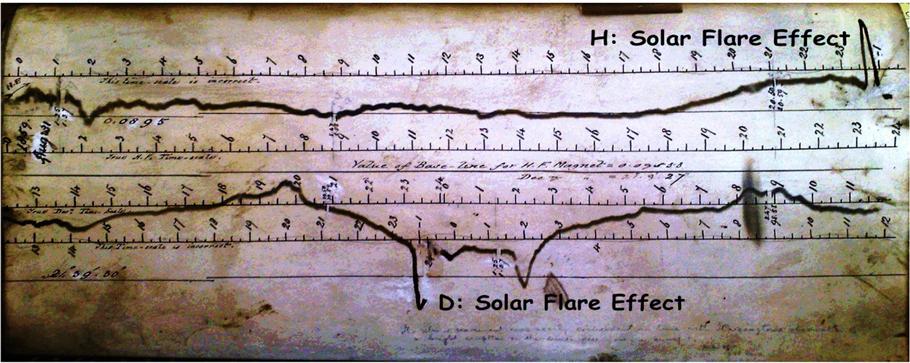
Ionospheric scintillations are rapid temporal fluctuations in both amplitude and phase of trans-ionospheric GNSS signals caused by the scattering of irregularities in the distribution of electrons encountered along the radio propagation path. The occurrence of scintillation has large day-to-day variability. The most severe scintillations are observed near the poles (at auroral latitudes) and near the equator (within ± 20 degrees of geomagnetic equator).

Read More >

By Inside GNSS

Proposal for U.S. eLoran Service Gains Ground

Trying to revive a years-dead federal program is usually the kind of hopeless task that even Sisyphus wouldn’t touch.

But determined supporters of eLoran are gaining ground in their effort to resurrect the cancelled radio-navigation network and, propelled by new worries over GPS jamming, they appear poised push the issue through.

Read More >

By Dee Ann Divis

Marc Weiss

Weiss at the helm during sailboat outing to San Juan Islands (top), Marc Weiss and wife, Pam (bottom)

SIDEBAR: Marc Weiss’ Compass Points

In a career spanning nearly the entire history of GNSS-enhanced metrology, Marc Weiss has been a key participant in projects that laid the foundation for accurate synchronization of atomic clocks around the world.

Read More >

By Inside GNSS
[uam_ad id="183541"]

Reaching for the STARx

Equation 1

GNSS modernization includes not only the global coverage capabilities of GPS, GLONASS, Galileo, and BeiDou, but also regional GNSS enhancement systems such as Japan’s Quasi-Zenith Satellite System (QZSS), the Indian Regional Navigation Satellite System (IRNSS), and the European Geostationary Navigation Overlay Service (EGNOS).

Read More >

By Inside GNSS
January 16, 2014

Galileo Funding, Satellite Tests Move Program Back on Track

Approval by the European Parliament of the new 2014-2020 European Union (EU) budget last November was widely seen as a step in the right direction for the 28-nation union, after more than a year of sometimes bitter monetary wrangling.

The Parliament quickly followed the move by voting to approve the financing and governance of Europe’s satellite navigation program over the same period. The measure passed the Parliamentary ballot by an impressive margin, with 603 votes in favor, 29 against, and 59 abstentions.

Read More >

By Inside GNSS
January 11, 2014

2014 Geospatial World Forum

The Geospatial World Forum and industry exhibition will be held at the Centre International de Conférences Genève (CICG), Geneva, Switzerland on May 5-9, 2014.

The call for abstracts has closed. Early registration is open until February 15, late registration will be from February 16 to April 25. Spot registration is available after April 25.

This year’s theme is "geoSMART Planet: Resources + Infrastructure & YOU!" Program highlights include:

Read More >

By Inside GNSS
January 9, 2014

Baška GNSS Conference 2014

The 8th annual conference on the Croatian Adriatic aims at GNSS experts and and focuses on GNSS resilience and GNSS applications development. It will take place at Baška on the resort island of Krk in Croatia from May 7 to May 9, 2014.

The deadline for abstracts is March 1, 2014.

Topics include:

  • core satellite navigation systems’ developments and modernisation,
  • satellite-based augmentation systems (SBAS),
  • space weather and ionospheric effects on GNSS performance and operation,
  • GNSS applications for air, marine, land and personal navigation, Location-Based Services, Intelligent Transport Systems, and Search and Rescue (SaR) operations,
  • resilience development againts natural (space weather and ionospheric) and artificial (jamming, spoofing and meaconing) disruptions of GNSS services
  • statistical and digital signal processing for electronic navigation and weak signal detection,
  • GNSS receiver design (including Software-Defined and Cognitive Radio),
  • GNSS education and professional advancement,
  • advanced multidisciplinary GNSS applications (in geomatics, transport, predictive analytics, remote sensing, agriculture, geodesy, forestry, tourism, environment protection, meteorology and science),
  • GNSS advancements, parallels and alternatives,
  • regulatory and legal aspects of GNSS utilisation,
  • Special session: space weather effects on GNSS performance and operation
  • Special session: statistical signal processing and Bayesian estimation for satellite navigation, and
  • Special session: Intelligent Transport Systems (ITS)

The Royal Institute of Navigation, London, UK, Faculty of Maritime Studies, University of Rijeka, Croatia and Faculty of Transport and Traffic Sciences, University of Zagreb, Croatia, and is technically co-sponsored by Beihang University of Aeronautics and Astronautics, Beijing, China.

For more information, contact Ms. Sally-Anne Cooke, the RIN conference and events manager at co********@*****rg.uk

By Inside GNSS
IGM_e-news_subscribe