New GPS Director Brings Technical, Space Program Background

With experience in satellite procurement, user equipment development and working with Congress, Col. Steven Whitney may be just the chief the GPS Directorate needs.
By Inside GNSS
With experience in satellite procurement, user equipment development and working with Congress, Col. Steven Whitney may be just the chief the GPS Directorate needs.
By Inside GNSS
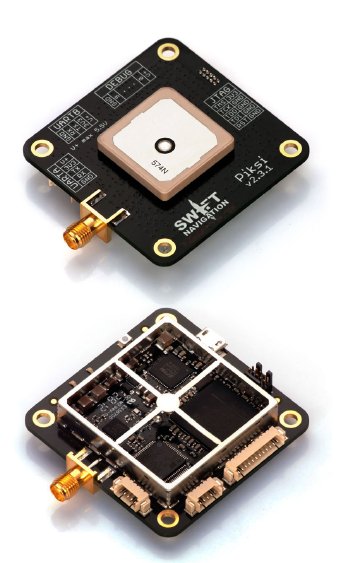
Unicore UR380 GNSS Receiver with UB380Unicore released UB380 GPS/GLONASSS/BDS high precision board at ION GNSS+ 2015, held this week in Tampa, Florida.
UB380 is a 384-channel, multi-GNSS receiver that supports GPS, GLONASS, and the BeiDou Satellite System (BDS) based on Unicore’s multi-GNSS system on a chip. The receiver board can support GPS L1, L2, and L5; GLONASS L1, L2; and BDS B1, B2 and B3.
By Inside GNSS
UNAVCO has announced the selection of Septentrio to be the preferred vendor of next-generation GNSS reference stations for the Geodesy Advancing Geosciences and EarthScope (GAGE) Facility. The preferred vendor status is valid through the duration of the GAGE Facility Cooperative Agreement with the National Science Foundation (NSF).
With a successful September 10/11 launch under its belt, the Galileo program continues to move in the right direction, but proponents should be cautious about overstating the rate of progress, lest too-hopeful forecasts come back to bite them (again).
The September 11 European Space Agency (ESA) press release featured a headline proclaiming that 10 Galileo satellites are now in orbit, and while technically that may be true, it bears considering whether the 10 satellites in question are all they’re cracked up to be.
By Inside GNSS

Rockwell Collins DAGR. From Wikimedia CommonsThe GPS Directorate wants industry to more quickly develop innovative user equipment that integrates both the modernized GPS signals and signals from international constellations like Galileo.
“In the future,” said the organization’s new director, Col. Steve Whitney, “it’s going to be important that our industry partners and the Directorate investigate ways to pull in these new signals — and that includes some of the non-GPS signals — into our user equipment.”
By Inside GNSS
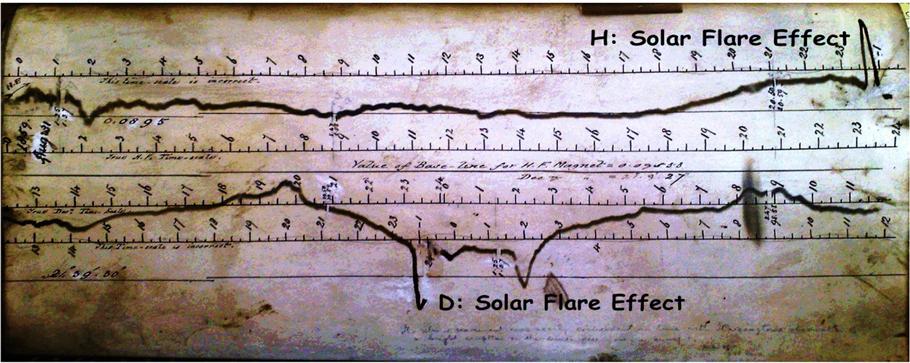
One of 12 magnetograms recorded at Greenwich Observatory during the Great Geomagnetic Storm of 1859
1996 soccer game in the Midwest, (Rick Dikeman image)
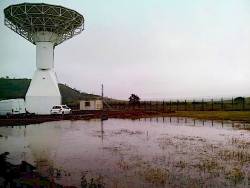
Nouméa ground station after the flood
A pencil and a coffee cup show the size of NASA’s teeny tiny PhoneSat
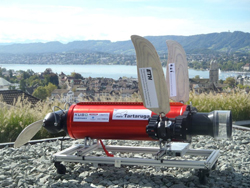
Bonus Hotspot: Naro Tartaruga AUV
Pacific lamprey spawning (photo by Jeremy Monroe, Fresh Waters Illustrated)
“Return of the Bucentaurn to the Molo on Ascension Day”, by (Giovanni Antonio Canal) Canaletto
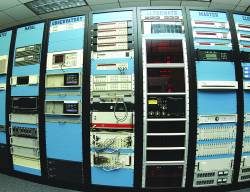
The U.S. Naval Observatory Alternate Master Clock at 2nd Space Operations Squadron, Schriever AFB in Colorado. This photo was taken in January, 2006 during the addition of a leap second. The USNO master clocks control GPS timing. They are accurate to within one second every 20 million years (Satellites are so picky! Humans, on the other hand, just want to know if we’re too late for lunch) USAF photo by A1C Jason Ridder.
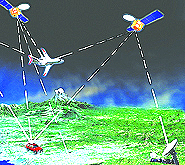
Detail of Compass/ BeiDou2 system diagram
Hotspot 6: Beluga A300 600ST

1. I LOVE MY JOB BUT…
Bakersfield, California USA
Falls Church, Virginia, c. 1861NavtechGPS Fall Mission Critical GNSS Training Seminars 2015 will take place at the Westin Tysons Corner Hotel in Falls Church, Viginia (Washington, D.C. area), November 2-6, 2015.
Special hotel rate if booked by October 12, 2015.
Course 556 starts on November 2, 2015. Courses 122 and 346 will start on November 3, 2015.
By Inside GNSSTwo Galileo satellites were carried into space today (September 10, 2015) with a successful launch at 10:08 p.m. (EDT) ((02:08 GMT on September 11) from the Soyuz Launch Complex at the European spaceport in French Guiana.
By Inside GNSS

A new federal watchdog report released yesterday (September 9, 2015) questions the outlook for the still-developing GPS ground control system saying the Pentagon may not fully understand the true cause of ongoing problems in a program where further delays “may likely pose significant risks to sustaining the GPS constellation and delivering GPS capability.”
By Inside GNSS
The incorporation of GNSS and inertial technologies is helping drive an explosion of systems development and applications of unmanned systems. On Tuesday, September 29, Inside GNSS and NovAtel will present a FREE 90-minute web seminar showcasing some of these applications, including the use of remote sensing technologies to assess pest populations in commercial crops and to conduct infrastructure inspections, with the aid of air and ground vehicles.
Register now for Tuesday, September 29, 2015: 9 am PDT
By Inside GNSS
Federal officials have released a draft of their plan to determine the amount of interference satellite navigation receivers can tolerate from users in neighboring frequencies. The tests, proposed after the Federal Communications Commission (FCC) froze a controversial wireless broadband system, would accelerate research on GNSS receivers that process signals from multiple satellite constellations.
By Inside GNSSWhen China joined the GNSS club in 2007, it turned a satnav triumvirate into a quartet.
But some of the limelight needs to fall a little further from center stage — out there where the Indian Regional Navigation Satellite System (IRNSS) and Japan’s Quasi-Zenith Satellite System (QZSS) are not waiting idly in the wings.
By Inside GNSS
John and his wife, Cindy.With an imposing 6’2” physique and a disarming grin, John Raquet rises above the crowd. To colleagues he’s a top-flight engineer and university professor, and director of the Air Force Institute of Technology (AFIT) Autonomy and Navigation Technology Center. But he is also a former all-star basketball player, a preacher, sometime soccer coach, former military officer, and, most definitely, a family man.
By Inside GNSS