Hemisphere GPS Announces LX-2 L-Band OEM Board for Crescent and Eclipse GPS Receivers
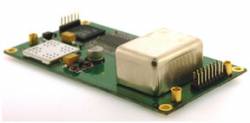
Hemisphere GPS LX-2Hemisphere GPS has introduced its LX-2, a second-generation L-band differential GPS OEM receiver board.
By Inside GNSS
Hemisphere GPS LX-2Hemisphere GPS has introduced its LX-2, a second-generation L-band differential GPS OEM receiver board.
By Inside GNSS
Bliley GMX1001Bliley Technologies, Inc., has unveiled two GPS frequency and timing modules at the 2011 IEEE MTT-S International Microwave Symposium taking place this week (June 5–10, 2011) in Baltimore, Maryland.
The company’s GMX1001 and GMM1002 modules launch a new product line for the company — introducing the first in a series of next-generation technologies for the Erie, Pennsylvania–based company.
By Inside GNSS
The Space-Based PNT National Coordination Office is located in the Dept. of Commerce Hoover BuildingRepresentatives from the Federal Aviation Administration (FAA), LightSquared, and Trimble will weigh in on the GPS vs. LightSquared interference at the afternoon session of a National Space-Based Positioning, Navigation and Timing (PNT) Advisory Board meeting tomorrow (June 9, 2011).
By Dee Ann Divis
A belated response from Julius Genachowski, Federal Communications Commission (FCC) chairman to Republican Senator Charles Grassley’s request for documents surrounding the LightSquared effort to broadcast near the GPS L1 band appears unlike to satisfy either Grassley or the GPS community.
By Inside GNSS
An informal discussion at the 2010 symposium.The Symposium Gyro Technology has changed its name to Inertial Sensors and Systems because of the expanded focus and scientific topics covered at recent conferences. It will take place at the Karlsruhe Institute of Technology in Karlsruhe, Germany on September 21 and 21, 2011. The conference will be held in English.
By Inside GNSS
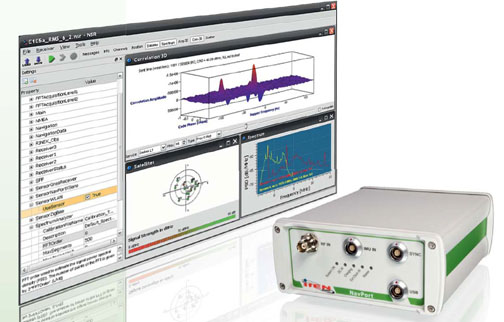
IFEN’s SX-NSR Multi-Channel, Multi-GNSS ReceiverIFEN GmbH has begun shipping the first units of its new second-generation, multi-frequency and multi-GNSS software receiver — the SX-NSR.
The Poing, Germany–based company has also announced that the Galileo Test and Development Environment (GATE) facility that it instrumented and operates near Berchtesgaden for the German Space Agency (DLR) has been certified as a Galileo open-air test laboratory conforming to ISO 17025.
By Inside GNSSQualcomm Incorporated has announced the company’s product support for the Russian GLONASS satellite system to enable the use of both GPS and GLONASS networks simultaneously for improved location performance.
The first GLONASS-capable phone is the MTS 945 from Chinese phone manufacturer ZTE developed with Russian chipset manufacturer AFK Sistema and powered by Qualcomm’s Snapdragon MSM7x30 chipset.
By Inside GNSS
Lt. Gen. Ellen Pawlikowsk. USAF photoOn Friday (June 3, 2011), Lt. Gen. Ellen M. Pawlikowski will assume command of the Space and Missile Systems Center at Los Angeles Air Force Base, California, where the GPS Directorate is located along with other space-related program offices.
By Inside GNSS
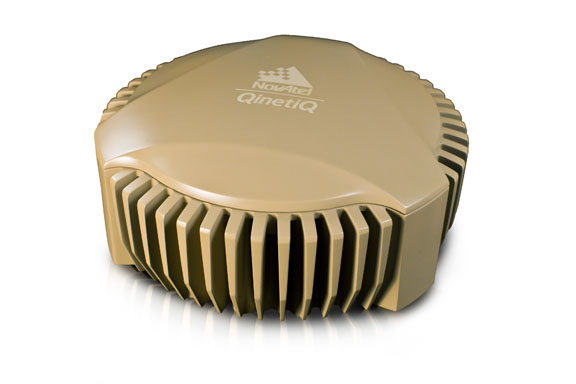
NovAtel Inc. in collaboration with QinetiQ Ltd. has developed GAJT (pronounced “Gadget”), the world’s first single-enclosure GPS anti-jam system small enough for light armored and other land-based military vehicles. GAJT combines NovAtel and QinetiQ technologies in a stand-alone, rugged enclosure that mounts to the exterior of vehicles.
GAJT is a seven element controlled reception pattern antenna (CRPA) that nulls jammers, ensuring GPS positioning capabilities are retained during combat, training, or other vehicle-based missions.
By Inside GNSS
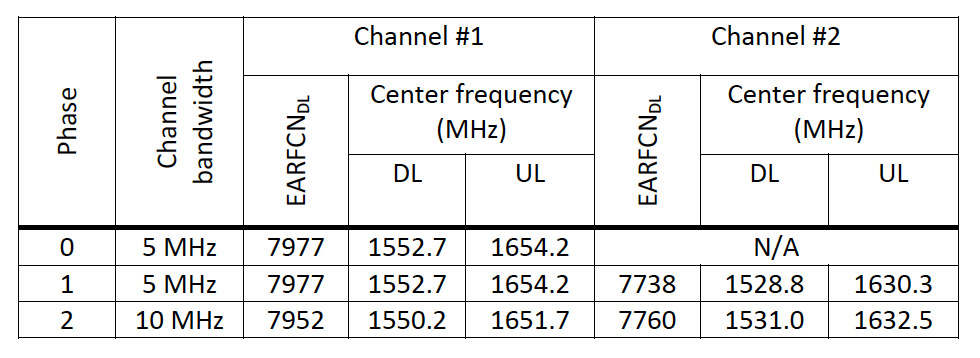
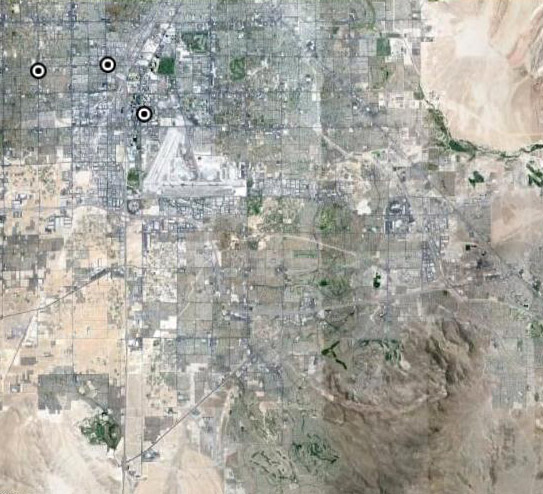
Las Vegas site for LightSquared/GPS testsTests of GPS receiver vulnerability to transmissions from terrestrial base stations in the proposed LightSquared 4G/LTE broadband service were scheduled to wrap up on May 27, but results as we post this message clearly indicate substantial adverse effects on GPS user equipment.
On June 1–2, the Technical Working Group (TWG) set up by the LightSquared-led working group mandated by the Federal Communications Commission (FCC) will have its first face-to-face meeting since the trials began to sort out the results.
By Inside GNSS
The Federal Communications Commission (FCC) report on the level of interference between LightSquared’s proposed mobile broadband network and GPS receivers is due in a couple of weeks. Meanwhile, the fight over final approval of the system has rolled into the halls of Congress.
On Thursday (May 26) the House approved an amended 2012 Defense Authorization bill requiring the Federal Communications Commission to withhold full approval of the LightSquared 4G-LTE system and disallow operations until interference issues with military receivers are resolved.
By Dee Ann DivisA new report by the American Meteorological Society (AMS) highlights the vulnerability of GPS-dependent critical infrastructures to disruptions caused by solar flares and other space weather events, and sets forth a series of recommendations for building robustness of the GPS service.
Entitled “Satellite Navigation & Space Weather: Understanding the Vulnerability & Building Resilience,” the report is based on a workshop organized by the AMS and held October 13–14, 2010 in Washington, D.C.
By Inside GNSS
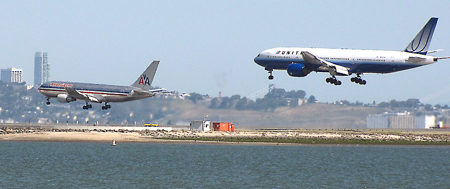
An executive summary of a special report by RTCA Inc. Special Committee 159 released today (May 27, 2011) indicates that GPS aviation receivers would experience serious interference from transmission planned by LightSquared in the upper portion of the 1525–1559 MHz spectrum adjacent to the GPS L1 band.
By Inside GNSS