Decoupling Civil Timekeeping from Earth Rotation
This colloquium will explore the implications of redefining UTC in astrodynamics, astornomy, geodesy, navigation, remote sensing and related fields.
By Inside GNSSThis colloquium will explore the implications of redefining UTC in astrodynamics, astornomy, geodesy, navigation, remote sensing and related fields.
By Inside GNSS
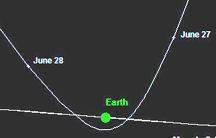
MD 2011 trajectory (NASA)A schoolbus-sized asteroid grazed the Earth’s atmosphere around 1:00 P.M. (EDT) on June 27. It was 7,600 miles (12,300 km) away at its closest point, at which time it veered away across the South Atlantic Ocean.
It actually passed through the GPS constellation, alerting us to the vulnerability of our vital PNT space vehicles. We can now add asteroids to the the list of GNSS collision risks that already includes other satellites and space debris.
By Inside GNSSOn June 27, the Supreme Court decided to accept a 2005 Washington D.C. warrantless tracking case that illustrates how confusing GPS satellite positioning and the new technologies that follow, sense and link us are to judges and public alike. The case, United States v. Jones, will probably be heard during the October 2011 term.
By Inside GNSS
Detail of India’s GAGAN system, from a presentation by Dr. S.V. Kibe. For full diagram:The communications satellite that carries India’s GPS-Aided Geo Augmented Navigation (GAGAN) system has been positioned, according to major news sources in India.
"The initial phase is now over. The satellite is now in position," Airports Authority of India chairman V.P. Agarwal said at a New Delhi workshop on aviation safety.
"We are now going through the certification stage of the Satellite-Based Augmentation System (SBAS) and we will have certification of the system by June 2013." he said, according to reports.
By Inside GNSSMuch of the research into the possible effects of the planned LightSquared cellular broadband transmissions near the GPS L1 band have focused on the saturation of the front end of GPS receivers caused by the high power of the terrestrial LightSquared base stations. In this article, an engineer with a long history in broadcast digital television takes a look at the likely effects on GPS receivers of third-order intermodulation products created by the LightSquared signals.
By Inside GNSS
The House Appropriations Committee approved its version of the Fiscal Year 2012 (FY12) Department of Defense Appropriations Act (H.R.2219) on June 14, cutting funds from the next-generation GPS space (GPS III) and operational control (OCX) segments, while adding money to the current GPS IIF satellite allocation.
By Inside GNSS
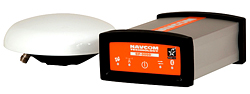
LightSquared’s proposed broadband service may cause trouble for GNSS receivers, such as this one, that use commercial satellite augmentation services. The Senate is considering establishment of receiver standards as part of a wide-ranging effort to find more frequencies for wireless broadband services, a move that could ultimately result in expensive new requirements for the GPS community.
By Inside GNSSThe U.S. House of Representatives Appropriations Committee today (June 23, 2011) approved action that would prevent the Federal Communications Commission (FCC) from expending any funds related to a conditional waiver it granted a company called LightSquared until all concerns have been resolved about interference with Global Positioning System (GPS).
By Inside GNSS
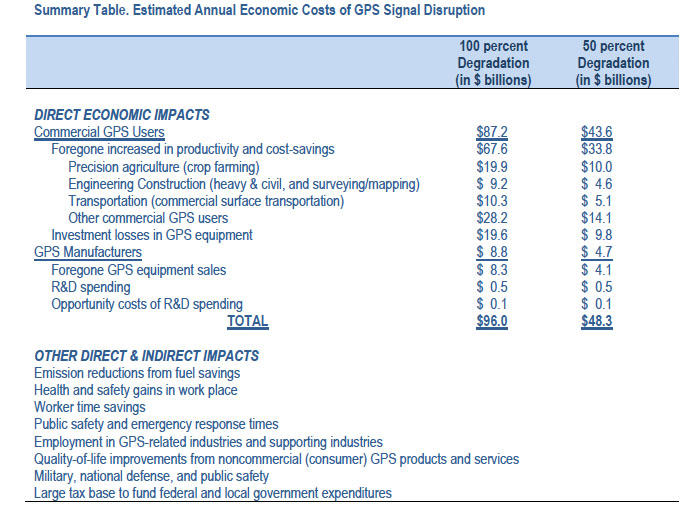
The report concerns economic effects on high precision commercial uses of GPS, such as precision agriculture. (U Calif. photo)Research released yesterday (June 22, 2011) indicates that interference from LightSquared cellular broadband transmitters could cost manufacturers and users of commercial GPS technology up to $96 billion in annual losses.
By Inside GNSS
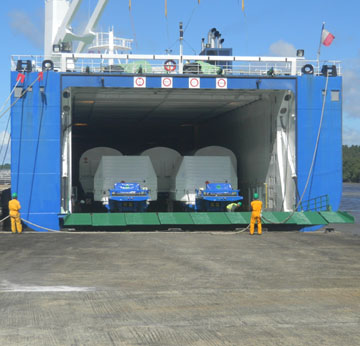
The two Soyuz ST-B launchers and Fregat-MT upper stages arrived at Kourou harbor on June 18 are the most powerful Soyuz-Fregat combination available, intended to launch the four Galileo IOV satellites. Arianespace photoSupporters of Europe’s Galileo system got some good news today (June 22, 2011) at the Paris Air Show: savings in the program have freed up funds that may be able to support acquisition of at least six additional spacecraft by 2014.
Taking part in a signing ceremony for the final Galileo work packages, European Commission Vice President Antonio Tajani announced that improved program management and cost-cutting by industry vendors could free up €300 million ($482.8 million) — enough to ensure that 24 satellites could be launched by 2015.
By Inside GNSS
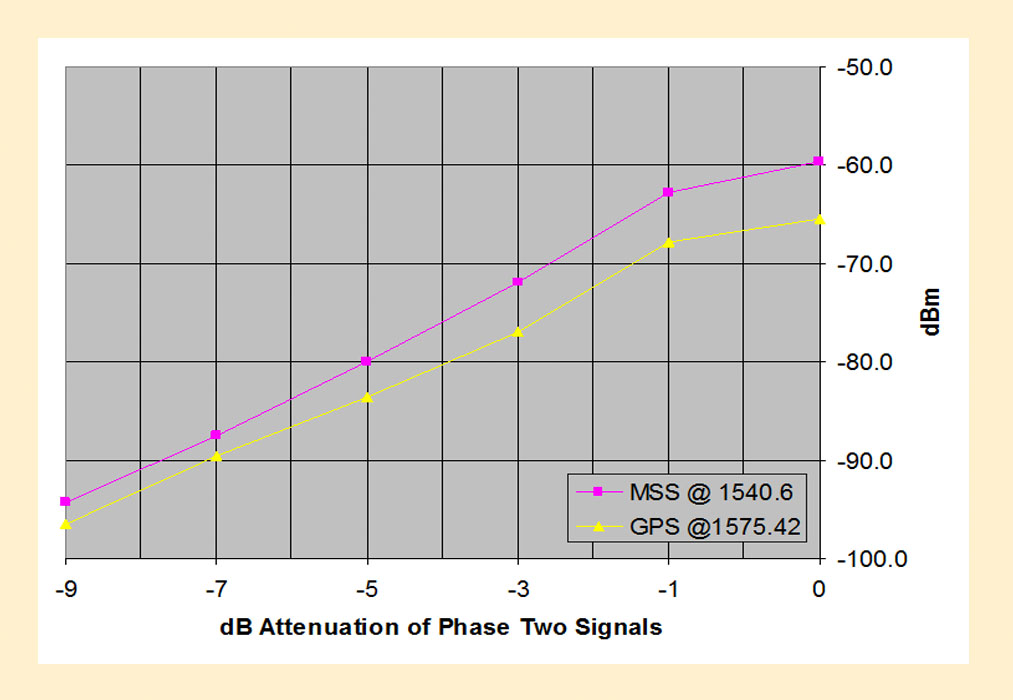
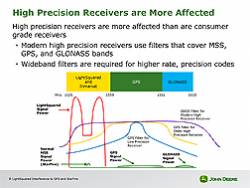
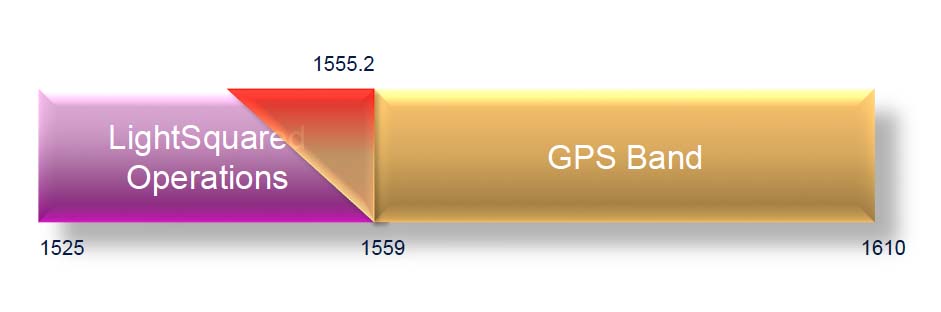
Results of John Deere test of LightSquared’s effect on high-precision GPS receiversIn what looks like a pre-emptive strike in the wake of extensive evidence that its proposed terrestrial wireless broadband transmissions will interfere with GPS receivers, LightSquared today (June 20, 2011) proposed to solve the problem by cut the power of its base stations in half and temporarily use a bandwidth further away from GPS.
By Inside GNSS
LightSquared graphicWith test results and congressional sentiment running against it, LightSquared has received a two-week extension for filing its report and recommendations, due to the Federal Communications Commission (FCC) yesterday (June 15, 2011), on likely interference to the GPS L1 band.
Meanwhile, a congressional critic of LightSquared’s effort to roll out a 4G/LTE broadband cellular service adjacent to the GPS frequency has called on the agency to rescind its waiver of limits on the company’s plans to build a high-powered national network of terrestrial transmitters.
By Inside GNSS
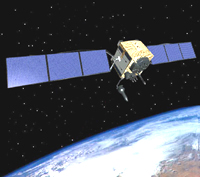
Successful completion today (June 15, 2011) of the rephrasing of the GPS constellation known as “Expandable 24,” has produced the most optimal geometry in the system’s 42-year history, maximizing GPS coverage for all users worldwide.
The 2nd Space Operations Squadron (2 SOPS) of the 50th Space Wing at Schriever Air Force Base, Colorado, successfully executed the two-phase expansion and repositioning of satellites, which improves global GPS coverage and provides a more robust signal and higher probability of signal acquisition in terrain-challenged environments.
By Inside GNSS