
Main Categories

December 19, 2017

Honeywell IMUs Bringing Pinpoint Navigation Accuracy to New Industries

The HG4930 is designed to meet the motion sensing needs of a range of applications across various markets. Photo courtesy of Honeywell Aerospace.

Long established as a key component within defense applications, navigation technology from Honeywell is now available to a wide range of new industries that can benefit from the advanced precision and performance of reliable, rugged and easy-to-install Inertial Measurement Units (IMUs).

Read More >

By Inside GNSS

December 15, 2017

Harris Corp. Delivers Fourth GPS III Satellite Navigation Payload; Establishing a Proven, Reliable Production Cadence

Completing the fourth delivery of 10 navigation payloads for Lockheed Martin’s GPS III satellites, Harris Corporation delivered the advanced navigation payload for the fourth GPS III Space Vehicle (SV04) to Lockheed Martin on October 29 – establishing a proven and reliable production cadence. Harris delivered two payloads in 2017 and is committed to delivering four more in 2018.

Read More >

By Inside GNSS

[uam_ad id="183541"]
December 7, 2017

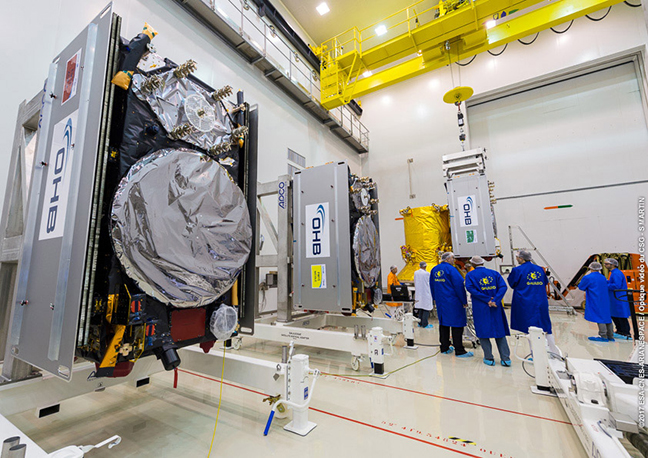
Ariane 5 Mission with 4 Galileo Satellites set for Dec. 12 Liftoff

UPDATE: Today’s the day. Check back to the Inside GNSS website for updates on today’s launch.

A European Ariane 5 rocket followed dual rail tracks across the Guiana Space Center in South America on Monday on the way to its launch complex Monday, a day before today’s scheduled blastoff with four satellites to expand the Galileo navigation network. Also, you can follow the launch live at Spaceflight.com.

Read More >

By Inside GNSS

November 30, 2017

Army Launches 5-Year PNT Technology R&D Program

The Army is kicking off a wide-ranging, five-year research effort to develop new position, navigation and timing (PNT) technologies for battlefield use.

The goal is to overcome technical barriers in a wide range of areas and military officials are offering to fund multiple, and even multi-phase, cost-plus-fixed-fee (CPFF) efforts to do that. The work may range from studies and analysis to development work that results in the production of a prototype-style deliverable or breadboard and/or a demonstration.

Read More >

By Dee Ann Divis
[uam_ad id="183541"]
November 27, 2017

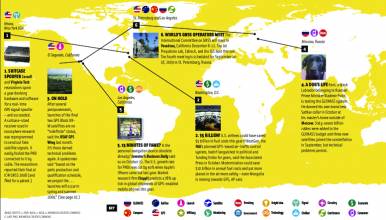
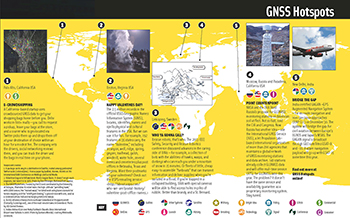
GNSS Hotspots | November 2017

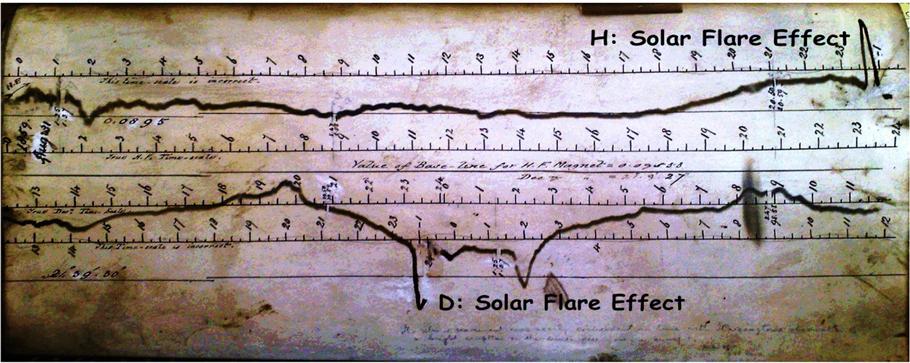
One of 12 magnetograms recorded at Greenwich Observatory during the Great Geomagnetic Storm of 1859
1996 soccer game in the Midwest, (Rick Dikeman image)
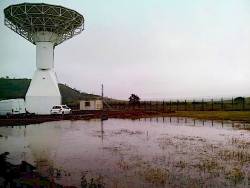
Nouméa ground station after the flood
A pencil and a coffee cup show the size of NASA’s teeny tiny PhoneSat
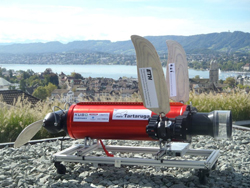
Bonus Hotspot: Naro Tartaruga AUV
Pacific lamprey spawning (photo by Jeremy Monroe, Fresh Waters Illustrated)
“Return of the Bucentaurn to the Molo on Ascension Day”, by (Giovanni Antonio Canal) Canaletto
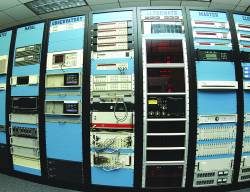
The U.S. Naval Observatory Alternate Master Clock at 2nd Space Operations Squadron, Schriever AFB in Colorado. This photo was taken in January, 2006 during the addition of a leap second. The USNO master clocks control GPS timing. They are accurate to within one second every 20 million years (Satellites are so picky! Humans, on the other hand, just want to know if we’re too late for lunch) USAF photo by A1C Jason Ridder.
Detail of Compass/ BeiDou2 system diagram
Hotspot 6: Beluga A300 600ST

1. Mapping Air Traffic, Rainy Seasons, and More
Sahel, Africa

Read More >

By Inside GNSS
Fundamental Rethink for Galileo Commercial Service

At the lavish European Satellite Navigation Competition Awards Ceremony, we caught up with Carlo des Dorides, general director of the European GNSS Agency (GSA), who updated us on the status of the much-anticipated Galileo Commercial Service (CS).

“On the CS, we are dialoging extensively with EU member states, because there is a more and more consolidated view that there could be an advantage to providing the service for free,” des Dorides said.

Read More >

By Peter Gutierrez

Ligado: Business and Network Plan Remain Unclear

A highly anticipated presentation by Ligado Networks to the nation’s leading satellite navigation experts took an unexpected turn when the company said it could not provide essential network information because it was looking to the government for technical direction and its business plans were still in flux.

Read More >

By Dee Ann Divis
IGM_e-news_subscribe