Galileo

Dorides to Head European GNSS Agency [updated]

[updated January 18, 2011] Carlo des Dorides has been named as the new executive director of the European GNSS Agency (formerly the Galileo Supervisory Authority or GSA).

He will succeed Heike Wieland, who leaves at the end of January to become principal legal council at the European Patent Office. Wieland served as GSA acting director following the departure of Pedro Pedreira last June.

Read More >

By Inside GNSS
January 9, 2011

A Model-Based Approach

For the complete story, including figures, graphs, and images, please download the PDF of the article, above.

Galileo receiver designers require formal interface specifications for the Galileo signal-in-space (SIS) in order to write unambiguous and accurate specifications for Galileo receivers. To compute their positions, Galileo receivers must be able to retrieve timing and orbital information from the data stream conveyed in Galileo analog signals.

Read More >

By Inside GNSS

GNSS Interference, Detection and Mitigation

Bushy House

Britain’s Position, Navigation and Timing Network of the Digital Systems
KTN (Knowledge Transfer Network) presents a one-day workshop on
"GNSS Interference, Detection and Mitigation."

Professor Martyn Thomas will present the
conclusions of the Royal Academy of Engineering report on GNSS vulnerability, which was released on March 8.  

The workshop will take place at Bushy House, National Physical Laboratory, Teddington, Middlesex on Thursday, March 10 2011 from 10 a.m. to 4 p.m.

Topics include:

Read More >

By Inside GNSS
[uam_ad id="183541"]
December 30, 2010

Europe’s Galileo Reaches Many 2010 Milestones – but Satellite Launches Still Delayed

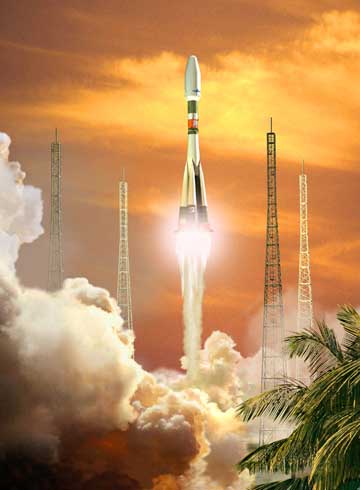
Soyuz launch of IOV satellite. ESA illustration

Europe’s Galileo space-based navigation system still awaits launch of its first in-orbit validation (IOV) satellites — now set for August 2011 — but the program is rolling out a steady stream of announcements of milestones reached.

Most recently, European Commission (EC) and European Space Agency (ESA) officials inaugurated the Fucino Galileo Control Center, 130 kilometers (81 miles) east of Rome, which will be responsible for the Ground Mission Segment.

Read More >

By Inside GNSS
December 22, 2010

GMV Will Launch Fully Hosted Software GPS Receiver at Mobile World Congress

GMV will launch the SRX-10, a software GPS receiver for mass-market applications, at this year’s GSMA Mobile World Congress, scheduled February 14–17 in Barcelona, Spain.

As a fully hosted solution, all SRX-10 receiver functions — even signal acquisition and tracking — can be hosted on a general purpose CPU with only the requirement of adding on a low cost RF front-end, according to the company.
The company cites other benefits offered by its new software receiver, particularly its substantial flexibility and upgradeability.

Read More >

By Inside GNSS
December 1, 2010

SpectraTime Announces Galileo PHM Contract Award

SpectraTime passive hydrogen physics package

SpectraTime has announced that it signed an €11 million contract with Selex Galileo S.p.A to supply the core element of the passive hydrogen masers (PHMs) for the first 14 full operational capability (FOC) Galileo satellites.

A second contract to supply the secondary atomic clocks (Rubidium Atomic Frequency Standards) should be signed in early 2011, according to the Neuchâtel, Switzerland­–based member company of the Orolia Group.

Read More >

By Inside GNSS
[uam_ad id="183541"]

European Space Council Backs Galileo; 2011 Funding Still Unresolved

ESA Director General Jean-Jacques Dordain and European Space Council co-chair Sabine Laruelle, Belgian science minister. Photo: ESA – S. Corvaja

While funding and technical issues continue to roil the waters at the program and operational level, Galileo and the European Geostationary Navigation Overlay Service (EGNOS) have received a strong reaffirmation of support from the highest levels of the European Union (EU) and the European Space Agency (ESA).

Read More >

By Inside GNSS
November 7, 2010

Munich Satellite Navigation Summit 2011

Residenz entrance, familiar to Munich Satellite Navigation Summit attendees.

The 2011 Munich Satellite Navigation Summit will take place from March 1 through 3 in Der Residenz, the palace of the old Bavarian royal family and now home to four museums. 

The event features high-level discussions about all of the world’s navigation satellite systems. It is organized by the Institute of Geodesy and Navigation at University FAF Munich.

The technical program begines with a plenary presentation on "GNSS in Balance," followed by a Bavarian State Reception.

Read More >

By Inside GNSS
November 2, 2010

Space Reflecto 2010

The first workshop on passive reflectometry using radiocom space signals is organized by two technical competence centers (CCT) of the French space agency, CNES. They are signal and images processing (TSI) and Position datation by satellite (PDS).

It will take place on December 1 2010 at the Institut Aero Spatial in Toulouse, France.

Read More >

By Inside GNSS
November 1, 2010

2011 European Navigation Conference

ENC 2011, the European Satellite Navigation conference, will be organized by the Royal Institute of Navigation (RIN) at London’s new Grange Tower Bridge Hotel in the heart of the City.  The hotel is next to St. Paul’s cathedral and close to Oxford and Regent streets.

The annual ENC focuses on European satellite navigation developments. It is hosted by EUGIN, the European Group of Insitutes of Navigation.

Read More >

By Inside GNSS
October 31, 2010

Galileo Operations Contract, EGNOS SoL Service Move Ahead

At European Space Policy Conference: From left, Jean-Jacques Dordain, ESA Director General, Mercedes Bresso, President of the European Committee of the Regions, Vittori Prodi, Member of the European Parliament. ESA photo – S. Corvaja, 2010

Amid continuing debate over how to handle budgetary shortfalls in building a European GNSS, the European Space Agency (ESA) signed a €194 million ($270.5 million) contract on October 25 with Spaceopal to provide space- and ground-based services to operate the Galileo constellation once it has been fully deployed.

Read More >

By Inside GNSS
1 70 71 72 73 74 82
IGM_e-news_subscribe