Galileo

The PNT Boom

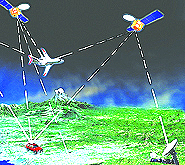
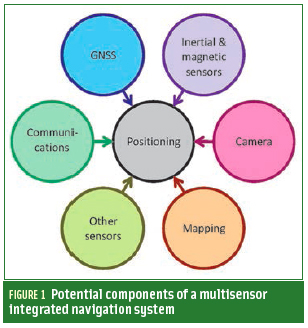
FIGURE 1: Potential components of a multisensor integrated navigation system

The navigation world is booming with new ideas at the moment to meet some of the greatest positioning challenges of our times. To realize demanding applications — such as reliable pedestrian navigation, lane identification, and robustness against interference, jamming and spoofing — we need to bring these different ideas together.

Read More >

By Inside GNSS

February 28, 2013

Czech GNSS Showcase

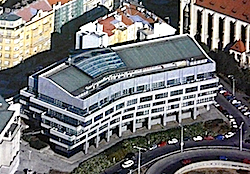
GSA Headquarters in Prague (Image: MDCR)

The European GNSS Agency (GSA) will sponsor a half-day workshop on GNSS for the regional business community at GSA headquarters, Janovkeho 438, in Prague at 8:30 a.m. on March 27.

The workshop is part of an effort to engage small and medium-sized enterprises from the Czech Republic in opportunities offered by the EU’s space programs.

In addition to SME’s, the audiece will include larger industries, representatives of foreign companies established in the Czech Republic and the press.

The agenda includes:

Read More >

By Inside GNSS
Egos behind New EC-ESA Rift?

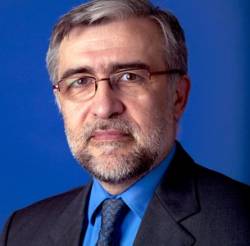
Didier Faivre, director of ESA’s Galileo Program and Navigation-related Activities. ESA photo

Speaking privately at the recent European Union (EU) Space Conference in Brussels, one individual said, “Relations between the European Commission (EC) and the European Space Agency (ESA) are worse than ever."

That would be very bad indeed, given the two bodies’ history of knocking heads.

And what’s at the center of this new rift? “It’s about power,” said this source, who would know.

Read More >

By Inside GNSS

[uam_ad id="183541"]
February 20, 2013

IFCS / EFTF 2013: Frequency Control Symposium and European Frequency and Time Forum

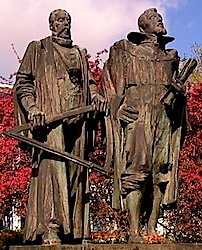
Brahe and Kepler statue in Prague

This combined meeting in Prague, Czech Republic – the 2013 Joint UFFC, EFTF and PFM Symposium – will take place at the Prague Congress Centre on July 21-25.

It includes the International Frequency Control Symposium and the European Time and Frequency Forum and several other IEEE scientific and academic gatherings.

The IFCS/EFTF plenary presentation takes place on  Wednesday, July 24. The speaker will be Daniel Kleppner, Massachusetts Institute of Technology (USA).

Read More >

By Inside GNSS
EU Council Sets 2014-2020 Budget; Galileo Request Reduced

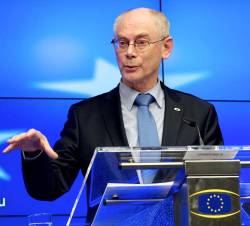
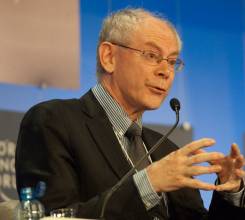
Herman Van Rompuy, European Council president. Photo: Council of the European Union

For the first time ever, European Union (EU) leaders have agreed to a real-terms cut in spending, after all-night marathon talks in Brussels that left some delegates angry, some disappointed, and a lot of others simply relieved that they could get out of town.

The €960 billion multi-annual financial framework or MFF, which covers the seven-year period from 2014 to 2020, would be about three per cent less than the current long-term budget, and a sharp cut from the €1.03 trillion proposed by the European Commission (EC) at the outset of negotiations.

Read More >

By Inside GNSS

[uam_ad id="183541"]
January 31, 2013

European Space Policy: Jobs the Bottom Line for Budget Battle, Galileo

MEP Dominique Riquet: “We will not say yes to a budget that cripples our space programs.” Peter Gutierrez photo.

Although they use a different vocabulary than their U.S. counterparts, European political leaders say that jobs would be the victims at the bottom of their fiscal cliff.

In his keynote speech to the 5th Space Conference on European Space Policy (subtitled “A Global Tool for Global Challenge” held this week in Brussels, European Commission (EC) Vice-President Antonio Tajani underlined the important role of space for restoring economic growth and employment.

Read More >

By Inside GNSS

UK/US Deal on GPS Signal Patent Omits Galileo Version

A recently announced deal between the United States and the United Kingdom to revoke the UK’s surprise patents on a key GPS technology has a glaring omission: Intentionally left out of the agreement are patents on the European Union’s version of the technology, a signal structure important to enabling Europe’s Galileo system to work seamlessly with America’s GPS constellation.

Read More >

By Inside GNSS
January 25, 2013

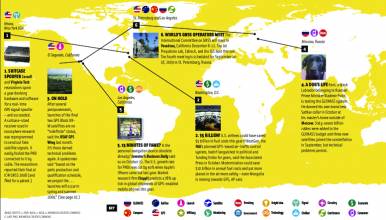
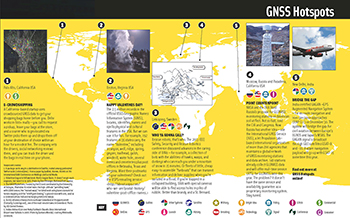
GNSS Hotspots | January 2013

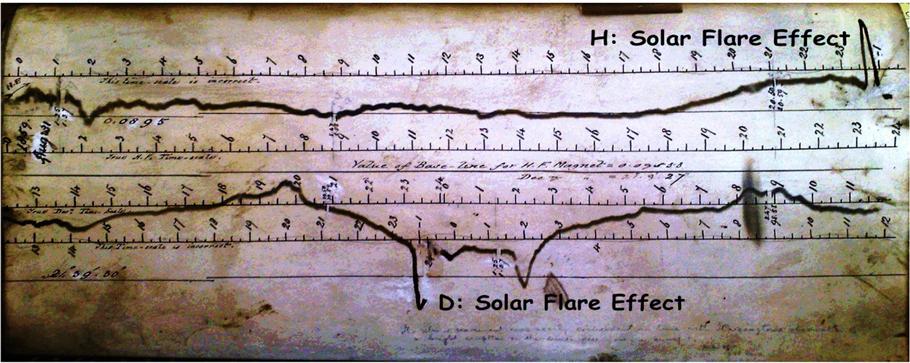
One of 12 magnetograms recorded at Greenwich Observatory during the Great Geomagnetic Storm of 1859
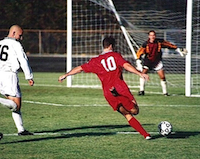
1996 soccer game in the Midwest, (Rick Dikeman image)
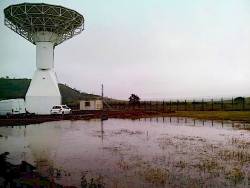
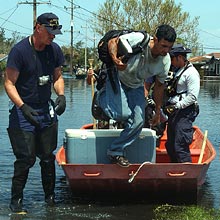
Nouméa ground station after the flood
A pencil and a coffee cup show the size of NASA’s teeny tiny PhoneSat
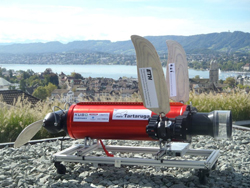
Bonus Hotspot: Naro Tartaruga AUV
Pacific lamprey spawning (photo by Jeremy Monroe, Fresh Waters Illustrated)
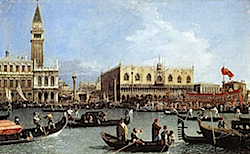
“Return of the Bucentaurn to the Molo on Ascension Day”, by (Giovanni Antonio Canal) Canaletto
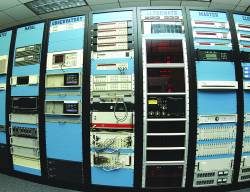
The U.S. Naval Observatory Alternate Master Clock at 2nd Space Operations Squadron, Schriever AFB in Colorado. This photo was taken in January, 2006 during the addition of a leap second. The USNO master clocks control GPS timing. They are accurate to within one second every 20 million years (Satellites are so picky! Humans, on the other hand, just want to know if we’re too late for lunch) USAF photo by A1C Jason Ridder.
Detail of Compass/ BeiDou2 system diagram
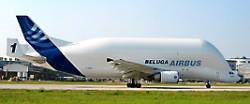
Hotspot 6: Beluga A300 600ST

1. TIMING IS EVERYTHING
Washington, D.C.

Read More >

By Inside GNSS

Markets and Multi-Frequency GNSS

FIGURE 1: Proposal to have a single chip GNSS receiver with additional pins to allow for the inclusion of an additional radio

Q: What will limit the spread of multi-frequency GNSS receivers into the mass market?

A: To set the scene, we need to define our terms of reference. By multi-frequency we mean receivers that operate with navigation signals in more than just the standard upper L-band from about 1560–1610 MHz where we find GPS L1, Galileo E1, Compass B1, and GLONASS L1. The obvious additional frequency is the lower L-band, from about 1170 to 1300 MHz, where again the same four constellations have signals.

Read More >

By Inside GNSS

The GNSS Merry Go Round

The whole GNSS world should have a warm spot in its heart for centripetal forces.

After all, a centripetal force — in this case, gravity — is what keeps planets in rotation around our Sun and satellites, around the Earth.

Centrifugal force, of course, is what throws us off a merry-go-round or carousel. Centripetal force is what keeps us on board.

For those on a merry-go-round, the centripetal force is not gravity, but rather the tensile strength of our arms pulling us toward the center of rotation, at right angles to the motion of our seats.

Read More >

By Inside GNSS
1 57 58 59 60 61 82
IGM_e-news_subscribe