Galileo

April 23, 2015

Novatel Launches Multi-GNSS Wideband Antenna

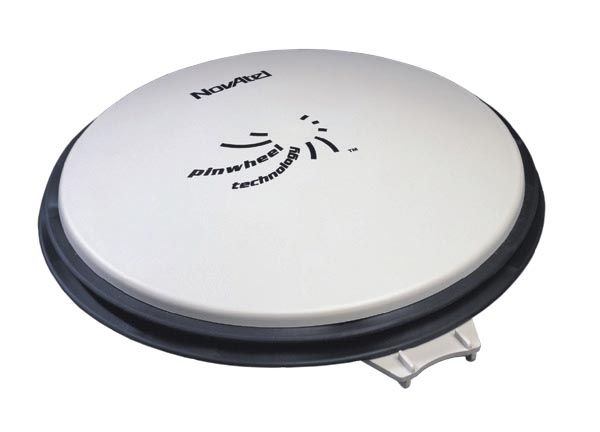
NovAtel GPS-704-WB antenna

NovAtel Inc. today (April 23, 2015) launched the GPS-704-WB antenna, a wideband antenna that supports L-band as well as the frequencies of all current GNSS constellations (GPS, GLONASS, Galileo, and BeiDou), including B3 and E6 signals. Customers can use this antenna for GPS-only or multi-constellation applications, providing excellent flexibility for application developers, according to the company.

Read More >

By Inside GNSS
April 14, 2015

GNSS Markets, Standards, and Resilience at the European Navigation Conference

The 2015 edition of the European Navigation Conference (ENC) in Bordeaux last week found the continent’s GNSS community leaving troubles behind and looking to the future, where the world’s dependence on GNSS is greater, the risks higher, and the potential profits ever more tantalizing.
 
Speaking at the opening session dedicated to “the impact of GNSS on the economic sector,” Topos Cluster President Florence Ghiron answered the question in the simplest of terms: “We expect the GNSS market to grow and to include more and more industrial sectors.”
 

Read More >

By Inside GNSS
[uam_ad id="183541"]
March 28, 2015

Successful Galileo FOC Launch Brings Relief to Europe’s GNSS Program

European space officials and engineering teams heaved a collective sigh of relief as the second attempt to launch a pair of full operational capability (FOC) Galileo satellites appears to have succeeded yesterday (March 27, 2015).

The EU’s Galileo satellite navigation system now has eight satellites in orbit, including four in-orbit validation (IOV) satellites launched in 2011 and 2012 and the first two FOC spacecraft placed into an anomalous orbit last August.

Read More >

By Inside GNSS
March 25, 2015

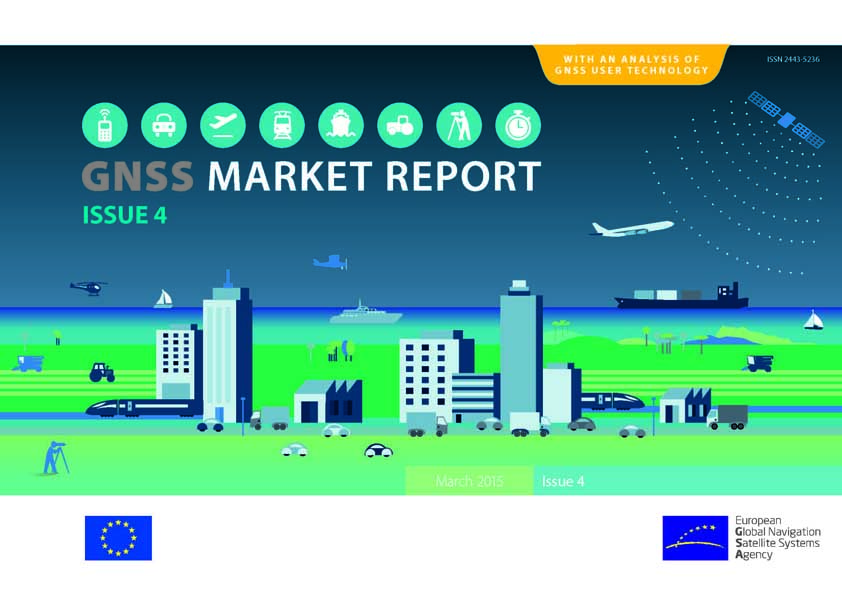
GSA’s GNSS Market Report #4: The Most Thorough Yet

The European GNSS Agency (GSA) unveiled its latest GNSS Market Report today (March 25, 2015) at the Munich Satellite Navigation Summit in Germany.

The fourth and most comprehensive in a series of GSA studies, the 80-page report describes current and projected GNSS receiver sales by volume and value and highlights market opportunities, technology trends, and future developments of GNSS.

Read More >

By Inside GNSS
March 22, 2015

u-blox Announces Profit, Revenue Advances in 2014

Thalwil, Switzerland–based u-blox reported revenue and profit growth in its most recent annual report, driven by strong sales in its GNSS and wireless chipset and module business.
 
Consolidated revenue was CHF270 million (US$276.7 million) in 2014, a growth of nearly 23 percent compared to 2013 while net profit increased by 39.6 percent to CHF34.4 million (US$35.2 million), representing a 12.7 percent net profit margin for the year.
 

Read More >

By Inside GNSS
[uam_ad id="183541"]
March 14, 2015

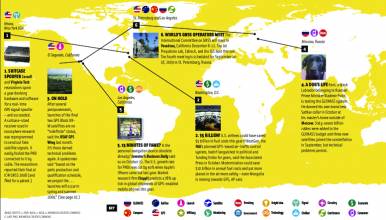
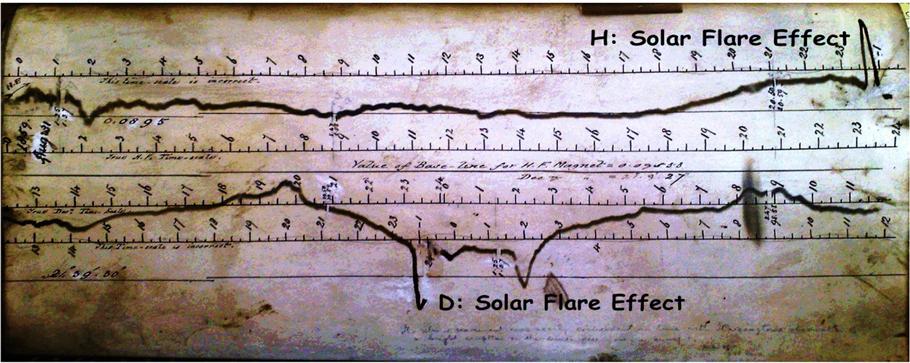
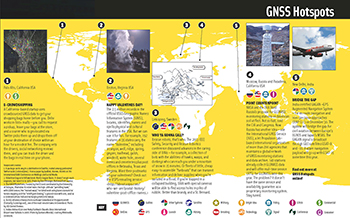
GNSS Hotspots | March 2015

One of 12 magnetograms recorded at Greenwich Observatory during the Great Geomagnetic Storm of 1859
1996 soccer game in the Midwest, (Rick Dikeman image)
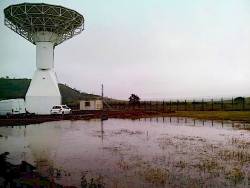
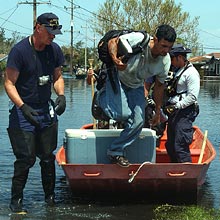
Nouméa ground station after the flood
A pencil and a coffee cup show the size of NASA’s teeny tiny PhoneSat
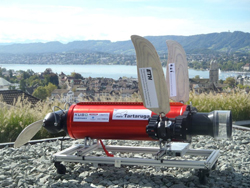
Bonus Hotspot: Naro Tartaruga AUV
Pacific lamprey spawning (photo by Jeremy Monroe, Fresh Waters Illustrated)
“Return of the Bucentaurn to the Molo on Ascension Day”, by (Giovanni Antonio Canal) Canaletto
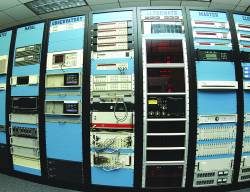
The U.S. Naval Observatory Alternate Master Clock at 2nd Space Operations Squadron, Schriever AFB in Colorado. This photo was taken in January, 2006 during the addition of a leap second. The USNO master clocks control GPS timing. They are accurate to within one second every 20 million years (Satellites are so picky! Humans, on the other hand, just want to know if we’re too late for lunch) USAF photo by A1C Jason Ridder.
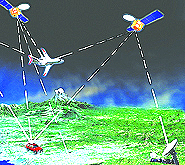
Detail of Compass/ BeiDou2 system diagram
Hotspot 6: Beluga A300 600ST

1. NAVSTAR GETS THE AX
Seal Beach, California

Read More >

By Inside GNSS

GNSS and Precision Farming

Dr. John Fulton, Ohio State University

Nowhere has the fact that GNSS can guide things besides military weapons and transport manifested itself more profoundly than in agriculture.

While Google and automotive manufacturers struggle to figure out how to put autonomous vehicles on the highway, farmers have been using GNSS for well over a decade to guide equipment through their fields — along with a host of other ag-related, site-specific applications.

Indeed, GNSS — along with an array of other high-tech resources — is transforming agriculture at an accelerating rate.

Read More >

By Inside GNSS

How does a GNSS receiver estimate velocity?

Equations 1 – 11

Q: How does a GNSS receiver estimate velocity?

A: Stand-alone single-frequency GNSS receivers represent the largest slice of the commercial positioning market. Such receivers operate mainly in single point position (SPP) mode and estimate velocity either by differencing two consecutive positions (i.e., approximating the derivative of user position) or by using Doppler measurements related to user-satellite motion.

Read More >

By Inside GNSS

Seriously Seeking a Galileo Service Operator

Carlo des Dorides, El?bieta Bie?kowska

Last January, the European GNSS Agency (GSA) announced a new invitation to tender for the role of Galileo service operator (GSOp). Speaking at the recent EU Space Policy Conference in Brussels, GSA Executive Director Carlo des Dorides called it the largest contract ever to be awarded under the Galileo program.

“It will shape the future of Galileo,” he said.

Read More >

By Peter Gutierrez
1 40 41 42 43 44 82
IGM_e-news_subscribe