
Tight Position Bounding for Automotive Integrity
A new approach to achieving the safety needed for levels 3 and higher of autonomy builds on a thorough mathematical framework to support safety analysis, while delivering very tight position bounds.

Global Navigation Satellite Systems Engineering, Policy, and Design
A new approach to achieving the safety needed for levels 3 and higher of autonomy builds on a thorough mathematical framework to support safety analysis, while delivering very tight position bounds.

On Memorial Day, just prior to the running of the legendary Indy 500 race, a new speedway star came out to shine. A driverless racecar, no less, aiming for track speeds above 120 mph with no human hands on the wheel.
By Inside GNSS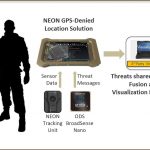
TRX Systems delivered its Dismount Electronic Warfare (EW) Kit to the U.S. Army Rapid Capabilities and Critical Technologies Office (RCCTO). The system is a prototype to extend Electronic Warfare (EW) and Signal Intelligence (SIGINT) for the dismounted warfighter.
By Inside GNSS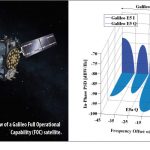
A novel method to track Galileo E5 AltBOC signal phase adjusts and then combines the correlation results of the upper sideband and lower sideband signal to form a double-sideband correlation result, which is equivalent to AltBOC wideband receiving to some extent. Thus, a Galileo E5 wideband receiver can be achieved with only minor modification to a traditional GNSS single-sideband receiver. The method can be further applied to other binary offset carrier (BOC) signals.
By Inside GNSS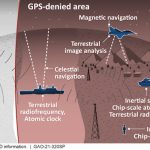
The Government Accounting Office (GAO) has issued a 51-page report examining the challenges the Department of Defense faces in developing and fielding new positioning, navigation and timing (PNT) technologies to complement, augment or replace GPS when it is unavailable. It found that the DOD is not doing enough in this regard.
By Inside GNSS
South of Stockholm, Sweden, the new Haninge Bus Terminal has been equipped with SubWAVE GPS Coverage Extension from Syntony.
By Inside GNSS
Iridium Communications Inc. made a strategic investment in DDK Positioning (DDK), an Aberdeen, Scotland-based provider of enhanced GNSS accuracy solutions. DDK uses the Iridium network, provided by a low Earth orbit (LEO) constellation, to provide global precision positioning services that can augment GNSS accuracy
By Inside GNSS
SAM PULLEN, Stanford University
A: Since at least 1997, the Global Positioning System (GPS) Control Segment (CS) has issued what are known as “Notice Advisor(ies) to NAVSTAR Users” or “NANU(s).”
By Inside GNSS
According to a presentation by China’s Satellite Navigation System Management Office, the value of industries related to the country’s BeiDou Navigation Satellite System (BDS) will surpass 1 trillion yuan (about 156.4 billion U.S. dollars) by 2025.
By Inside GNSS
Multi-antenna carrier-phase differential GNSS (CDGNSS)-based pose (position and orientation) estimation aided by monocular visual measurements and a smartphone-grade inertial sensor form the core of a system designed for micro aerial vehicles. It can be applied generally for low-cost, lightweight, high-accuracy, geo-referenced pose estimation.

The year 2020 was definitely one for the history books. The global pandemic forever changed life as we know it, and in its midst, our GPS development and production teams launched us deep into a new era of positioning, navigation, and timing (PNT) capabilities.
By Inside GNSS
The Defense Advanced Research Projects Agency (DARPA) has awarded Northrop Grumman a $13.3 million contract Phase 2 of the Blackjack program to “advance its Position, Navigation, and Timing (PNT) payload through emulation and Critical Design Review, and build PNT payload units destined for space flight.”
By Inside GNSS
A consortium is preparing to ramp up production of Geonav IoT, a seamless indoor/outdoor positioning solution for sports applications, asset tracking and aiding drone traffic management. The GNSS module is a high-accuracy, dual-frequency system-on-chip with an integrated, low-power application processor.