
New Small Satellites to Use GNSS Reflectometry for Weather Prediction, Climate-Change Study
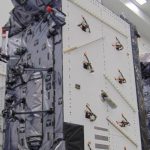
GeoOptics Inc. has upgraded its CICERO constellation of Earth-observation satellites to include advanced GNSS Reflectometry (GNSS-R).
By Inside GNSSGeoOptics Inc. has upgraded its CICERO constellation of Earth-observation satellites to include advanced GNSS Reflectometry (GNSS-R).
By Inside GNSSChisha, that’s who. China’s first robot for assembling building components rolled off the production line in Nantong City in east China’s Jiangsu Province, according to the Science and Technology Daily.
By Inside GNSSIn-flight refueling requires sustained minimal separation between paired aircraft with little room for error. In or near combat zones, wide-area GPS-denial or spoofing means that an GPS-independent system must be available. Regardless of the selected sensor package, a common set of properties must be satisfied to facilitate mid-air docking: a high degree of accuracy, precision, and integrity.
UrsaNav and ADVA have conducted an enhanced long-range navigation (eLoran) field trial using UrsaNav’s eLoran receiver and ADVA’s Oscilloquartz grandmaster clock technology. The successful demo showed that eLoran offers a robust and reliable backup for GPS and other GNSS and could be used to provide an assured position, navigation, and timing (PNT) service.
By Inside GNSSThe U.S. Air Force Research Laboratory’s AFWERX program awarded a Phase II SBIR contract to Masten Space Systems to develop and demonstrate a lunar positioning and navigation network prototype. With functionality similar to GPS, the network will enhance cislunar security and awareness by enabling navigation and location tracking
By Inside GNSSSituational awareness and risk assessment are key to UAV mission planning in both dense urban areas and, surprisingly, in open-sky areas such as over ocean coastlines. Successful results depend closely upon scheduling for the most advantageous hours, or even minutes, to overfly particular areas.
By Inside GNSSTopcon Positioning Systems will supply GNSS hardware components to DDK Positioning Ltd. of Aberdeen, Scotland, to integrate with signals from the Iridium satellite network to create a robust, resilient and completely independent GNSS-augmenting positioning solution.
By Inside GNSSThe addition of alternative sensors such as cameras, magnetometers, and small ranging radios increases the likelihood of a mismodeled and/or faulty sensor, affecting the accuracy and performance of the overall navigation solution. Unlike two-sensor systems such as GPS-inertial integration, systems of three or more sensors present the problem of ambiguity as to which sensor is adversely affecting the solution. This presents the need for a robust framework that can maintain navigation integrity despite the additional sensor modalities.
In a GNSS spoofing attack, a terrestrial radio transmitter mimics GNSS signals at a greater signal strength than the actual system can transmit. In order to detect and mitigate a spoofing attack, it is important to know where a spoofing signal comes from and what it tries to accomplish for its ultimate neutralization.
Testing of the first Galileo Second Generation (G2) hardware has begun, with versions of the satellites’ navigation payloads and antennas undergoing evaluation to check whether they meet the ambitious performance levels set for the coming generation of Europe’s GNSS.
By Inside GNSSSwift Navigation of San Francisco and Tokyo-based KDDI Corporation, a telecommunications company have partnered to bring precise positioning to the Japanese market.
By Inside GNSSThe European Commission and the European Space Agency (ESA) selected Leonardo’s hydrogen atomic clocks for Galileo Second Generation.
By Inside GNSSFugro’s SpaceStar GNSS Precise Point Positioning (PPP) service provides high-accuracy positioning in space. Highly accurate positioning in LEO is becoming increasingly important for Earth observation applications, safe constellations management, and space debris collision avoidance.
By Inside GNSS