
Timing on the Fly
Sensor fusion is a predominant feature of modern navigation systems. To integrate navigation systems with other sensors, the spatial and temporal relationship of the sensor systems must be defined and calibrated.
BySensor fusion is a predominant feature of modern navigation systems. To integrate navigation systems with other sensors, the spatial and temporal relationship of the sensor systems must be defined and calibrated.
BySince the dawn of humanity, the sky and stars have stimulated our imagination and curiosity. As our understanding about outer space increases, so does our passion and drive to explore beyond the reaches of our own planet — and to use space to understand our own planet.
ByRome wasn’t built in a day, and neither was the Global Positioning System.
Nor will the emerging GNSS system of systems arising from the regional and global infrastructures being put in place or modernized today: GPS, GLONASS, Galileo, Compass (Beidou-2), QZSS, GAGAN, IRNSS, EGNOS, WAAS, MSAS, and undoubtedly other acronyms yet to be born.
By
The Spanish high-technology company GMV S.A. won three top prizes for its canine search and rescue positioning system at the sixth European Satellite Navigation competition awards ceremony held on October 21 in Munich, Germany.
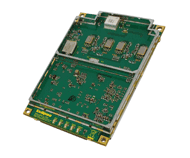
DataGrid, Inc. has released the third generation of its programmable DGRx-GNSS receiver for OEM integrators as well as a high-sensitivity mode for DGRx-GNSS that allows the receiver to track the L1 and L2C codes transmitted by GPS and GLONASS satellites down to a signal level of only 15 dB-Hz.
By Inside GNSSLeica Viva from Leica Geosystems is a new-generation measurement system that combines a number of technologies into a portfolio of total stations, GNSS receiver, system controllers and onboard software.
The Viva GNSS suite’s GS10 and GS15 system controllers can be used for all tasks and setups for GNSS surveying and construction, including all-on-the-pole or backpack rover; mounted on a car, quad or boat; RTK field base station; and long term monitoring sensor.
By Inside GNSS
Trimble introduced its new Trimble BD970, a real-time kinematic (RTK) GNSS receiver for high-precision and control application, at the ION GNSS 2009 show in September.
Capable of receiving a wide range of commercially available satellite signals, the BD970 receiver is designed to allow OEMs and system integrators to easily add centimeter-level positioning to specialized or custom hardware solutions.
By Inside GNSS
NovAtel OEMStarNovAtel Inc. rolled out a series of new products and a firmware upgrade at the Institute of Navigation’s ION GNSS 2009 conference held September 22-25 in Savannah, Georgia, USA.
The Calgary, Alberta, Canada–based GNSS manufacturer announced the launch of their new single-frequency GNSS receiver, OEMStar. The low-cost, 14-channel, L1 receiver measures 46 x 71 millimeters and consumes just 750 milliwatts of power when tracking both GPS and GLONASS signals.
By Inside GNSS
Chronos Technology, Lydbrook, Gloucestershire, United Kingdom, is leading an academic and business research consortium working on the GAARDIAN Project — “GNSS Availability, Accuracy, Reliability anD Integrity Assessment for Timing and Navigation.”
By Inside GNSS
My history with GPS began during the time of the “Cold War” in what was then Czechoslovakia. In 1975, the ION Journal of Navigation was the only information available to me. Despite that, my team at the Czech Technical University developed a GPS receiver and measured the position of our faculty in 1984. In those relatively isolated years, we gained a good deal of experience with GPS signals.
ByAs I pack my bags for the damply enticing venue of Savannah, Georgia, I’m reminded that this is my 21st consecutive journey to an ION GNSS conference. And the number 21 still has a lingering resonance as the age of majority, the harbinger of having reached adulthood — if not maturity.
By
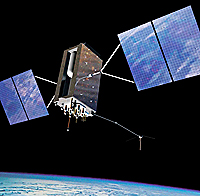
An increasingly likely $97.4-million cut in the GPS OCX budget for fiscal year 2010 (FY10) would slow down work on modernization of the operational control segment, but the Air Force would try to recoup any reduction in the FY11 budget.
Meanwhile, technical problems that have delayed development of the follow-on generation of Block IIF satellites are largely resolved and a first launch is expected in May 2010.
By Inside GNSSGeoWAY, now in its fifth year, will cover intelligent transport systems and satellite navigation. It will take place in Pavillion 1, Hall 1 at the Crocus Exposition Center in Moscow, Russia from March 30 to April 2 2010.
It is one of the four specialized exhibitions of GeoForm+ 2010, the seventh international industrial Forum of geodesy, cartography, navigation, geoinformation systems, engineering geology and geophysics, tunnel and utility systems construction.
By Inside GNSS