
B: Applications

Lockheed Martin Awarded $395 Million GPS III Contract Option

Littleton, Colorado-based Lockheed Martin Space Systems has received a $395 million U.S. Air Force Space and Missile Systems Center contract option to build two additional GPS III satellites. The contract option calls for long-lead and production hardware to manufacture GPS III space vehicles (SVs) 9 and 10.

“The GPS III SV 9 and 10 satellites are expected to be ready for launch in 2022, thus sustaining the GPS constellation,” said Lt. Gen. Samuel Greaves, Space and Missile Systems Center’s commander.

Read More >

By Inside GNSS

Market Study See GNSS Growth in Autonomous Markets by 2021

A Google self-driving car in Mountain View, California. Wikimedia Commons photo by grendelkhan.

Low-cost, precision, GNSS receivers will become a reality in the driverless cars, drones, and smartphone markets by 2021, said ABI Research in two new reports, “Precision GNSS in Automotive” and “GNSS IC Design Trends: Modules, Standalone, Combo, and Embedded.”

The automotive industry will be the main driver behind precision GNSS receiver adoption, in which centimeter-level accuracy is essential to complete driver safety systems with the redundancy necessary for autonomous vehicles, the company said.

Read More >

By Inside GNSS
[uam_ad id="183541"]

Air Force Disposes of Long-Serving GPS IIA Satellite

The U.S. Air Force’s 2nd Space Operations Squadron (2SOPS) at the 50th Space Wing, Schriever Air Force Base, Colorado, has moved the longest-serving GPS satellite, space vehicle number (SVN) 23, into a disposal orbit several hundred miles above the operational GPS constellation.

The satellite, which was launched on November 26, 1990, had a rough start, the Air Force said. After early-orbit operations and initial stabilization in December 1990, SVN 23’s solar array stopped working.

Read More >

By Inside GNSS

GPS Directorate’s Whitney: No Immediate GPS OCX Work Stoppage

Col. Steve Whitney, GPS Directorate

A funding shortfall will not halt work on the new GPS ground system this month, although a decision expected in the next two weeks may signal major changes in the program.

Increased personnel costs on the Global Positioning System Next Generation Operational Control System (OCX) program had eaten up the fiscal year 2016 budget and were poised to force managers to stop work on September 15. The Pentagon had requested Congress to allow $39 million to be reprogrammed to bridge the gap but lawmakers left for the summer recess without approving the change.

Read More >

By Inside GNSS
September 14, 2016

DHS Continues to Test GNSS Timing for Critical Infrastructure

Because GPS and other GNSS are critical to the nation’s infrastructure, the U.S. Department of Homeland Security (DHS) is testing an augmentation system and developing new requirements to protect it, a DHS official told the U.S. Department of Transportations’s Civil GPS Service Interface Committee (CGSIC) meeting this week in Portland, Oregon.
 

Read More >

By Inside GNSS
[uam_ad id="183541"]
September 9, 2016

GNSS Hotspots | September 2016

One of 12 magnetograms recorded at Greenwich Observatory during the Great Geomagnetic Storm of 1859
1996 soccer game in the Midwest, (Rick Dikeman image)
Nouméa ground station after the flood
A pencil and a coffee cup show the size of NASA’s teeny tiny PhoneSat
Bonus Hotspot: Naro Tartaruga AUV
Pacific lamprey spawning (photo by Jeremy Monroe, Fresh Waters Illustrated)
“Return of the Bucentaurn to the Molo on Ascension Day”, by (Giovanni Antonio Canal) Canaletto
The U.S. Naval Observatory Alternate Master Clock at 2nd Space Operations Squadron, Schriever AFB in Colorado. This photo was taken in January, 2006 during the addition of a leap second. The USNO master clocks control GPS timing. They are accurate to within one second every 20 million years (Satellites are so picky! Humans, on the other hand, just want to know if we’re too late for lunch) USAF photo by A1C Jason Ridder.
Detail of Compass/ BeiDou2 system diagram
Hotspot 6: Beluga A300 600ST

1. BREXIT
Harwell Didcot, United Kingdom

Read More >

By Inside GNSS

The Particular Importance of Galileo E6C

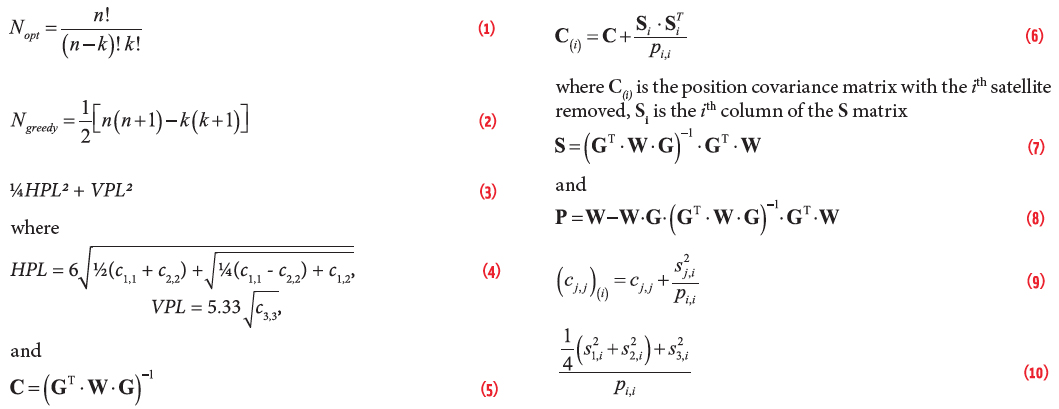
Equations

The Galileo E6 signal is centered at 1278.75 MHz, and comprises three signals: an authorized signal (E6A, the publicly regulated service, PRS plus two civilian signals), a data component (E6B), and a pilot component (E6C). Both E6B and C are modulated using binary-phase shift keying (BPSK) code division multiple access (CDMA) memory codes, having lengths of 5,115 chips and chipping rates of 5.115 Mcps.

Read More >

By Inside GNSS
August 30, 2016

UAS Rules Could Unleash Potential GPS Market

A new rule that took effect yesterday (August 29, 2016) eases U.S. limits on the commercial drone flights, unleashing a surging industry that depends in large measure on GPS for success.

The rule’s provisions allow operators of unmanned aircraft systems (UAS) to proceed without having to obtain waivers or flight-by-flight permissions from the Federal Aviation Administration (FAA) — a process that had caused long delays and lost business.

Read More >

By Dee Ann Divis
IGM_e-news_subscribe