A: System Categories

June 1, 2020

New GPS Performance Document Gives Glimpses of L2C, L5, Expanded Constellation

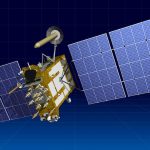
The U.S. Air Force updated the GPS Standard Positioning System (SPS) Performance Standard (PS) in mid-April, 2020, the first new Performance Standard document since 2008. It includes mention of and  pre-Initial Operating Capability (IOC) performance standards for the new civil GPS signals L2C and L5 for the first time. In another new feature, the document mentions “expanded capabilities which allow the total size of operational constellation to grow beyond the previous maximum of 32 Navstar satellites” for “more robust constellation availability to enhance the overall SPS SIS performance.”

Read More >

By Inside GNSS
May 25, 2020

Green Lane Speeds Border Crossings of Essential Goods

Galileo Green Lane, a new mobile app, facilitates the free movement of freight, reduces waiting times at European Union borders, and prioritizes essential goods during pandemic response. The app uses Galileo positioning services  to address the needs of border control authorities and truck drivers, with two intuitive user interfaces. The app was developed by the European GNSS Agency (GSA) in collaboration with the European Commission.

Read More >

By Inside GNSS
[uam_ad id="183541"]
May 21, 2020

The New Flex Power Mode: From GPS IIR-M and IIF Satellites with Extended Coverage Area

GPS satellites usually transmit their signals with constant power. However, a so-called “Flex Power” is foreseen to increase the strength of individual signals to better fulfill operational constraints. Flex power operations can be detected in carrier-to-noise density ratio (C/N0) observations provided by GNSS receivers of the global tracking network of the International GNSS Service (IGS).

Read More >

By Peter Steigenberger, et al.

Knives Out

The Federal Communications Commission should really consider updating its motto. “Firm, fast, flexible, and fair” has a bit of an old-fashioned ring. As mottos go, it fails to keep up with the times.

Read More >

By Alan Cameron
[uam_ad id="183541"]

Photonic Technology Brings a Cutting Edge to Inertial

Order-of-magnitude advances in inertial technology seem to take place roughly every 20 years, and the industry is poised at such a point now. New developments in photonic technology make high-performance inertial measurement accessible at lower size, weight and power. Many applications from driverless cars to UAVs can now take advantage of positioning that can independently bridge GPS outages from 2 minutes up to 10 minutes.

Read More >

By Inside GNSS
May 14, 2020

British GNSS May Die A-borning

Britain’s own satellite navigation system, envisioned to fill the country’s Galileo void created by Brexit, may never see the light of day. Government officials don’t want to spend tax revenues to meet projected increasing costs.

Read More >

By Inside GNSS

Receiver with Inertial for UAVs

A new GNSS/INS receiver, the AsteRx-i D UAS from Septentrio, specifically targets integration into unmanned aerial systems (UAS).  It provides centimeter-level RTK positioning and 3D attitude. It features a 44 pin connector compatible with 3rd-party integrations, as well as event marker inputs to accurately time-stamp camera shutter events.

Read More >

By Inside GNSS
1 54 55 56 57 58 227
IGM_e-news_subscribe