NavtechGPS Spring GNSS Training


NavtechGPS Spring GNSS Training 2014 will take place April 1-4, at Loews Annapolis Hotel in Annapolis, Maryland, USA.
Register by February 15 and get a $100 Discount for 4-Day Courses.
By Inside GNSS

NavtechGPS Spring GNSS Training 2014 will take place April 1-4, at Loews Annapolis Hotel in Annapolis, Maryland, USA.
Register by February 15 and get a $100 Discount for 4-Day Courses.
By Inside GNSS
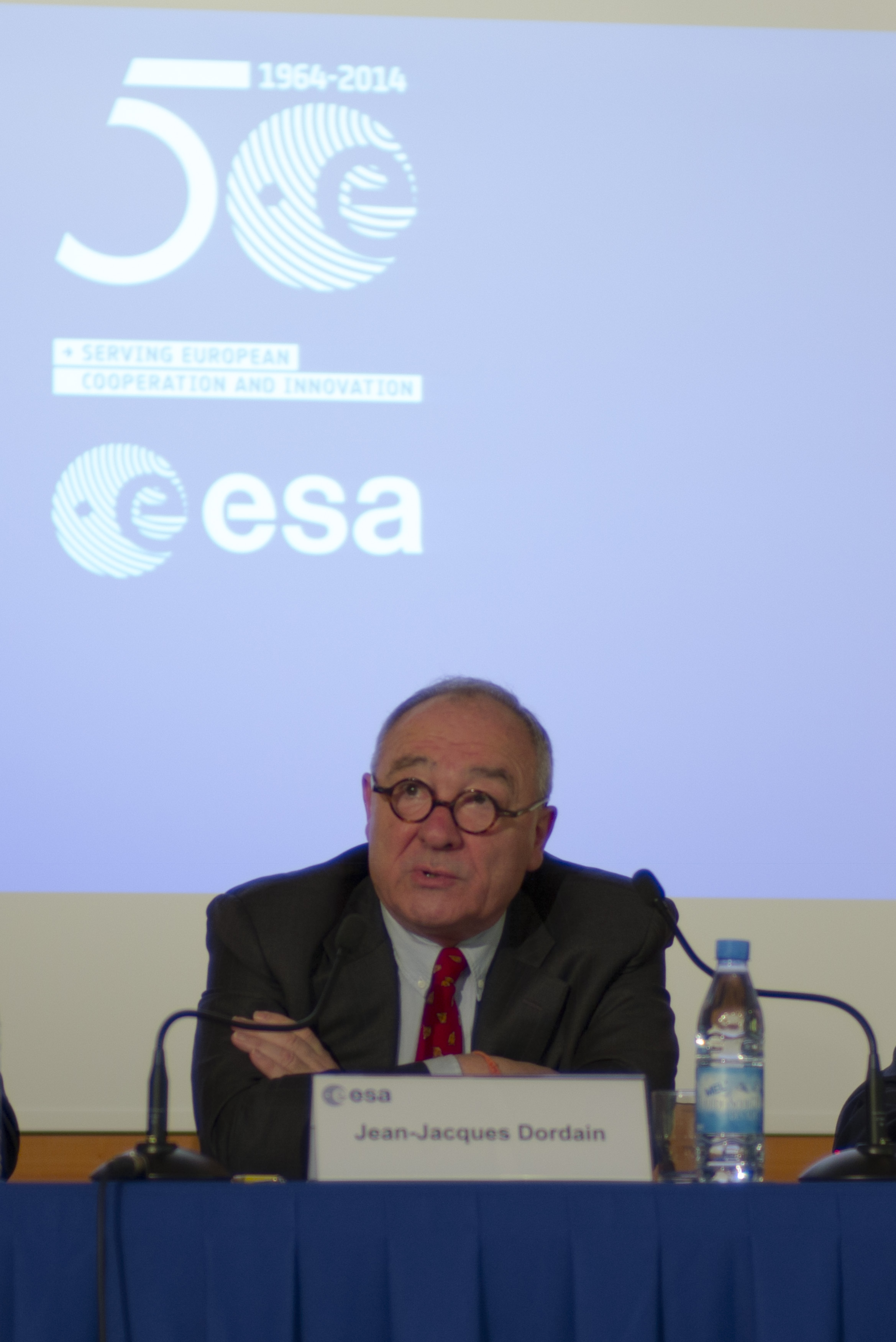
ESA Director General Jean-Jacques Dordain during his annual press briefing. ESA photo by S. CorvajaSpeaking at his annual press conference in Paris last Friday (January 17, 2014), European Space Agency (ESA) Director General Jean-Jacques Dordain was cool, collected and, importantly, positive, as he laid out plans and parried questions on a whole range of ESA issues. From the Rosetta mission to manned space flights, Swarm, Gaia, Sentinel and Copernicus, and of course Galileo, he set the stage for an ambitious 2014.
By Inside GNSS
NovAtel GAJT GPS anti-jam antenna systemNovAtel has announced that Public Works and Government Services Canada (PWGSC) has selected the company’s GAJT-700ML antenna, a single-unit GPS anti-jam antenna system, for testing on Canadian Army armored vehicles. The testing is being conducted through PWGSC’s Build in Canada Innovation Program (BCIP).
Prague’s medieval astronomical clockThe European GNSS Agency (GSA) Workshop "European GNSS Applications In H2020" will be held at the CTU Faculty of Electrical Engineering, Technická 2, 166 27 PRAGUE, Czech Republic on February 4, 2014. (Note: this is a new venue from the one previously announced.)
By Inside GNSS
NovAtel G-III reference receiverNovAtel Inc., has announced an agreement with the Indian Space Research Organisation (ISRO) to supply reference receiver products for use in the Indian Regional Navigation Satellite System (IRNSS) ground segment.
India-based Elcome Technologies Pvt. Limited, a sister company to NovAtel in the Hexagon Group of Companies, will provide local integration, training and technical support services for the NovAtel receivers.
By Inside GNSS
Applanix Corporation announced that today (November 12, 2013) that the Trimble CenterPoint RTX correction service will be available across its entire airborne mapping portfolio.
Trimble CenterPoint RTX correction service is a GPS-, GLONASS-, and QZSS-enabled correction service built on Trimble RTX technology that provides high-accuracy GNSS positioning without the use of traditional reference station-based differential RTK infrastructure.
By Inside GNSS
U.S. aviation officials on Monday (December 30, 2013) named the winners of a high-stakes contest to operate one of six new research and test sites for unmanned aircraft. The Federal Aviation Administration (FAA) will now work to help the sites set up safe operations and create the structures needed within the agency to help it use the sites’ research results.
By Inside GNSS
John PorcariThe U.S. Department of Transportation (DoT) is asking the Air Force to cancel its plan to add navigation data to two key civil GPS signals this year, saying they are concerned that the approach and “nonstandard engineering tools” military officials plan to use could put GPS users at risk.
By Inside GNSS
Ran Chengqi, director of the China Satellite Navigation OfficeAt a news media conference in Beijing on the first anniversary of the BeiDou Navigation Satellite System (BDS) declaration of full operational capability (FOC) for its regional service, officials reported on the current performance of China’s GNSS system.
The BDS program also released two new technical documents, including an updated interface control document (ICD) that describes the second civil signal, B2I, and a “BDS Open Service Performance Standard (version 1.0).”
By Inside GNSS
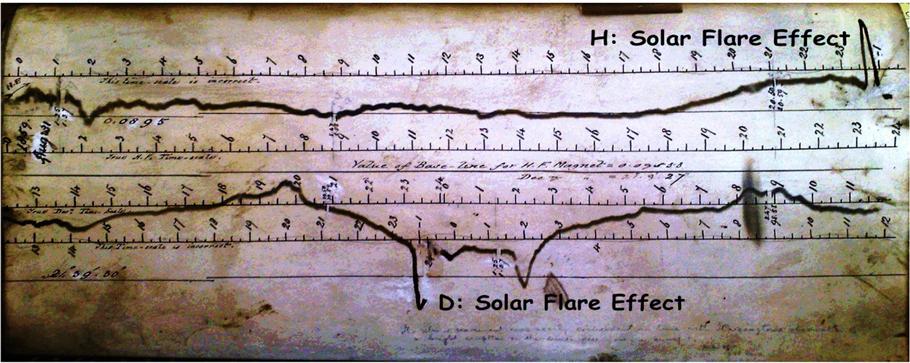
One of 12 magnetograms recorded at Greenwich Observatory during the Great Geomagnetic Storm of 1859
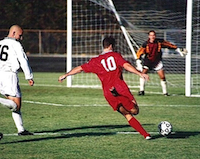
1996 soccer game in the Midwest, (Rick Dikeman image)
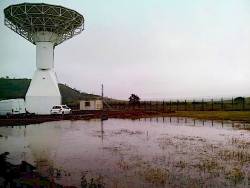
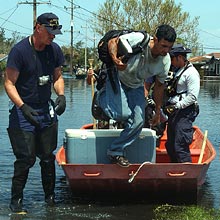
Nouméa ground station after the flood
A pencil and a coffee cup show the size of NASA’s teeny tiny PhoneSat
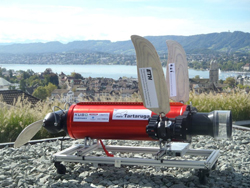
Bonus Hotspot: Naro Tartaruga AUV
Pacific lamprey spawning (photo by Jeremy Monroe, Fresh Waters Illustrated)
“Return of the Bucentaurn to the Molo on Ascension Day”, by (Giovanni Antonio Canal) Canaletto
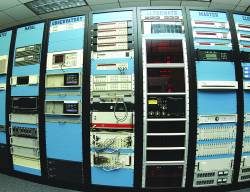
The U.S. Naval Observatory Alternate Master Clock at 2nd Space Operations Squadron, Schriever AFB in Colorado. This photo was taken in January, 2006 during the addition of a leap second. The USNO master clocks control GPS timing. They are accurate to within one second every 20 million years (Satellites are so picky! Humans, on the other hand, just want to know if we’re too late for lunch) USAF photo by A1C Jason Ridder.
Detail of Compass/ BeiDou2 system diagram
Hotspot 6: Beluga A300 600ST

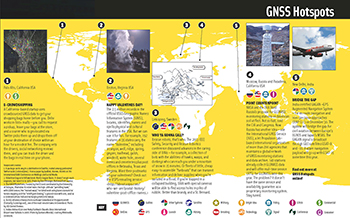
1. E-CROWDSHIPPING
Palo Alto, California USA
How many times, as some once-promising politician stumbles up against his pull date, have we heard that irreverent anthem of The Who invoked?
Thousands? Millions?
Yes, back in the wreckage of the second George Bush’s second term, Barack Obama looked pretty good by comparison. Even then, though, raising the banner of “Hope” before the eyes of a desperate nation was a risky thing to do.
By Inside GNSS
Tim Springer, PosiTim UGA common refrain in the world of GNSS is the desire for “interoperability,” the use of signals from multiple systems without a decline — and potentially even an improvement — in the quality of results.
Achieving this depends on large part in establishing comparable parameters — particularly the geodetic references and timing systems — among the GNSSs along with a dense network of ground reference stations that can provide continuous, precise monitoring of satellites’ orbital positions.
By Inside GNSS
Marc Weiss’ Favorite EquationGNSS Event that most signifies for you that GNSS has “arrived”
By Inside GNSS