A: System Categories

First Position Fix with IRNSS

Figure 1

The Indian Regional Navigation Satellite System (IRNSS) is an Indian Space Research Organisation (ISRO) initiative to build an independent satellite navigation system that provides precise position, velocity, and time (PVT) to users across the Indian region.

The primary objective of IRNSS is to achieve position accuracy of 20 meters (2σ) for dual-frequency users over India and the primary service area (a region extending to about 1,500 kilometers or 930 miles).

Read More >

By Inside GNSS

ESA/JRC International Summer School on GNSS 2015

Casa Battló, Passeig de Gràcia, Barcelona, Spain

The European Space Agency (ESA) International Summer School on GNSS 2014 take place August 31 – September 10, 2015 at Hotel Alimara, Barcelona, Spain.

Held in conjunction with the European Commission Joint Research Center’s Summer School on GNSS, the program is open to graduate students (with a first university degree), Ph.D. candidates, early-stage researchers, and young professional seeking to broaden their knowledge.

Read More >

By Inside GNSS
[uam_ad id="183541"]
June 22, 2015

LabSat SatGen GNSS Product Upgraded to Include BeiDou Signals

SatGen V3 software now available for use on LabSat 3 simulators

LabSat has launched a new version of its SatGen V3 software package that enables users to create scenarios for replay through any LabSat simulator and now includes BeiDou.

The software creates either user-generated or imported trajectory files for use with a LabSat GNSS simulator. The addition of the BeiDou B1 signals means that users can now test a device’s design and performance as if it were being used within the operating area of the Chinese GNSS constellation – which at present only provides full coverage in Asia.

Read More >

By Inside GNSS
June 17, 2015

NovAtel Picked to Supply QZSS Reference Receivers

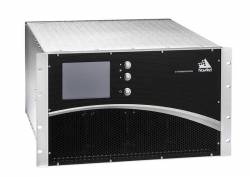
NovAtel G-III WAAS Reference Receiver

NovAtel Inc. today (June 17, 2015) announced an agreement with NEC Corporation to supply reference receiver products for use in Japan’s Quazi-Zenith Satellite System (QZSS).
 
The QZSS equipment will be based on NovAtel’s third-generation (G-III) family of reference receivers. Designed for integrity monitoring and reference measurement applications, the receivers track signals independently to provide precise code and carrier phase reference measurements as well as signal-quality measurements and other integrity monitoring metrics.  
 

Read More >

By Inside GNSS
[uam_ad id="183541"]
June 16, 2015

PNT Advisory Board Debates Critical Infrastructure Designation for GPS

The United States’ top advisors on satellite navigation are split over the practical implications of identifying the GPS system as critical infrastructure.

At the heart of the issue is the additional protection such a designation could potentially afford the constellation particularly in the arenas of public and congressional opinion. That protection, however, could come with another layer of time-consuming and possibly constricting bureaucratic requirements.

Read More >

By Inside GNSS

Study: GPS Contributed More Than $68 Billion to the U.S. Economy

GPS contributed more than $68 billion to the U.S. economy in 2013, according to the preliminary results of a new study presented to the National Space-Based Positioning, Navigation, and Timing (PNT) Advisory Board.

And the study’s author, Irv Leveson, a consultant to ASCR Federal Research and Technology Solutions, LLC, described that figure as conservative because it did not fully incorporate a host of GPS applications including those depending on GPS timing information.

Read More >

By Inside GNSS

GNSS-Aided Autonomous Trucks Could Save Fuel, Reduce Congestion

Block diagram of driver-assisted truck platooning (DATP) system. From “Heavy Truck Cooperative Adaptive Cruise Control” Phase 1 report

Although media coverage of autonomous or self-driving vehicles has focused on their use by private car owners, an initial report on driver-assistive truck platooning (DATP) highlights the prospects for their use in the commercial freight sector.

Titled “Heavy Truck Cooperative Adaptive Cruise Control — Evaluation, Testing, and Stakeholder Engagement for Near Term Deployment: Phase One Final Report,” the DATP project was funded by a grant from the U.S. Department of Transportation’s Exploratory Advanced Research program.

Read More >

By Inside GNSS

Inside GNSS Columnist Gathers Another D.C. Correspondent Award

Dee Ann Divis, an Inside GNSS contributing editor who writes the magazine’s Washington View column, continues to garner journalistic awards.

On June 9 she received the Society of Professional Journalists D.C. Chapter’s award for 2015 “Washington Correspondent” for a series of articles on unmanned aerial systems (UAS) published in Inside GNSS last year.

Her 2015 award citation for the series entitled  “Empty Skies” emphasized the “well-detailed and comprehensive handling of a complex subject. . . .”

Read More >

By Dee Ann Divis
June 15, 2015

Septentrio Absorbs Altus Positioning

Belgian GNSS manufacturer Septentrio Satellite Navigation, of Leuven, Belgium, has announced the completion of the acquisition and integration of Altus Positioning Systems, based in Torrance, California.
 
Septentrio Satellite Navigation and Altus-PS started working together in 2007. The collaboration between the two companies has already resulted in a series of such surveying and GIS-focused products as the APS-NR2, APS-3, APS-U, and APS-GeoPod. The smart antenna form factors will form a separate product line in the Septentrio product portfolio.
 

Read More >

By Inside GNSS
June 13, 2015

OriginGPS Launches Miniature GPS/GLONASS Module

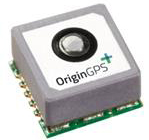
OriginGPS has announced the launch of the Multi Micro Hornet, a patented, GPS/GLONASS antenna module targeting developers of “wearables” and other devices that require a small form factor, low power consumption, and high sensitivity.

The module measures 20x10x5.9 millimeters, has a signal tracking sensitivity of –165dBm, according to the company. It incorporates OriginGPS’s patented and proprietary Noise Free Zone (NFZ) technology designed to provide high sensitivity and noise immunity under marginal signal conditions.

Read More >

By Inside GNSS
IGM_e-news_subscribe