TOPCON Launches GR-5 Integrated GNSS Receiver/Antenna
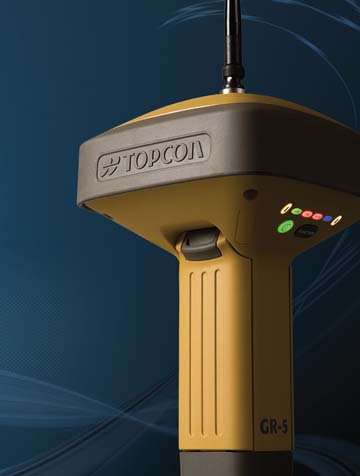
TPS GR-5Topcon Positioning Systems (TPS) has launched its new GR-5 GNSS receiver using patented Fence Antenna technology and expanded tracking-channel support.
By Inside GNSS
TPS GR-5Topcon Positioning Systems (TPS) has launched its new GR-5 GNSS receiver using patented Fence Antenna technology and expanded tracking-channel support.
By Inside GNSS
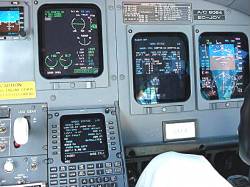
EGNOS-equipped cockpitOn March 2, ESSP (the European Satellite Services Provider) declared the safety-of-life (SoL) signal from the European Geostationary Navigation Overlay Service (EGNOS) officially available for use by aviation, following European Commission (EC) authorization to provide the service.
Similar to the U.S. Federal Aviation (FAA) Administration’s Wide Area Augmentation System (WAAS), EGNOS transmits real-time corrections to GPS signals over a large expanse of Europe and north Africa.
By Inside GNSS
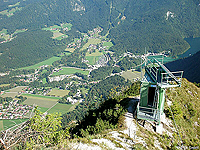
Galileo Test and Development Environment (GATE) Photo: iFENThe 2011 International Summer School on GNSS will take place July 20 to July 30 at the GATE facility in Berchtesgaden, Germany. GATE is the German Galileo Test and Development Environment that opened in February.
By Inside GNSS
The International Committee on GNSS (ICG), is a voluntary United Nations–backed association that brings together GNSS and augmentation providers — including the United States, Russia, European Union, China, India, and Japan — and associate members representing key user communities.
By Inside GNSS
The Geospatial Building at the University of NottinghamA two-day workshop on GNSS receivers will take place at the Geospatial Building at the University of Nottingham Innovation Park on April 14 and 15, 2011.
In addition to talks by GNSS experts, the workshop features product demonstrations, using the test facilitiies at GRACE, the GNSS Research and Applications Center of Excellence. These include GPS and Galileo full constellation Spirent simulator, signal record and replay devices and the roof-based fixed test track designed for dynamic research and testing.
By Inside GNSSThe 2011 EU GNSS Receiver Workshop will take place at the University of Nottingham’s Geospatial Building on April 14 and 15.
In addition to talks, the event features project demonstrations that make use of the GNSS Research and Applications Center of Excellence (GRACE) test facilities. These include a GPS and Galileo full constellation Spirent simulator, signal record and replay devices and the roof-based fixed test track designed for dynamic research and testing.
By Inside GNSS
The third international colloquium on scientific and fundamental aspects of the Galileo program will take place at the Danish Design Center in Copenhagen, Denmark from August 31-September 2, 2011.
The deadline for receiving paper abstracts has been extended until April 15, 2011 and may be submitted online.
Fira de Barcelona, Monjuic venueThe GlobalGEO Fair will take place in the Monjuic Venue, Hall 6 at Fira de Barcelona exhibition center in Barcelona, Spain from March 15 to March 17.
The fair features the latest products for GPS navigation, 3D mapping, geographic information systems, photogrammetry, teledetection, geodesics, topography, satellite navigation, intelligent transport systems and communications.
By Inside GNSS
Despite the fact that China’s rapidly developing global navigation satellite system now has seven spacecraft in orbit intermittently broadcasting test signals, it is the only GNSS provider that has not yet published a draft version of its interface control document (ICD), although one has reportedly been completed for more than a year.
Against that background, any new source of information about the directions of the Compass design — official, semi-official, or other — draws special attention.
By Inside GNSS
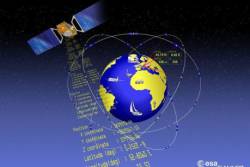
The first two of four Galileo In-Orbit Validation satellites are due for launch in August 2011. ESA illustrationEurope’s GNSS system is still six months away from first launch of its in-orbit validation (IOV) spacecraft, but one Galileo satellite has already been put through its paces, taking center stage in a Europe-wide exercise conducted recently by the European Space Agency (ESA).
The satellite in question never left the confines of its Thales Alenia Space (TAS) integration facility in Rome, Italy, but was connected to a distant trio of control centers during the nine-day System Compatibility Test Campaign (SCTC-1), which began on January 25.
By Inside GNSS
The European Commission (EC) has appointed a new deputy director in the Directorate-General for Enterprise and Industry, who will have among his responsibilities overseeing the three units responsible for Galileo and the European Geostationary Navigation Overlay Service (EGNOS).
By Inside GNSS
Antonio Tajani, EC Vice-President. EC photoA European Commission (EC) communication sent to the European Parliament and European Council today (January 18, 2011) estimates that completing a fully operational capability (FOC), 30-satellite Galileo system and the European Geostationary Navigation Overlay Service (EGNOS) will cost an additional €1.9 billion above the €3.4 billion already allocated.
By Inside GNSS
Berry Smutny. OHB-System photoBerry Smutny has become the first GNSS casualty in the WikiLeaks war.
The CEO of OHB-System AG was suspended on Monday (January 17, 2011) "with immediate effect," according to the company.
By Inside GNSS