Hexagon 2012

A number of user conferences for customers of Hexagon AB’s precise measurement brands and products will be combined in the Swedish corporation’s second international conference this summer.
By Inside GNSS
A number of user conferences for customers of Hexagon AB’s precise measurement brands and products will be combined in the Swedish corporation’s second international conference this summer.
By Inside GNSS
European Space Agency’s ESTEC in Noordwijk
European Space Agency’s ESTEC in NoordwijkNavtechGPS will offer a four-day public venue course from March 5 though 8 at the European Space Agency’s Space Research and Technology Center (ESA/ ESTEC) in Noordwijk, Netherlands.
"Advanced Receiver Processing of GNSS Signals" (Course 541) will be taught by John Betz, MITRE and James Sennott, Tracking and Imaging Systems, Inc.
By Inside GNSS
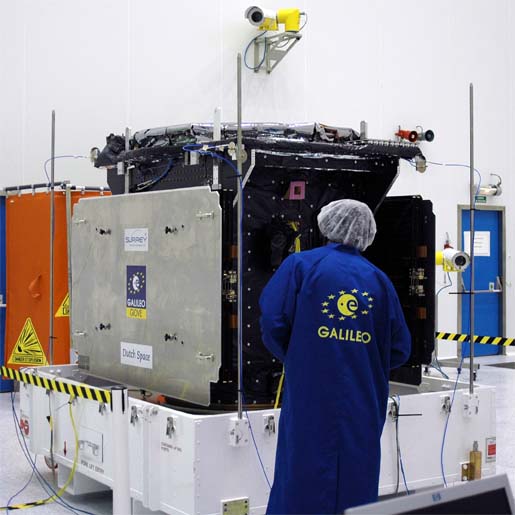
A photo of the NavSAS group (December 2011)On December 12, 2011, one of the two Galileo in-orbit validation (IOV) satellites launched on October 21 — the Galileo- ProtoFlight Model (PFM) spacecraft — started transmitting its payload signal on the E1 band over Europe.
That same day NavSAS researchers were able to acquire and track the E1 signal (Galileo Code Number 11) beginning at 14:46:15 CET. Two days later, on December 14, the E5 signal became available as well.
By Inside GNSS
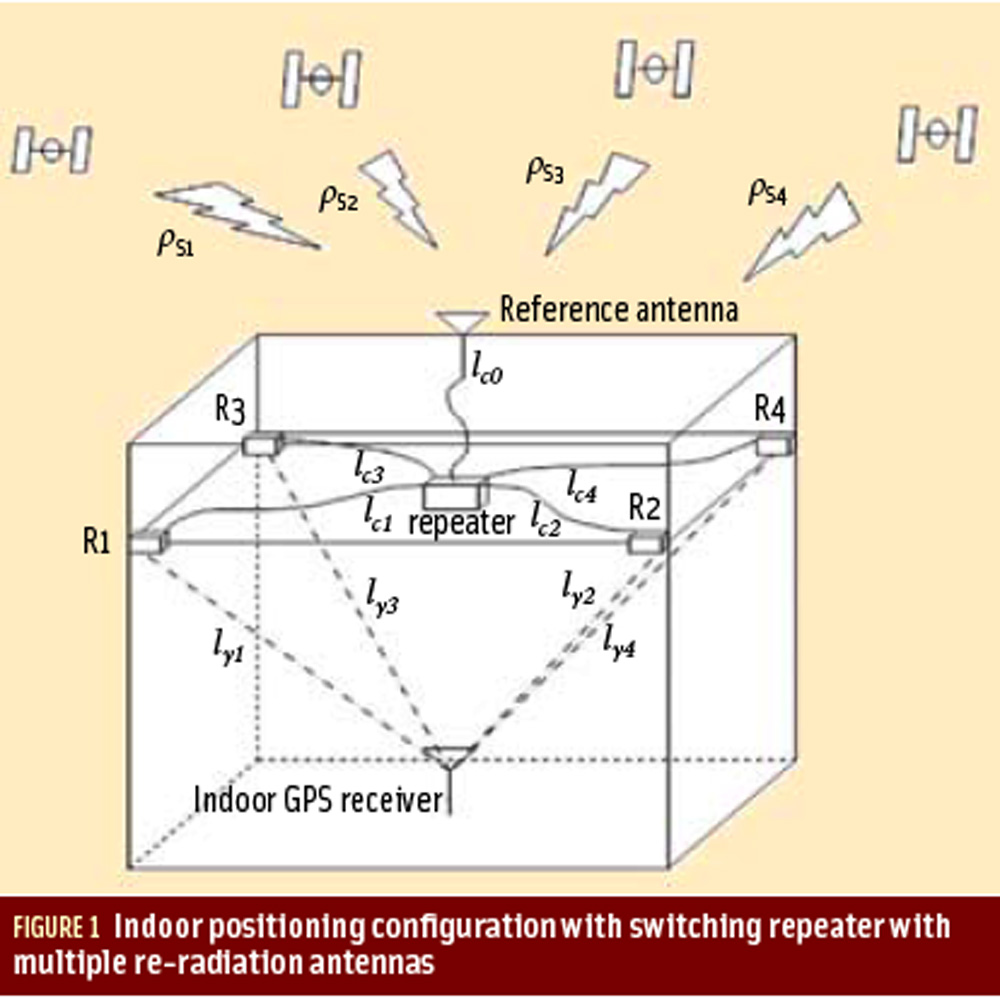
UNSW, the conference venue, is 4.3 miles (7 km) from Sydney city center.The 2012 International Conference on Indoor Positioning and Indoor Navigation (IPIN) will take place at the University of New South Wales in Sydney, Australia From November 13 to 15.
The keynote, by Google’s Waleed Kadous, is "The Indoor Tipping Point: Lessons from Indoor at Scale."
By Inside GNSS
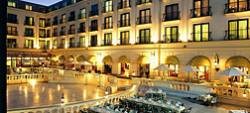
The Hilton Helsinki Strand at nightUPINLBS 2012 will take place on the Gulf of Finland waterfront at the Hilton Strand in Helsinki, Finland on October 3 and 4. The conference venue is 1/2 mile (0.8 km ) from the center of the city.
John Raquet, U.S. Air Force Institute of Technology ; Mark Petovello, University of Calgary and Rafael Lucas, GNSS Evolution and Strategy Division, European Space Agency will deliver the keynotes.
The topics are:
By Inside GNSS
Lake StarnbergThe 2012 International Conference on Localization and GNSS will take place from June 25 to 27 in Starnberg, near Munich, Germany.
ICL-GNSS 2012 will address the latest research on satellite-based and complementary positioning techniques for use outdoors and indoors, and on different platforms such as stand-alone
navigators, PDAs and mobile devices.
Abstracts may be submitted online beginning in February. The deadline for submission is Friday, March 2, 2012.
Topic areas include:
By Inside GNSS
Baska, Krk Island beach
This annual seminar on the Croatian Adriatic aims at GNSS experts and
covers the risks and vulnerabilities of the global navigation satellite
systems and efforts to improve accuracy and reliability.
The sixth GNSS Vulnerabilities and Solutions Conference will take place at Baska on the resort island of Krk in Croatia from May 21 to May 24, 2012.
By Inside GNSSThe European Space Agency (ESA) has reported its first successful reception of triple-frequency signals from a Galileo in-orbit validation (IOV) spacecraft.
The weekend of December 17 all Galileo signals were activated simultaneously for the first time across the European GNSS system’s three spectral bands, known as E1 (1559–1592 MHz), E5 (1164–1215 MHz), and E6 (1.215–1.300 MHz). The accompanying graphic displays the signals spectral profile.
By Inside GNSS
The PRN 11E5b autocorrelation function as monitored by TAS-I receiver (x axis represents chip spacing y, time in seconds).[Updated December 14, 2011] Today (December 12, 2011), the first of two Galileo IOV satellites launched October 21 began transmitting its payload signals.
Researchers at several European organizations have reported initial acquisition and tracking results of the E1 signals from the Galileo-ProtoFlight Model (PFM) satellite (previously incorrectly identified as Flight Model-2), also identified by its pseudorandom noise code (PRN 11).
By Inside GNSS
Paul Weissenberg of the European Commission’s Enterprise and Industry directorateAfter years of arduous political navigation filled with delays and disappointments, Europe’s GNSS programs appear to have found firmer ground as it heads into a crucial deployment phase.
Today (November 30, 2011), the European Commission (EC) proposed a €7 billion (US$9.41 billion) allocation for Galileo and EGNOS in the European Union’s next budget cycle (2014–2020) and delegation of the programs “exploitation” to the European GNSS Agency (GSA) and the systems’ deployment, to the European Space Agency (ESA).
By Inside GNSS
One of 12 magnetograms recorded at Greenwich Observatory during the Great Geomagnetic Storm of 1859
1996 soccer game in the Midwest, (Rick Dikeman image)
Nouméa ground station after the flood
A pencil and a coffee cup show the size of NASA’s teeny tiny PhoneSat
Bonus Hotspot: Naro Tartaruga AUV
Pacific lamprey spawning (photo by Jeremy Monroe, Fresh Waters Illustrated)
“Return of the Bucentaurn to the Molo on Ascension Day”, by (Giovanni Antonio Canal) Canaletto
The U.S. Naval Observatory Alternate Master Clock at 2nd Space Operations Squadron, Schriever AFB in Colorado. This photo was taken in January, 2006 during the addition of a leap second. The USNO master clocks control GPS timing. They are accurate to within one second every 20 million years (Satellites are so picky! Humans, on the other hand, just want to know if we’re too late for lunch) USAF photo by A1C Jason Ridder.
Detail of Compass/ BeiDou2 system diagram
Hotspot 6: Beluga A300 600ST

1. Portland, Oregon and Los Angeles, California USA
TWINS!
FIGURES 1 & 2: True3D Volumetric HUD components and operation (left), Comparison of True3D HUD user view with other types of nav aids (right)Return to main article: "True3D HUD Wins Global SatNav Competition"
Many technologies are created before their best applications are even thought about. This leads to a business phenomenon known as “technology push” in contrast to “consumer pull.” The True3D Volumetric HUD technology did not share this path.
By Inside GNSSEurope’s first two Galileo satellites have reached their final operating orbits, opening the way for activating and testing their navigation payloads.
Marking the formal end of their launch and early operations phase (LEOP), on November 3, control of the satellites was passed from the CNES French space agency center in Toulouse to the Galileo Control Center (GCC) in Oberpfaffenhofen, Germany.
By Inside GNSS