November 27, 2018

Lockheed Martin, Amazon Web Services Team to Make Downlinking Satellite Data Easier and Less Expensive

Today at AWS re:Invent, Amazon Web Services (AWS), an Amazon.com company, and Lockheed Martin announced a strategic collaboration to integrate the new AWS Ground Station service with Lockheed Martin’s new Verge antenna network. AWS and Lockheed Martin are bringing these two highly capable systems together to provide a solution that addresses customer needs for resilient satellite uplinks and downlinks.

Read More >

By Inside GNSS

Septentrio’s AIM+ Designed to Overcome RF Interference on GNSS Signals

GNSS signals are exceptionally vulnerable to radio frequency interference which can happen by accident – think of an amateur radio operator broadcasting locally – but also occur intentionally by jamming and spoofing devices. No matter the application, the stakes can be extremely high when GNSS signals are lost due to radio interference.

This could mean a loss of position in cars, taxis, trucks or robotic vehicles, emergency response vehicles, but also construction machines, marine survey, drone inspection or even financial transaction synchronization, food delivery and ride-sharing services. Interference is not some new phenomenon but with the many markets —demanding reliable positioning — it has become a priority today.

For more than 15 years Septentrio has been developing and perfecting unique interference mitigation techniques to address interference threats on GNSS. The countermeasures employed include adaptive notch filtering, pulse blanking, and unique wide band interference mitigation. Together, these measures along with other analogue and digital advancements form Septentrio’s AIM+ (Advanced Interference Mitigation) technology.

The company has an informational brochure designed to address the ever-increasing number of connected devices operating across the increasingly crowded RF spectrum that can cause unintentional interference of GNSS signals. Maintaining position accuracy, reliability and availability is a serious challenge both today and tomorrow for GNSS receivers operating in this crowded RF interference environment. As more and more new applications for GNSS are developed, challenges grow as more complex forms of interference appear worldwide. Identifying and overcoming interference with the application of advanced mitigation technologies is critical to ensure the quality of GNSS measurements and positioning.

You can download  your free 20 pages GNSS interference brochure and find out how we can help you monitor and mitigate interference in your everyday work and life.

Septentrio has developed a sophisticated RF interference monitoring and mitigation system (AIM+). To mitigate the effects of narrow-band interference, 3 notch filters can be configured either in auto or manual mode. These notch filters effectively remove a narrow part of the RF spectrum around the interfering signal. The L2 band, being open for use by radio amateurs, is particularly vulnerable to this type of interference. The effects of wideband interference, both intentional and unintentional, can be mitigated by enabling the WBI mitigation system. The WBI system also reduces, more effectively than traditionally used pulse-blanking methods, the effects of pulsed interferers.

By Inside GNSS

November 15, 2018

FCC Poised to Approve Broad Use of Galileo in U.S.

UPDATED: The Federal Communications Commission (FCC) on Nov. 15 unanimously approved waivers allowing the use of the Galileo E1 and E5 signals for non-federal purposes in the U.S. and denied the E6 signal waiver request. Approving the E6 waiver “could constrain our future spectrum management for non-Federal operations in the U.S.” the FCC wrote in the draft order document released ahead of the meeting.

Read More >

By Dee Ann Divis
November 13, 2018

International Technical Symposium on Navigation and Timing Held This Week in Toulouse, France

The International Technical Symposium on Navigation and Timing (ITSNT) is an annual event organized by CNES (Centre national d’études spatiales) and ENAC (Ecole Nationale de l’Aviation Civile) for professionals and researchers working with or interested in navigation and timing technologies and their use. This year’s event is taking place this week, Nov. 13-16, in Toulouse, France, on the campus of ENAC.

Read More >

By Inside GNSS

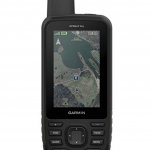
Garmin Refreshes Popular Handheld GPSMAP Series

Garmin International recently announced two additions to its popular outdoor GPS handheld series – the GPSMAP 66s and the GPSMAP 66st. The GPSMAP 66 handhelds can log raw measurements in RINEX form. These updated premium handhelds bring expanded wireless connectivity, direct-to-device access to BirdsEye Satellite imagery and a larger 3-inch sunlight-readable color display. The GPSMAP 66st offers preloaded topographic maps for the United States and Canada.

Read More >

By Inside GNSS
November 8, 2018

NavtechGPS Offering GNSS Operations for Engineers Course at ESA/ESTEC

NavtechGPS is offering a training seminar later month titled Course 336: GNSS Operations for Engineers at the European Space Agency (ESA/ESTEC) in Noordwijk, The Netherlands.

This 3-day course offers a comprehensive introduction to GPS/GNSS and DGPS technology, system concepts, design, operation, implementation and applications. Detailed information on the GPS signal, its processing by the receiver, and the techniques by which GPS obtains position, velocity and time will be covered, together with a full day on differential GPS.

Read More >

By Inside GNSS

u-blox Collaborates with ERM on Vehicle Tracking Device with Built-in Wi Fi Hotspot

Thalwil, Switzerland–based u‑blox today announced the StarLink TrackerWi‑Fi, an advanced vehicle tracking device produced by ERM Advanced Telematics, a provider of device-based telematics solutions. The device combines u-blox GNSS, 4G and Wi-Fi Technology eliminating the need to equip vehicles with a separate mobile Wi‑Fi hotspot. The StartLink TrackerWi‑Fi has wide-ranging solutions for applications in connected car, telematics and vehicle diagnostic, fleet management, vehicle security, usage-based insurance, and rental and leasing service companies.

Read More >

By Inside GNSS
November 7, 2018

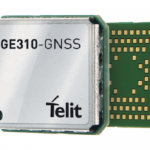
Telit GE310-GNSS IoT Module Caters to Sustained European Demand for GSM/GPRS Compact Form Factors

Telit has announced the GE310-GNSS, the first Internet of Things (IoT) module with GSM/GPRS, multi-constellation satellite positioning and Bluetooth functionality, all in a 270 mm2 form factor. The GE310-GNSS enables original equipment manufacturers (OEMs) and system integrators in application areas such as asset management, utilities and telematics, to meet strong demand for low-cost, highly compact devices without tradeoffs in performance, reliability and functionality, particularly in regional markets like Europe where 2G is forecast to remain in strong growth in a number of IoT connections for many years.

Read More >

By Inside GNSS
November 6, 2018

Positioning, Mapping Technologies Converging to Deliver Innovation in High Added Value Applications

Positioning and mapping technologies are converging and integrating as never before, enabling developers to deliver innovative high added-value applications and services, according to participants in the 5th edition of Technology for All, a forum dedicated to technological innovation in support of the environment, cultural heritage and smart cities, which was held at Rome’s Higher Institute for Firefighting (Istituto Superiore Antincendi) in early October.

Read More >

By Inside GNSS
1 34 35 36 37 38 46
IGM_e-news_subscribe