
Main Categories

LightSquared Charges That GPS Receiver Manufacturers “Ignore” DoD Standards

LightSquared has opened a new rhetorical front in its battle with the GPS community over the company’s efforts to convert L-band frequencies into terrestrial wireless broadband services: claiming in an August 11 letter to the Federal Communications Commission (FCC) that receiver manufacturers “chose to ignore” Department of Defense (DoD) standards.

In response, the Coalition to Save Our GPS, a group of GPS receiver manufacturers opposed to LightSquared’s plans, called the company’s filing an act of "desperation."

Read More >

By Inside GNSS

[uam_ad id="183541"]
August 1, 2011

Australian Satellite Navigation and Positioning Lab Founder to Head IAG

Chris Rizos

The founder of Australia’s largest concentration of GNSS research and development efforts has been named head of the International Association of Geodesy, part of the International Union of Geodesy and Geophysics (IUGG) 

Chris Rizos put together the Satellite Navigation and Positioning laboratory (SNAP) at the University of New South Wales in the 1990s.  He has been researching and writing about high precision technology and applications of GNSS since 1985 and is a professor and head of the surveying and spatial information school at the university.

Read More >

By Inside GNSS
July 29, 2011

GNSS Experts to Judge 2011 Satellite Navigation Applications Idea Contest

Find out more about 2011 USA Challenge applications ideas

Six judges — satellite navigation engineering experts from Stanford University, the Air Force Institute of Technology, Overlook Systems, NovAtel, KLA Global, the Institute of Navigation, and Inside GNSS — will select the finalists in the 2011 USA Challenge, one of 23 regional contests in this year’s European Satellite Navigation Competition (ESNC).

Read More >

By Inside GNSS
[uam_ad id="183541"]
July 28, 2011

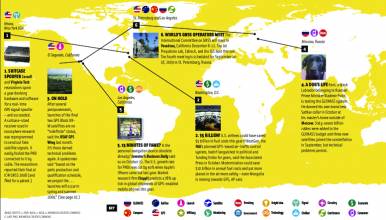
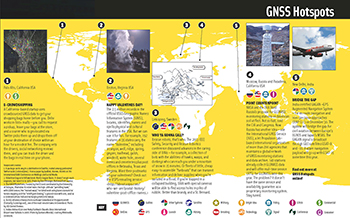
GNSS Hotspots | July 2011

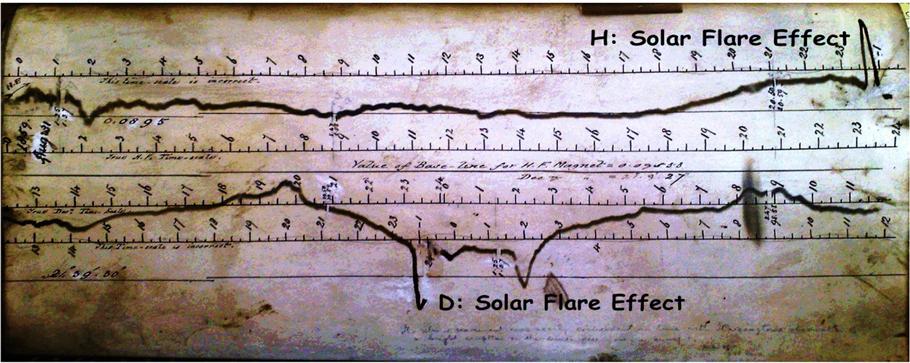
One of 12 magnetograms recorded at Greenwich Observatory during the Great Geomagnetic Storm of 1859
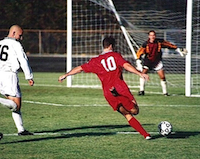
1996 soccer game in the Midwest, (Rick Dikeman image)
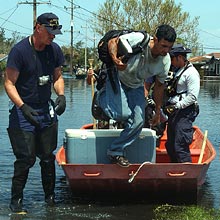
Nouméa ground station after the flood
A pencil and a coffee cup show the size of NASA’s teeny tiny PhoneSat
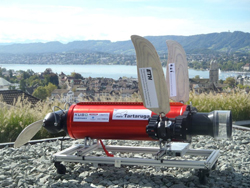
Bonus Hotspot: Naro Tartaruga AUV
Pacific lamprey spawning (photo by Jeremy Monroe, Fresh Waters Illustrated)
“Return of the Bucentaurn to the Molo on Ascension Day”, by (Giovanni Antonio Canal) Canaletto
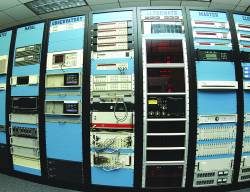
The U.S. Naval Observatory Alternate Master Clock at 2nd Space Operations Squadron, Schriever AFB in Colorado. This photo was taken in January, 2006 during the addition of a leap second. The USNO master clocks control GPS timing. They are accurate to within one second every 20 million years (Satellites are so picky! Humans, on the other hand, just want to know if we’re too late for lunch) USAF photo by A1C Jason Ridder.
Detail of Compass/ BeiDou2 system diagram
Hotspot 6: Beluga A300 600ST

1. AQUARIUS
Buenos Aires, Argentina and Vandenberg AFB, California, USA

Read More >

By Inside GNSS

July 26, 2011

China Announces Successful Compass/BeiDou-2 Satellite Launch

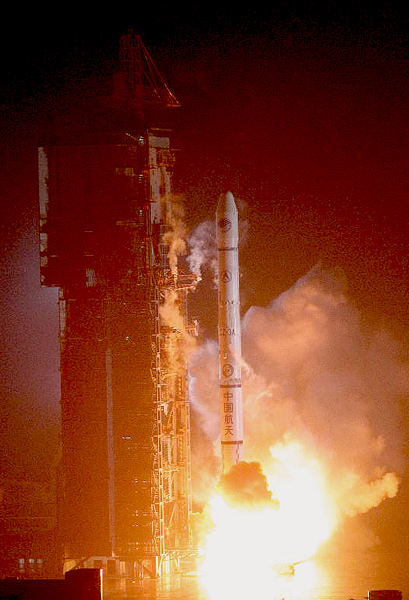
Official launch photo by Jinli Wang

[Updated 7:30 p.m. July 26 PDT) China launched another Compass/BeiDou-2 satellite at 5:44 on the morning of July 27 (Sichuan time zone). It is the ninth spacecraft in China’s indigenous satellite navigation and positioning network and the fourth in inclined geosynchronous orbit.

The navigation satellite was launched on a Long March-3A carrier rocket, according to China’s government-sponsored Compass website at www.beidou.gov.cn.

Read More >

By Inside GNSS

The Fire Next Time

What have we learned from the LightSquared fiasco?

Aside from the fact that someone gambling with other people’s money, with friends in high places benefiting from his largesse, can make the law stand on its head and our hair stand on end.

But then, we already knew that.

Just because the forces behind the broadband cellular company, Philip Falcone and Harbinger Investments, made their money by betting against the housing bubble doesn’t take away from the fact that they represent the same crew who helped take down the world economy in 2007.

Read More >

By Inside GNSS
July 20, 2011

EC Official Adds Galileo, EGNOS Worries to FCC’s LightSquared-GPS Deliberations

European Geostationary Navigation Overlay Service (EGNOS). ESA illustration

Citing European Space Agency (ESA) studies that showed “harmful interference” to Galileo receivers operating up to 1,000 kilometers from LightSquared base stations, a European Commission (EC) official has told the Federal Communications Commission (FCC) about his “deep concerns” about the wireless broadband company’s terrestrial transmissions in the 1525–1559 MHz band next to L1 GNSS frequencies.

Read More >

By Inside GNSS
IGM_e-news_subscribe