
Main Categories

March 15, 2012

Coarse Time Positioning

Q: What is Coarse Time Positioning and how does it work?  

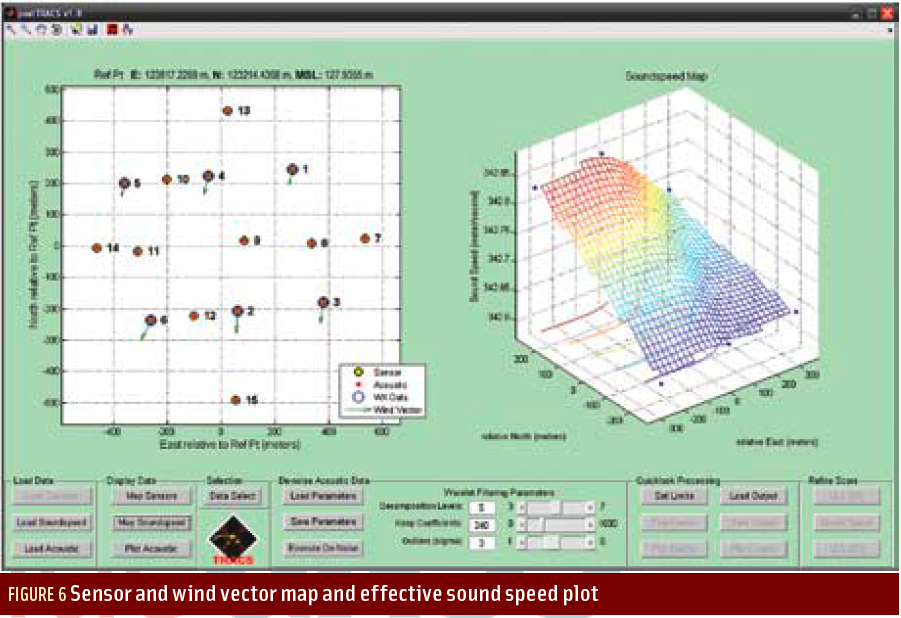
A: Coarse time positioning is used to provide a position fix using inaccurate time information when tracking sufficiently weak GNSS signals such that the navigation message cannot be extracted reliably. This article presents the key aspects of coarse positioning, including some of its challenges. To start, however, we begin by looking at the role of time within a GNSS receiver.

Read More >

By Inside GNSS

The GPS Dot and its Discontents

In-home construction of the first civilian-owned civil GPS spoofer.

Over the last few years, several of us in the GNSS community have done our best to convince our colleagues, policymakers, and the general public that unsavory characters with GNSS jammers or spoofers are a genuine threat to GNSS and an orderly society.

"But who would want to use a jammer or spoofer?” people ask.

My response? Hackers, because they can. Thieves planning to snatch expensive cargo. A moonlighting employee in the company car. Worse yet, state actors or terrorists targeting our national infrastructure.

Read More >

By Inside GNSS
[uam_ad id="183541"]
March 12, 2012

Air Force Space Command Head Supports GPS Spectrum Needs at House Subcommittee Hearing

U.S. Air Force Gen. William Shelton , commander of the Air Force Space Command (AFSPC), told a recent House Armed Services subcommittee hearing that the LightSquared controversy at the Federal Communications Commission (FCC) underlined the need to protect GPS spectrum “Whether it is by policy within the FCC or whether that is by legislation. . . “

Shelton’s comments came during March 8 testimony on the Fiscal Year 2013 National Defense Authorization Budget Request for National Security Space Activities before the Strategic Forces Subcommittee.

Read More >

By Inside GNSS

Polaris Wireless Names Per Enge as Tech Advisor

Pen Enge

Stanford University professor and GNSS expert Per Enge has been named chief technical advisor of Polaris Wireless, a Mountain View, California–based provider of software-based wireless positioning.

According to Polaris Wireless, Enge, director of Stanford’s GPS Research Laboratory, will leverage his experience in technology and academic fields “to provide strategic guidance regarding location technology, intellectual property, and research partnerships with universities and other technology vendors.” He will report to the company’s CEO, Manlio Allegra.

Read More >

By Inside GNSS
March 7, 2012

Going to Nashville in September? Submit your ION GNSS 2012 Abstracts by March 9

Aerial view of downtown Nashville, Tennessee USA

Join the 250 other technical presenters at this year’s Institute of Navigation GNSS conference and submit your abstract by Friday, March 9.

The U.S. Institute of Navigation sponsors the world’s oldest and largest conference on global navigation satellite systems. ION GNSS 2012 will take place next September 17 through 21 at the Nashville Convention Center in Tennessee. Tutorials and the CGSIC meeting will take place on September 17 and 18.

Read More >

By Inside GNSS
February 29, 2012

Web Seminar on Challenges of GNSS/Inertial Integration Gets Thumbs Up

Nearly 400 system integrators, equipment manufacturers, product/application designers, and other professionals from around the world tuned into a live broadcast web seminar presented by Inside GNSS on February 28 with the subject, “Challenges of GNSS/Inertial Integration.”

A link to the recorded version is available here. If you already registered and would like to review the webinar, just sign in. If you have not yet registered, you may do so now. Registration is free.

Read More >

By Inside GNSS
[uam_ad id="183541"]

U.S. House Committee Leaders Request Information on LightSquared and GPS Interference

Republican leaders of the U.S. House of Representative’s Energy and Commerce Committee have requested additional information regarding the procedures followed by federal agencies in the interference dispute between LightSquared and GPS.

The inquiry also asks about the government plans to develop GPS receiver standards that would prevent interference from “future deployment of terrestrial service in spectrum near or adjacent to the GPS bands.”

Read More >

By Inside GNSS

GPS Program Budget: A Lot, But Is It Enough?

The details of President Obama’s 2013 budget have been gradually filtering out and, in general, the GPS system and those programs closely linked to satellite navigation, have escaped deep cuts.

On the hardware side the White House has requested $58.2 for GPS IIF satellite procurement. According to Air Force budget documents, the plan is to then wrap up the total IIF procurement of 12 satellites with a request for $77.6 million in FY14 and $7.3 million in FY15.

Read More >

By Inside GNSS
February 28, 2012

LightSquared CEO Resigns Amid GPS Interference Controversy

Sanjiv Ahuja

LightSquared announced today (February 28, 2012) that Sanjiv Ahuja has resigned his position as chief executive officer of LightSquared, Inc. He will continue to serve as chairman of the board.

Ahuja’s resignation is the latest development in the company’s attempt to establish a nationwide terrestrial wireless broadband network in spectrum adjacent to that used by GPS and other GNSS L1 services. No explanation was given for his departure.

Read More >

By Inside GNSS
February 25, 2012

China Launches 11th Compass/BeiDou-2 Satellite

China successfully launched a satellite into space at 00:12 Beijing Time on February 25 (February 24, 16:12 UTC/GMT), the 11th of the nation’s second-generation Beidou, or Compass, GNSS system.

The satellite, launched from the Xichang Satellite Launch Center in the southwestern Sichuan province, was carried by a Long March-3C carrier rocket into a geosynchronous orbit. It is the fifth geostationary spacecraft in the current BeiDou-2 constellation.

Read More >

By Inside GNSS

Solar Max and Space Weather Prediction

Dr. Genene Fisher

On any given day — especially cloudy winter days — most people may not give a lot of thought to the Sun.

More than 150 million kilometers (93.2 million miles) away, its remoteness belies the enormous forces at work in this yellow dwarf star with a mass 330,000 times that of Earth. If someone asked us to name its harmful effects, we might come up with sunburn, heat stroke, skin cancer.

But many in the GNSS community know better.

Read More >

By Inside GNSS
IGM_e-news_subscribe