Main Categories

September 15, 2015

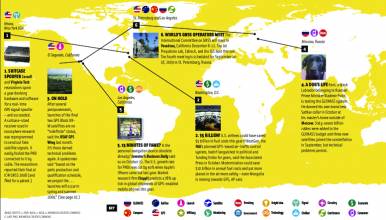
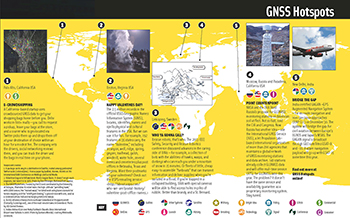
GNSS Hotspots | September 2015

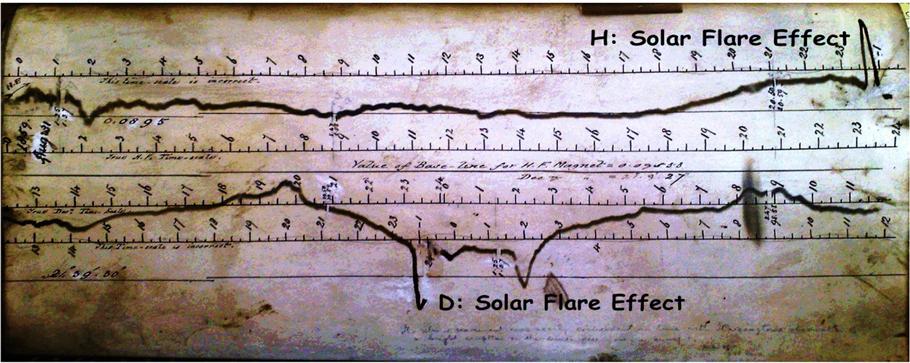
One of 12 magnetograms recorded at Greenwich Observatory during the Great Geomagnetic Storm of 1859
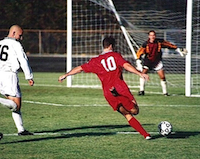
1996 soccer game in the Midwest, (Rick Dikeman image)
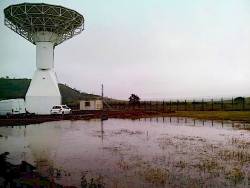
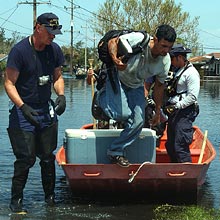
Nouméa ground station after the flood
A pencil and a coffee cup show the size of NASA’s teeny tiny PhoneSat
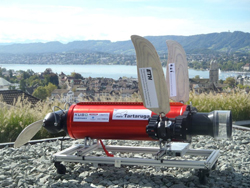
Bonus Hotspot: Naro Tartaruga AUV
Pacific lamprey spawning (photo by Jeremy Monroe, Fresh Waters Illustrated)
“Return of the Bucentaurn to the Molo on Ascension Day”, by (Giovanni Antonio Canal) Canaletto
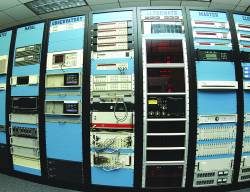
The U.S. Naval Observatory Alternate Master Clock at 2nd Space Operations Squadron, Schriever AFB in Colorado. This photo was taken in January, 2006 during the addition of a leap second. The USNO master clocks control GPS timing. They are accurate to within one second every 20 million years (Satellites are so picky! Humans, on the other hand, just want to know if we’re too late for lunch) USAF photo by A1C Jason Ridder.
Detail of Compass/ BeiDou2 system diagram
Hotspot 6: Beluga A300 600ST

1. I LOVE MY JOB BUT…
Bakersfield, California USA

Read More >

By Inside GNSS
[uam_ad id="183541"]
September 9, 2015

Webinar: Cutting-Edge Applications of Unmanned Systems

The incorporation of GNSS and inertial technologies is helping drive an explosion of systems development and applications of unmanned systems. On Tuesday, September 29, Inside GNSS and NovAtel will present a FREE 90-minute web seminar showcasing some of these applications, including the use of remote sensing technologies to assess pest populations in commercial crops and to conduct infrastructure inspections, with the aid of air and ground vehicles.

Register now for Tuesday, September 29, 2015: 9 am PDT

Read More >

By Inside GNSS

September 7, 2015

Let Us Now Praise

When China joined the GNSS club in 2007, it turned a satnav triumvirate into a quartet.

But some of the limelight needs to fall a little further from center stage — out there where the Indian Regional Navigation Satellite System (IRNSS) and Japan’s Quasi-Zenith Satellite System (QZSS) are not waiting idly in the wings.

Read More >

By Inside GNSS

Alternative PNT

At one time, GPS was expected to supplant a wide range of navigation technologies in the world’s positioning, navigation, and timing (PNT) portfolio. But an unexpected thing happened along the way.

Read More >

By Inside GNSS

John Raquet: A Family Affair

John and his wife, Cindy.

John Raquet’s Compass Points

With an imposing 6’2” physique and a disarming grin, John Raquet rises above the crowd. To colleagues he’s a top-flight engineer and university professor, and director of the Air Force Institute of Technology (AFIT) Autonomy and Navigation Technology Center. But he is also a former all-star basketball player, a preacher, sometime soccer coach, former military officer, and, most definitely, a family man.

Read More >

By Inside GNSS
[uam_ad id="183541"]

GPS Confidential

Ubiquitous location-aware mobile devices, mainly GPS-enabled smartphones, have led to a boom in location-based services (LBS), which have been revolutionizing businesses and lifestyles. Common uses of LBSs include asset tracking, location-based advertising, emergency roadside service, turn-by-turn navigation, and real-time traffic & road information sharing.

Read More >

By Inside GNSS

Urban Localization and 3D Mapping Using GNSS Shadows

It is by now well known that GNSS-based localization in built-up urban environments can be extremely inaccurate. This is a fundamental problem that hardware enhancements cannot solve.

A GNSS receiver estimates 3D location and timing from pseudoranges from four or more satellites, assuming that these pseudoranges correspond to direct line-of-sight (LOS) paths from each satellite. In urban canyons, however, the signal from a satellite to the receiver suffers from multipath propagation and shadowing.

Read More >

By Inside GNSS

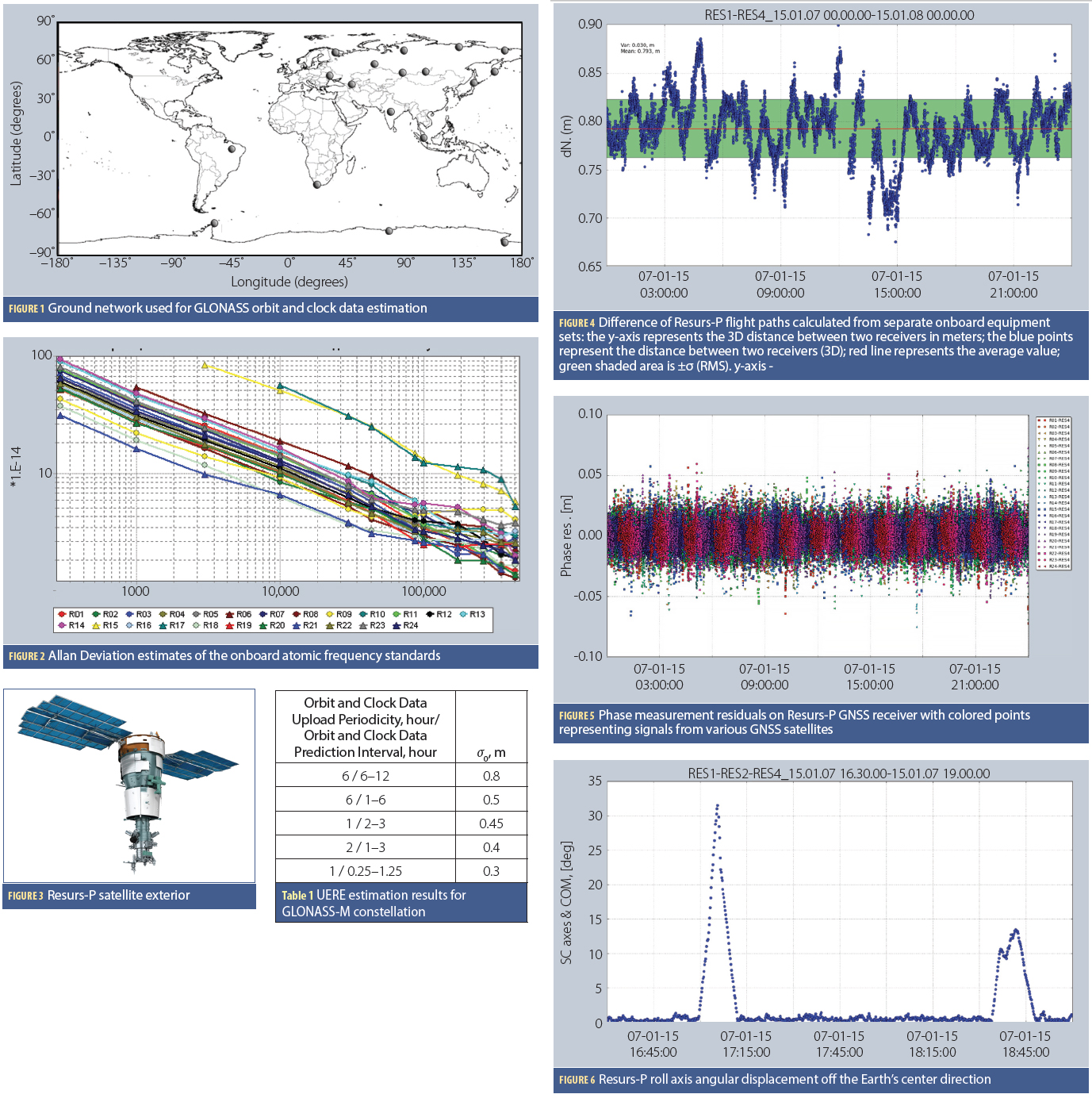
GLONASS for Precise Navigation in Space

Figures and Tables

The current stage of GLONASS evolution is aimed at meeting future user requirements of which the most important is the improved accuracy of positioning.

During the implementation of the GLONASS Space Segment Modernization Program (2012–2015), the GLONASS team is facing the situation in which it is not feasible to launch new navigation satellites because the existing constellation is comprised of GLONASS-M satellites operating beyond their guaranteed design lifetime. Nine more GLONASS-M satellites are in ground storage.

Read More >

By Inside GNSS

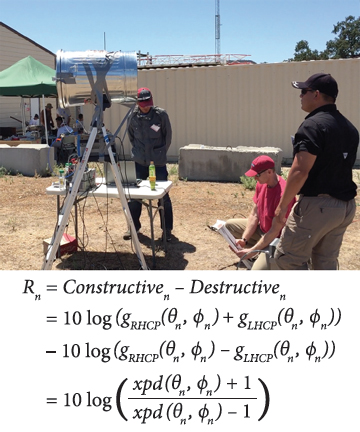
Single Antenna, Dual Use

A GNSS single-antenna system can be compared to a single-pixel camera. Electromagnetic waves traveling 20,000 kilometers from every overhead direction can reach us. Yet once at the antenna, this diverse set of information is collapsed into a single magnitude and phase value, then sent off to the receiver so that value can be extracted.

Read More >

By Inside GNSS

New Fiscal Year Begins with Unfinished GPS Business

Most folks look to a new year as an opportunity for fresh starts and new projects. For the GPS community, however, the October 1 start of the 2016 federal fiscal year (FY16) will likely be more about the hangover — that is, the issues that are hanging over into the next 12 months, unresolved.

At the top of that list of unfinished business are two system decisions: a go/no-go determination on whether the United States will build eLoran as the U.S. backup to GPS and deciding whether or not to choose a new contractor for the GPS III program.

Read More >

By Dee Ann Divis
July 20, 2015

GNSS Hotspots | July 2015

One of 12 magnetograms recorded at Greenwich Observatory during the Great Geomagnetic Storm of 1859
1996 soccer game in the Midwest, (Rick Dikeman image)
Nouméa ground station after the flood
A pencil and a coffee cup show the size of NASA’s teeny tiny PhoneSat
Bonus Hotspot: Naro Tartaruga AUV
Pacific lamprey spawning (photo by Jeremy Monroe, Fresh Waters Illustrated)
“Return of the Bucentaurn to the Molo on Ascension Day”, by (Giovanni Antonio Canal) Canaletto
The U.S. Naval Observatory Alternate Master Clock at 2nd Space Operations Squadron, Schriever AFB in Colorado. This photo was taken in January, 2006 during the addition of a leap second. The USNO master clocks control GPS timing. They are accurate to within one second every 20 million years (Satellites are so picky! Humans, on the other hand, just want to know if we’re too late for lunch) USAF photo by A1C Jason Ridder.
Detail of Compass/ BeiDou2 system diagram
Hotspot 6: Beluga A300 600ST

1. RUM DEAL
Moscow, Russia, and Havana, Cuba

Read More >

By Inside GNSS
IGM_e-news_subscribe