
Main Categories

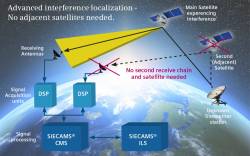
Is it possible to build a low-cost system to detect and locate a single GNSS jammer in near-real time?

Q: Is it possible to build a low-cost system to detect and locate a single GNSS jammer in near-real time?

A: GNSS jammers are an ongoing threat to the reliable use of GNSS. The problem of geolocating GNSS jammers can be addressed using a time-difference-of-arrival (TDOA) processing technique; however, this problem is quite different than geolocating jammers in other radio frequency systems. The two main differences are:

(1) No GNSS are available to use as a timing reference.

Read More >

By Inside GNSS

GPS Roundup: Congress Reopens for Business

Washington has seen a lot of transitions, so even amidst political controversy it’s generally business as usual.

For the GPS community that business, at least in the near term, will likely center on changes in federal leadership — with many key appointments, like a new Secretary of the Air Force, still to be determined. In addition — even at this early stage when new lawmakers are still trying to find their offices — there are issues and opportunities worth watching in emerging legislation.

Read More >

By Dee Ann Divis
[uam_ad id="183541"]

Multi-Receiver GPS-Based Direct Time Estimation

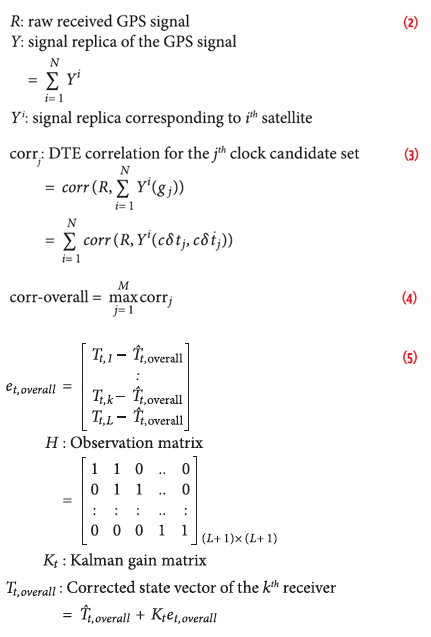
Equations

Incorporation of real-time synchronized phasor measurements in the control of power grids can play an important role in maintaining the overall closed-loop stability of the power system. In the past, instability in the power grid caused disturbances ranging from small local perturbations to severe large scale blackouts as can be seen from Figure 1. Currently, the synchronization achieved in measurements collected using devices known as supervisory control and data acquisition (SCADA) is not robust enough for efficient monitoring the power grid.

Read More >

By Inside GNSS
January 23, 2017

Positioning Technology in Australia Gets a $12 Million Boost

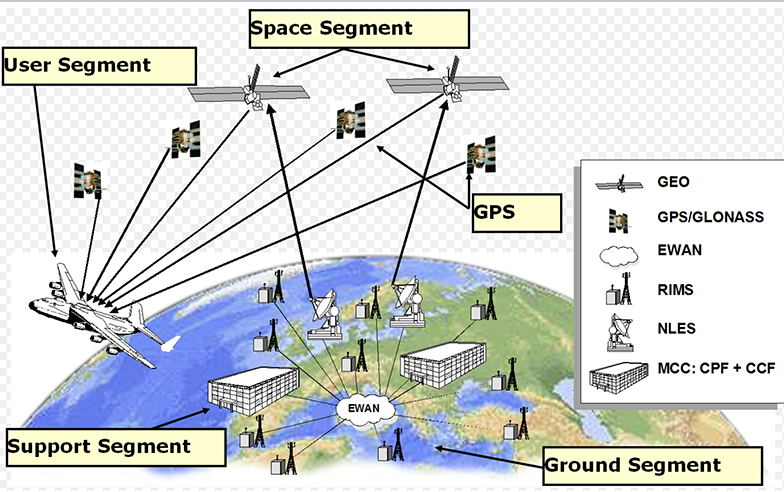
SBAS illustration with the GNSS satellites (upper left) and the communications satellite (upper right).

With the Australian government’s announcement earlier this month that it would invest $12 million in a two-year program looking into the future of positioning technology in Australia, comes plans for testing of satellite based augmentation systems (SBAS) to be undertaken, and for future applications for all four major modes of transport in Australia, as well as for potential safety, productivity, efficiency and environmental benefits.

Read More >

By Inside GNSS
January 20, 2017

Swift Navigation Co-Founders Make Forbes 30 Under 30 Consumer Tech List

Swift Navigation co-founders Colin Beighley (left) ands Fergus Noble (right).

Swift Navigation co-founders Fergus Noble (29) and Colin Beighley (28) have been honored in the 2017 Forbes 30 Under 30 Consumer Technology list.

Swift Navigation is a San Francisco-based startup that provides centimeter-accurate real-time kinematics (RTK) GPS and GNSS positioning technology for autonomous vehicles, unmanned aerial vehicles (UAVs), precision agriculture, robotics, surveying, space applications and more.

Read More >

By Inside GNSS

ODOT Deploys DT Research Purpose-built GNSS Rugged Tablets for Construction Projects

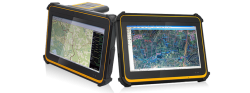
DT Research’s DT391GS Rugged GNSS Tablets

San Jose, California-based DT Research announced on January 9 the successful deployment of the DT391GS Rugged GNSS Tablets for the Oregon Department of Transportation (ODOT).

The DT391GS tablets with Intel Celeron Dual Core Processors are used as Inspector Positioning Tablets with the critical hardware and software needed for line and grade determination on stakeless highway construction projects.

The tablet comes with four GNSS module options including two from Hemisphere GNSS and two from Trimble. The GNSS options are:

Read More >

By Inside GNSS
[uam_ad id="183541"]

FCC Seeks Comments on Allowing Galileo Use in U.S.

After a yearslong wait the Federal Communications Commission (FCC) is asking for comments on whether it should allow signals from Europe’s Galileo satellite navigation system to be used for non-federal applications in the United States. The call for public feedback is part of a process to grant a waiver so that Galileo-capable receivers don’t have to be licensed in the United States.

Read More >

By Inside GNSS
January 11, 2017

Spirent Announces New GNSS/GPS Testing Software

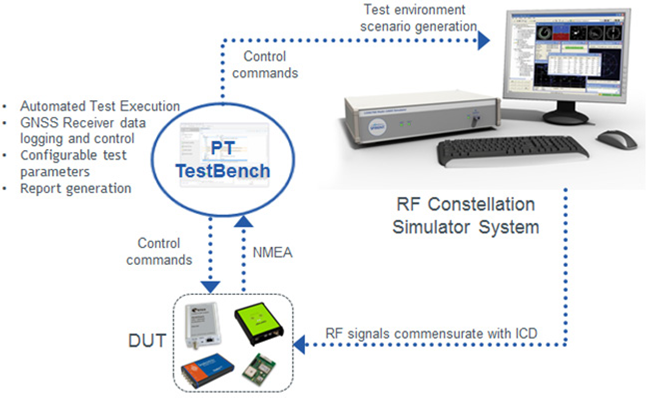
Spirent Communications’ PT TestBench.

Spirent Communications plc has announced the availability of PT TestBench — software designed to help technology, system and application developers build more accurate positioning functions more quickly. According to the company, the testing, analysis and reporting package automates testing of GPS and other global navigation satellite system (GNSS) receivers, so higher quality systems are brought to market faster and more reliably.

Read More >

By Inside GNSS
IGM_e-news_subscribe