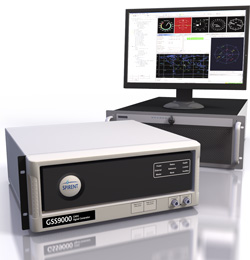
GPS Directorate Issues Security Approval for Spirent GSS9000 Simulator
Spirent Federal Systems has announced that the GSS 9000 RF constellation simulator has been reviewed and granted security approval by the U.S. Air Force GPS Directorate.

Global Navigation Satellite Systems Engineering, Policy, and Design
Spirent Federal Systems has announced that the GSS 9000 RF constellation simulator has been reviewed and granted security approval by the U.S. Air Force GPS Directorate.

The European GNSS Agency (GSA) and Eurocontrol have signed a new cooperation agreement to jointly contribute to the implementation of European Union GNSS policies as they apply to the field of aviation.
By Inside GNSS The Antiquarium in the Residenz München
The Munich Satellite Navigation Summit will take place at the Residenz Muenchen in Munich, Germany on March 24 – 26, 2015.
The theme for this year’s summit is “Future of PNT – A Glance into the Crystal Ball”.
The technical program includes plenary discussions and updates on the main activities in worldwide satellite navigation systems, including:
By Inside GNSS
Trimble Dimensions, the 2014 International User Conference, will take place at the Mirage and Treasure Island hotels in Las Vegas, Nevada from November 3 through 5.
Online registration is now open. The deadline for abstracts has passed.
By Inside GNSS
 The Capitole of ToulouseToulouse, France
The 2014 International Technical Symposium on Navigation and Timing will be held at the ENAC premises (Bellonte Amphitheater) in Toulouse, France on November 17 – 18, 2014. The objective of the symposium is to gather experts and innovators that will present their views/work on specific navigation- and/or timing-related topics, with an emphasis on technical aspects.
Online registration is open.
By Inside GNSS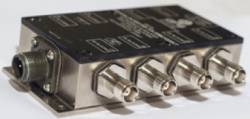
GPS Networking, headquartered in Pueblo West, Colorado, has announced that it now offers electro-magnetic interference (EMI) shielding on its GPS/GNSS Splitters.
Interference between electronic components is an increasing issue as more wireless components are used to complete broadband systems. Reducing disturbance among separate frequencies through EMI shielding is a critical deliverable for project managers, says Eileen O’Halloran, general manager at GPS Networking
By Inside GNSS
The Air Force says it might ask Congress for permission to implement bigger buys of GPS satellites beginning in fiscal year 2016 (FY16) once it sorts out whether to drop Lockheed Martin as the GPS III prime contractor and switch to a different manufacturer for the navigation payload.
The department told Congress in a recent report on multiyear procurement (MYP) that while its current approach “allows the government the flexibility to adapt to a changing budget profile and constellation needs, it prevents the program from realizing savings that MYP could provide.”
By Inside GNSS
A Department of Transportation (DoT) plan that would establish limits on the power of transmissions from bands adjacent to GPS and other GNSS services will get its first hearing at a September 18 meeting in Cambridge, Massachusetts.
By Inside GNSS
Techniques to avoid aircraft collisions took center stage as aviation experts met in Washington this week to continue hammering out the standards essential to integrating unmanned aircraft systems (UAS) into the nation’s skies.
The standards are being developed by RTCA Special Committee 228 (SC-228), one of the family of committees operating through RTCA, Inc., which develops consensus standard for aviation, which are then adopted and put into real-world practice by the Federal Aviation Administration (FAA).
By Inside GNSS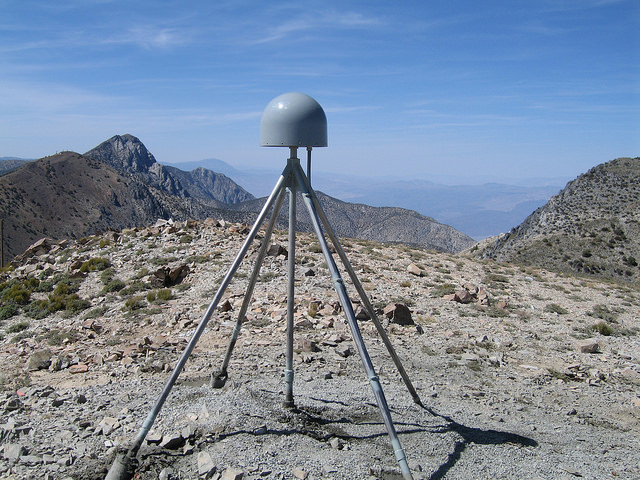
Precise GNSS measurements have revealed that the severe drought gripping the western United States in recent years is changing the landscape well beyond localized effects of water restrictions and browning lawns, according to scientists at Scripps Institution of Oceanography at the University of California at San Diego.
By Inside GNSS NovAtel IMU-ISA-100C
NovAtel Inc. has announced the addition of the IMU-ISA-100C as an inertial measurement Unit (IMU) option for its SPAN GNSS+INS line of positioning products.
According to the company, the IMU-ISA-100C is a high-performance, near–navigation-grade IMU that provides a solution for platform stabilization, general purpose navigation, photogrammetry, remote sensing, and ground mobile mapping applications.
By Inside GNSS
Members of Congress mapped out some rare common ground with both House and the Senate appropriators agreeing to not only fully fund nearly all elements of the GPS program next fiscal year but to add tens of millions to restore cutbacks in the procurement schedule for GPS III.
By Inside GNSS
The advantages of a digital navigation payload, a technology singled out by both the House and Senate for $20 million worth of research support, appears to be a key factor in the Air Force’s search for a new GPS III contractor.
The digital payload “is a direct complement to the Production Readiness Alternate Sources Sought released in June,” Air Force officials said in an emailed response to questions about the technology and how it fits into the ongoing search for new GPS III suppliers.
By Inside GNSS