
House Lawmakers Cut Civil GPS Funding across the Board
The House Appropriations Committee voted May 13 to cut the White House request for civil GPS funding and a number of other GPS-related program at the Dept. of Transportation.
By Inside GNSS
Global Navigation Satellite Systems Engineering, Policy, and Design
The House Appropriations Committee voted May 13 to cut the White House request for civil GPS funding and a number of other GPS-related program at the Dept. of Transportation.
By Inside GNSS
GPS III satellites and their new ground system, both years behind schedule and hundreds of millions of dollars over budget, still may not be on track despite corrective actions, Air Force Secretary Deborah L. James told a U.S. Senate hearing recently.
By Inside GNSS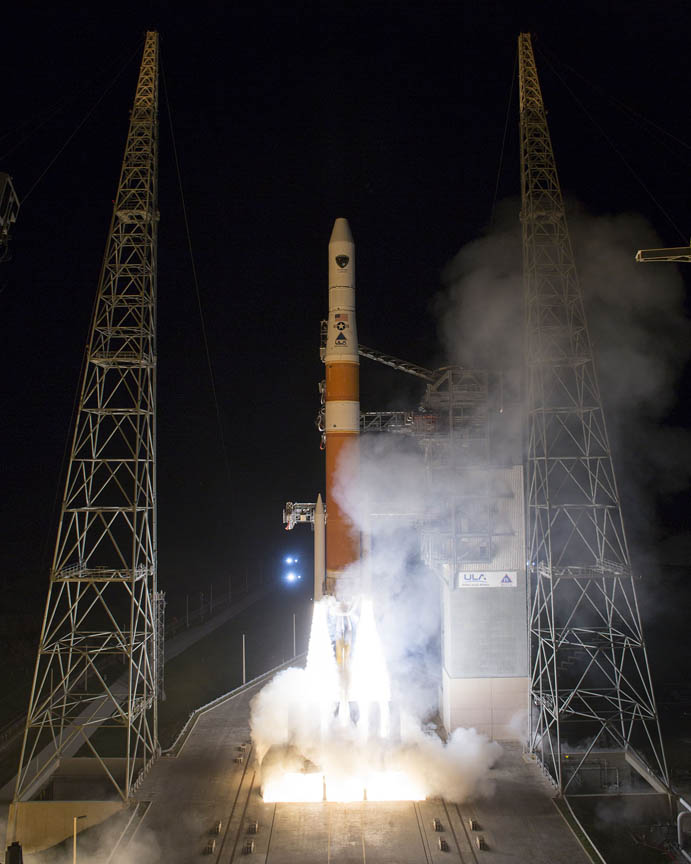 GPS Block IIF-5 on its way from Cape Canaveral on February 20, 2014. Photo by Ben Cooper, United Launch Alliance
[Updated May 26, 2015] The U.S. Air Force released a draft request for proposal (RFP) yesterday (May 13, 2015) for GPS III Launch Services, including launch vehicle production, mission integration, and launch operations. The Space Exploration Technologies Corporation — better known as SpaceX and headed by Elon Musk — may well enter the competition.
By Inside GNSS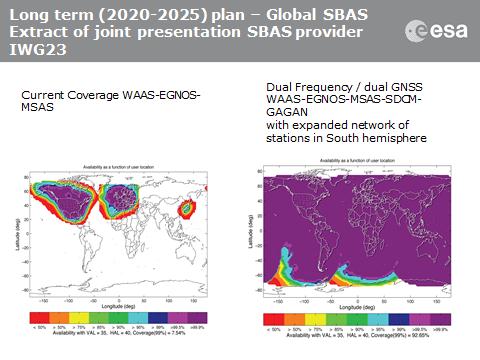
The next decade’s aircraft pilots will be able to rely on enhanced, reliable GNSS satellite navigation signals on a seamless basis across much of the world, thanks to decisions made at the latest gathering of worldwide GNSS augmentation system providers and experts.
By Inside GNSS
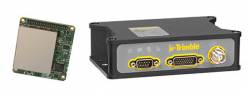 Trimble’s BD935-INS (left) and BX-935-INS
Trimble has introduced the BD935-INS module that combines a multi-frequency, multi-GNSS receiver with an integrated 3-D microelectromechanical systems (MEMS) inertial sensor package.
As part of Trimble’s GNSS OEM portfolio, the new compact module augments real-time precise positioning with 3-D orientation, connectivity, and configuration capabilities designed to enable system integrators and OEMs to add GNSS and attitude to specialized or custom hardware solutions.
By Inside GNSS
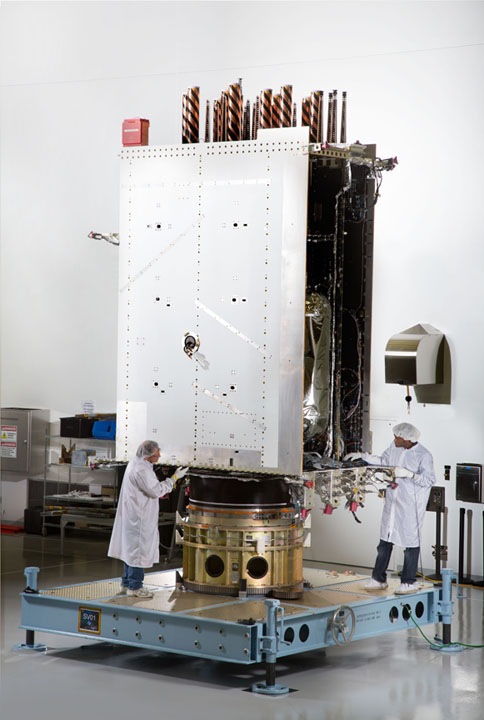 In April, Lockheed Martin fully integrated the U.S. Air Force’s first next-generation GPS III satellite at the company’s Denver, Colorado–area satellite manufacturing facility. The first in a design block of new, more powerful and accurate GPS satellites, GPS III Space Vehicle One is now preparing for system-level testing this summer. Lockheed Martin photo
Lockheed Martin has finally been able to announce victory in its effort to complete integration of the first GPS Block III satellite.
Integration took place last month at the company’s GPS III Processing Facility near Denver, Colorado, bringing together the system module — which includes the navigation payload that performs the primary positioning, navigation, and timing mission — the functional bus containing the electronics that manage all satellite operations, and the propulsion core that enables the satellite to maneuver for operations on orbit.
By Inside GNSS
Forsberg Services Ltd. has announced its recent acquisition of the StarLink product line from Raven Industries. StarLink products include inline amplifiers, coaxial down/up converters and fiber-optic link systems to enable and support extended cable runs for GNSS in navigation and time synchronization applications.
The House Armed Services Committee (HASC) is considering legislation that would fully authorize the White House’s funding request for GPS and possibly add provisions aimed at evaluating the new, troubled GPS ground system and pushing the Pentagon to look at a global backup for GPS.
By Inside GNSS College Park Marriott Hotel and Conference Center
The 2015 Space Situational Awareness (SSA) Forum will be held at the College Park Marriott Hotel and Conference Center in Hyattsville, Maryland, U.S.A. on May 12-13, 2015.
By Inside GNSS
Registrations are still available for the this year’s European Space Agency (ESA) International Summer School on Global Navigation Satellite Systems, which will take place in Barcelona, Spain, at the end of August.
 Meb Keflezighi midway through 2014 Boston Marathon en route to victory. Wikimedia Commons photo
“Wearable” sensors, the Internet of Things, and GNSS didn’t achieve as high a profile as they might have in the 2015 Boston Marathon held Monday (April 20, 2015). That’s because last year’s winner, Meb Keflezighi, finished eighth behind Ethiopia’s Lelisa Desisa and well off the former’s winning 2014 pace of 2:08:37.
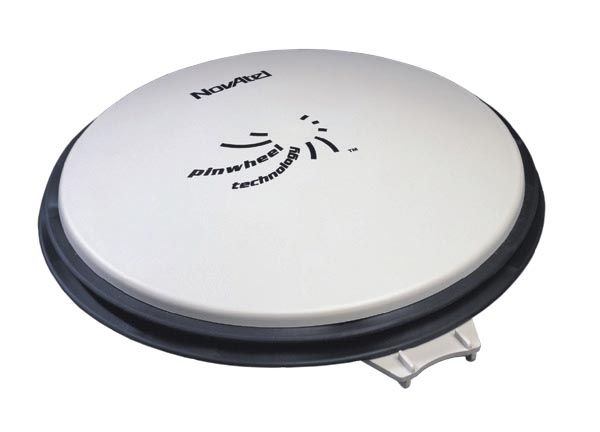 NovAtel GPS-704-WB antenna
NovAtel Inc. today (April 23, 2015) launched the GPS-704-WB antenna, a wideband antenna that supports L-band as well as the frequencies of all current GNSS constellations (GPS, GLONASS, Galileo, and BeiDou), including B3 and E6 signals. Customers can use this antenna for GPS-only or multi-constellation applications, providing excellent flexibility for application developers, according to the company.
By Inside GNSS
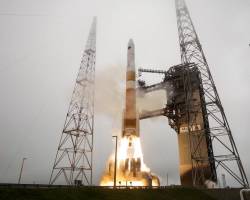 Launch of GPS IIF-9 on March 25, 2015. United Launch Alliance photo
In a Notice to NAVSTAR Users (NANU 2015028), the U.S. Air Force announced that the ninth GPS-IIF satellite, SVN-71/PRN-26, launched on March 25, 2015, has completed its operational checkout and was set to healthy and usable on Monday (April 20, 2015). This brings the number of satellites transmitting the L2C signal to 16 and those transmitting the L5 signal to 9.
The next GPS-IIF satellite, IIF-10/SVN-72 is tentatively scheduled for launch on June 16.
By Inside GNSS