
Galileo

May 6, 2014

Michel Monnerat: Out of Africa — GNSS

SIDEBAR: Michel Monnerat’s Compass Points

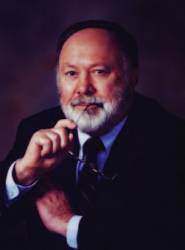
“I was born in Arles, in the south of France,” says Michel Monnerat, “but I left France before my first birthday. We moved many times, from place to place.”

Monnerat’s father worked for a civil engineering company, specializing in maritime works — harbor construction, coastal protection, and such. His family lived in Ivory Coast, Cameroon, and Tunisia, but Monnerat spent most of my early life in Lomé, the capital city of Togo.

Read More >

By Inside GNSS
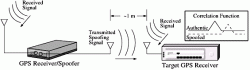
Location Authentication

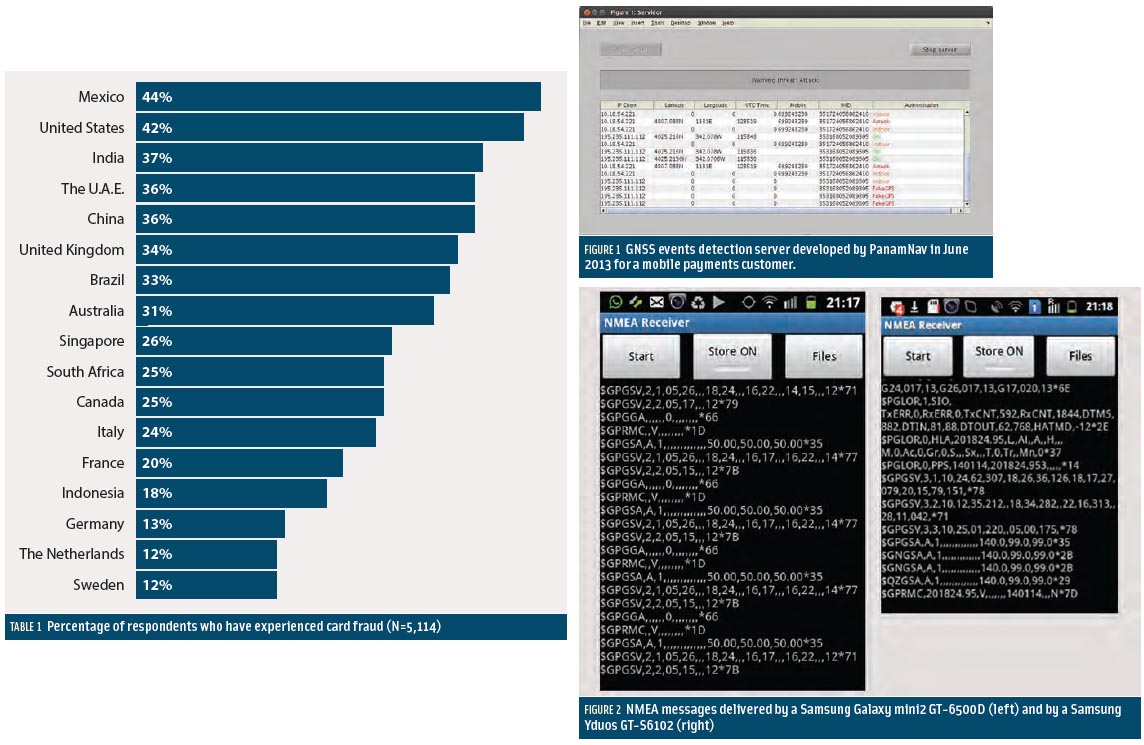
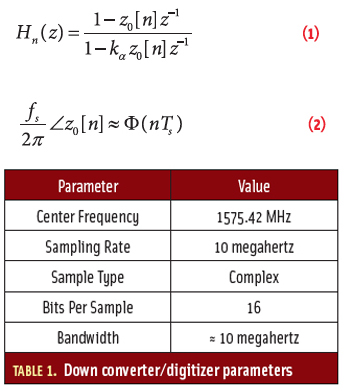
Table 1, Figures 2 & 3

Smartphone apps represent the most prominent market for GNSS. No other device or community of users has achieved a larger growth and market penetration in the period 2008–2013.

Apple introduced the first GPS capability on a smartphone in June 2008 with the iPhone3, and one year later Samsung introduced its Samsung Galaxy, incorporating the first GPS receiver for this brand.

Read More >

By Inside GNSS
April 30, 2014

Pentagon Seeks to Partner for Access to Other GNSS Signals

The U.S. military is moving toward using the signals of other satellite navigation constellations to help ensure access to positioning and timing information and to potentially thwart spoofing.

The impending shift came to light in remarks made by Air Force Chief of Staff Gen. Mark Welsh III during a talk last week (April 23, 2014) at the National Press Club.

Read More >

By Inside GNSS
[uam_ad id="183541"]

European Officials Consider Galileo Mandate for Mobile Devices

Perhaps taking a page of Russia’s playbook for mandating use of GLONASS in certain equipment, European officials are looking into the possibility of requiring the addition of Galileo capability to mobile phones and other device and platforms.

As it has become clear that the European GNSS will be the third or fourth GNSS available — after GPS, GLONASS, and probably BeiDou — the European Union’s executive body, the European Commission, is exploring non-market strategies to increase adoption of Galileo by manufacturers and users.

Read More >

By Inside GNSS
April 16, 2014

At ENC 2014: A GNSS Wake Up Call for Europe

Brad Parkinson

Among the key topics to come out of this year’s European Navigation Conference (ENC 2014) in Rotterdam is how safe — or unsafe — we really are, and who in Europe cares. The answer is, a lot of people care, but almost no one can do anything about it.

Professor David Last, strategic advisor at the General Lighthouse Authorities of the UK & Ireland, made the case before the conference had even started, at the pre-conference “Resilient PNT Forum.”

Read More >

By Inside GNSS

April 8, 2014

2014 UPINLBS: Ubiquitous Positioning Indoor Navigation and Location Based Service

The third IEEE international conference on "Ubiquitous Positioning, Indoor Navigation and Location-Based Service" (UPINLBS 2014) will be held on 20-21 Nov. 2014 at the Omni Hotel in Corpus Christi, Texas, USA.

Keynote speakers will include:

  • Dr. Bryan Klingner, Google, USA
  • Dr. Jade Morton, Miami University, USA
  • Dr. Liqiu Meng, Technical University Munich, Germany

UPINLBS 2014 will feature technical papers and presentations on a variety of topics such as:

Read More >

By Inside GNSS

March 31, 2014

ESNC 2014 GNSS Innovation Competition Launches at ENC 2014

The European Satellite Navigation Competition (ESNC) 2014 will officially kick off on April 15 at the European Navigation Conference (ENC) in Rotterdam, The Netherlands, but the 11th round of the annual event opens Tuesday (April 1).

Launched by Anwendungszentrum GmbH Oberpfaffenhofen in 2004 with three partner regions, the ESNC has grown into a network of GNSS innovation and expertise with more than 20 regions taking part worldwide. Since 2004, the ESNC has received almost 2,400 submissions from 4,263 teams and named 204 award winners.

Read More >

By Inside GNSS
[uam_ad id="183541"]
March 24, 2014

EGNOS Capability Enhanced with Addition of New Generation of Satellite Transponders

On Saturday (March 22, 2014) two geostationary L-band transponders, GEO-2s, were successfully launched on board the SES ASTRA 5B satellite from the European Space Port in Kourou, French Guiana.

The new generation transponders will provide higher accuracy positioning signals to both civil and professional users of EGNOS-enabled receivers and ensure the continuity and quality of the European Geostationary Navigation Overlay Service (EGNOS) open service and safety-of-life services for the next 15 years, according to the European GNSS Agency (GSA).

Read More >

By Inside GNSS
March 23, 2014

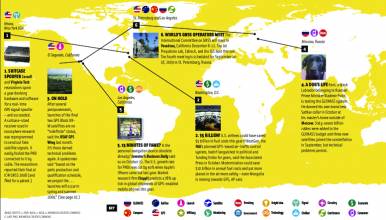
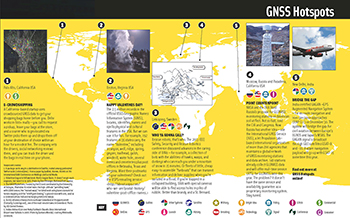
GNSS Hotspots | March 2014

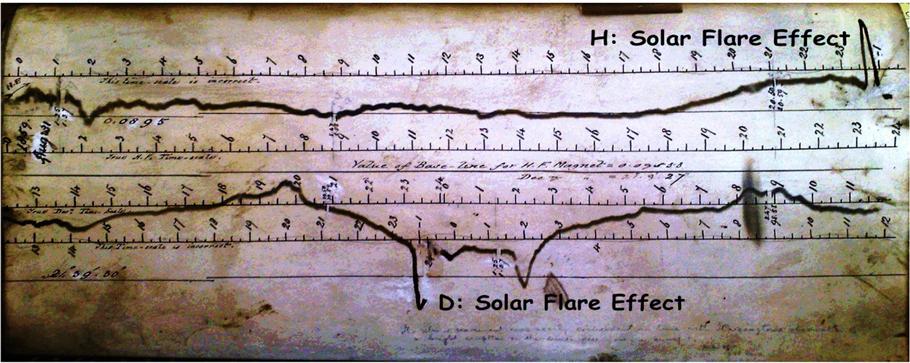
One of 12 magnetograms recorded at Greenwich Observatory during the Great Geomagnetic Storm of 1859
1996 soccer game in the Midwest, (Rick Dikeman image)
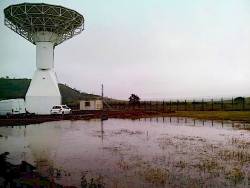
Nouméa ground station after the flood
A pencil and a coffee cup show the size of NASA’s teeny tiny PhoneSat
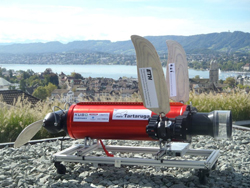
Bonus Hotspot: Naro Tartaruga AUV
Pacific lamprey spawning (photo by Jeremy Monroe, Fresh Waters Illustrated)
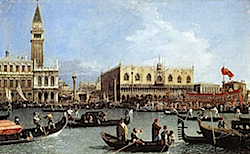
“Return of the Bucentaurn to the Molo on Ascension Day”, by (Giovanni Antonio Canal) Canaletto
The U.S. Naval Observatory Alternate Master Clock at 2nd Space Operations Squadron, Schriever AFB in Colorado. This photo was taken in January, 2006 during the addition of a leap second. The USNO master clocks control GPS timing. They are accurate to within one second every 20 million years (Satellites are so picky! Humans, on the other hand, just want to know if we’re too late for lunch) USAF photo by A1C Jason Ridder.
Detail of Compass/ BeiDou2 system diagram
Hotspot 6: Beluga A300 600ST

1. WHAT’S LOVE GOT TO DO WITH IT? 
Detroit, Michigan USA 

Read More >

By Inside GNSS

New GNSS Signals

A. J. Van Dierendonck

The world’s GNSS systems are entering a phase of transformation — modernization of existing systems (the U.S. Global Positioning System and Russia’s GLONASS) and development of new systems (China’s BeiDou and Europe’s Galileo) that benefit from the lessons learned from the original GNSSs.

Notable among the modernization initiatives is an interest in implementing new satellite signal designs. These include the GPS L5, L2C, and L1C signals as well as those signals designed for Galileo and BeiDou. GLONASS designers are also working on modernized signals.

Read More >

By Inside GNSS

Who’s Your Daddy?

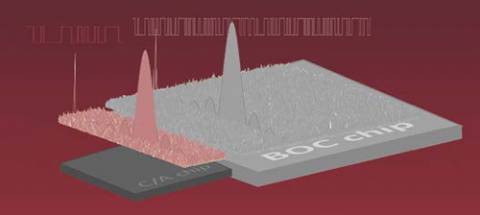
In this article, we will take a look at the various GNSS signals from the perspective of their cost-benefit tradeoffs. First, we’ll look at the evolution of consumer GPS architecture to date — where acquisition speed and sensitivity have been the main drivers of receiver architecture. That architecture has evolved rapidly to take full advantage of the characteristics of the GPS C/A code.

Read More >

By Inside GNSS
1 49 50 51 52 53 82
IGM_e-news_subscribe