Do modern multi-frequency civil receivers eliminate the ionospheric effect?
Figures 1 – 10Q: Do modern multi-frequency civil receivers eliminate the ionospheric effect?
By Mark Petovello
Figures 1 – 10Q: Do modern multi-frequency civil receivers eliminate the ionospheric effect?
By Mark PetovelloA highly anticipated presentation by Ligado Networks to the nation’s leading satellite navigation experts took an unexpected turn when the company said it could not provide essential network information because it was looking to the government for technical direction and its business plans were still in flux.
By Dee Ann Divis
Figures 1 – 6, Table 1There are many good reasons for getting excited about highly automated vehicles, or HAVs, which is the acronym used by the National Highway Traffic Safety Administration (NHTSA). HAVs can make driving more fuel- and time-efficient. They can significantly reduce traffic congestion and emissions by driving a precise speed, minimizing lane changes, and maintaining an exact distance to neighboring cars. They can also increase accessibility and mobility for disabled and elderly persons.
By Inside GNSS
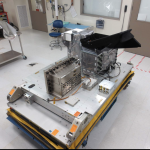
The GPS III SV03 fully assembled. Photo courtesy of Lockheed Martin.The U.S. Air Force’s third GPS III satellite in production flow at Lockheed Martin’s advanced satellite manufacturing facility in Denver is now fully integrated into a complete space vehicle.
GPS III Space Vehicle 03 (GPS III SV03) followed the first two GPS III satellites on a streamlined assembly and test production line. Technicians successfully integrated the satellite’s major components – its system module, navigation payload and propulsion core – into one fully-assembled space vehicle on August 14.
By Inside GNSSAir Force Space Command announced Wednesday it will begin the next phase of its plan to buy another 22 GPS III satellites in two weeks.
The November 22 posting on Fed Biz Opps (fbo.gov) said the highly anticipated Request for Proposals (RFP) would be released on or about December 7. The contract for the new space vehicles is "planned as a single, predominantly Fixed Price Incentive-type contract awarded via full and open competition for production of 22 GPS III SVs."
By Inside GNSSThe Global Positioning Systems Directorate, which is poised to launch its procurement of another 22 GPS III satellites, has given its next tranche of spacecraft a name.
"We are officially calling this GPS IIIF," Col. Gerry Gleckel, the Directorate’s deputy director, told the November meeting of the National Space-Based Positioning, Navigation, and Timing (PNT) Advisory Board. "Just as there was a IIF that was the follow-on for the GPS II’s, this is the follow-on for the GPS III."
By Dee Ann DivisThe SORUS system, designed to enable user receivers to calculate Galileo PRS positions at predefined points in time including robustness against jamming and spoofing, picked up top honors at the 2017 European Satellite Navigation Competition (ESNC).
By Inside GNSS
Example of IEEE 1588 Timing Synchronization Module in Centralized Architecture. Image courtesy of Microsemi.
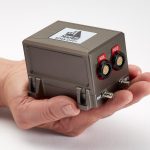
The TA7774 iFOG is suitable for autonomous driving and mobility applications, and ADAS. Photo courtesy of AdvanTech International.Tamagawa Seiki, an advanced inertial sensing technology provider for aerospace, military and automotive applications, is launching a new, low-cost, tactical grade, interferometric Fiber Optic Gyroscope (iFOG) suitable for autonomous driving and mobility applications, and ADAS (Advanced Driver Assistance Systems).
By Inside GNSS
Col. Steven Whitney, the director of the GPS Directorate. Air Force photo.Though lawmakers have made clear their interest in having U.S. military receivers incorporate European navigation signals, an agreement to use the encrypted Galileo signal remains elusive and the normal military requirements process could substantially delay implementation.
By Inside GNSS
Photo courtesy of GPS.gov. House and Senate authorizers are forcing a reorganization of the Pentagon’s management of military space programs, giving authority to a soon-to-be-named official to prioritize space budgets across services and setting planning in motion for a possible new department. They also approved spending the full amounts requested for the military GPS programs and mandated that defense officials both test a backup to GPS and look at incorporating European and Japanese GNSS signals into military user equipment.
By Inside GNSS
The advanced MDU on navigation payloads being delivered for GPS III Space Vehicles 1-10. Photo courtesy of Harris Corp.Harris Corporation has completed development of the company’s fully digital Mission Data Unit (MDU), which is at the heart of its navigation payload for Lockheed Martin’s GPS III satellites 11 and beyond.
By Inside GNSS