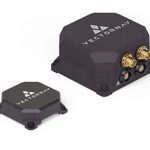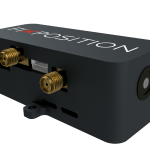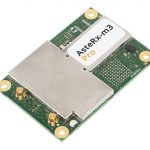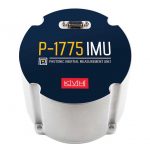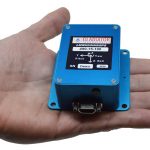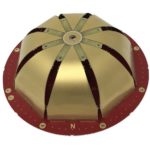

Low-noise MEMS inertial sensor and systems technology coupled with VELOX high-speed processing are integrated with a 72-channel GNSS receiver from Gladiator Technologies. The devices deliver position accuracy within 2 nautical miles per hour during GPS outages.
By Inside GNSSBynav (Hunan Bynav Technology Co., Ltd.), a supplier of GNSS high-precision receivers in China’s vehicle testing market, has released two commercial products: the C1 GNSS real-time kinematic (RTK) OEM receiver and A1 industrial-grade IMU-enhanced GNSS OEM receiver, based on its proprietary GNSS baseband ASIC Alita and RFIC Ripley.
By Inside GNSSTallysman Wireless Inc., a manufacturer of precision GNSS antennas and related components, has been acquired by Calian Group Ltd, a publicly owned Canadian company. Both companies are based in Ottawa, Canada.
By Inside GNSSAutonomy has become the new goal of off-road machine control. Collaboration between NovAtel and AutonomouStuff, both part of Hexagon, has produced sensing and positioning kits to accelerate autonomous development for off-road applications.
By Inside GNSSPower-packed Autonomous Week, September 9–11, swings into action with an awesome Day One, Wednesday, September 9 session on the use of drones in Intelligence, Surveillance and Reconnaissance (ISR).
By Inside GNSSAn extensive and significant body of technical information on inertial navigation, including detailed instruction, technical papers and use cases, has appeared online. This valuable resource is openly available to engineers, designers, integrators, and specifiers working on UAVs, aerial and ground survey and mapping, construction, surveillance and reconnaissance, satellite communications, military and much more.
By Inside GNSSSpirent Communications has released SimIQ, a new software that enables earlier and more efficient GNSS testing during product development. It accomplishes this by extending multi-frequency, multi-constellation simulation capabilities to cover software-only testing needs.
By Inside GNSSMEMS has moved into the high-end market, and the latest disruptor to take into account is silicon MEMS. That’s micro-electromechanical systems based in silicon chips, for short. Accelerometers with up to 100g range and 70µg bias in a very small form factor — 6 cubic centimeters — are exploding the horizons for inertial applications.
By Inside GNSSA revolutionary accelerometer makes possible new levels of stability and control in UAV navigation, at lower cost for the inertial measurement unit package. A free webinar on July 8 focuses on this class of high-performance accelerometers and the expanding autonomous applications they are opening up.
By Inside GNSSWe cannot simply test-drive our way to safety. Instead, innovative methods of demonstrating safety and reliability must come into play immediately.
A free three-hour professional training over two days in June aims to show how.
By Inside GNSSA group of Stanford Ph.D. and Masters graduates, with work experience among them at SpaceX, Ford Motor Systems, Blue Origin, Booz Allen Hamilton and other firms, has launched a start-up to start up a low-Earth orbit successor to GPS and other GNSS. The existing services, they say, are not up to the challenges of autonomy. They founded Xona Space Systems to supplant the venerable satnav systems.
By Inside GNSSIn three hours over two days, this special virtual workshop and professional learning experience rigorously investigates safety, integrity, standards and testing for precise positioning in automotive, both driven and driverless. It asks — and answers! — these crucial questions:
By Inside GNSS