Aerospace and Defense

March 6, 2020

Rescue Satellite Makes Space Navigation History

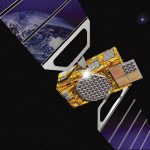
In late February, Northrop Grumman’s Mission Extension Vehicle MEV-1 autonomously docked with another satellite in geostationary orbit in space, making navigation history.  It simultaneously took the next step in satellite operation by extending Intelsat 901’s lifetime beyond its original plan. The so-called “rescue satellite,” built by Northrop Grumman subsidiary Space Logistics, used a combination of traditional ranging, optical orbit determination from ground, and on-board sensors (visible, infrared, and LiDAR)  for relative navigation in space to make its ultra-precise rendezvous 35,786 km above Earth.

The successful operation means a potential sea change in satellite operation: their lifetimes can be extended, and defunct satellites can be moved to safer orbit even after their fuel supplies are exhausted.

The complex series of maneuvers to bring the two satellites together began with an October 2019 launch of the MEV-1. Northrop Grumman controllers undertook a series of engine burns to raise MEV-1’s orbit from its highly elliptical geostationary transfer orbit up to a circular orbit 300 km above the geosynchronous belt. Shortly thereafter, Intelsat decommissioned its satellite 901, and it used the last of its propellant to move into the GEO graveyard orbit.

MEV-1 approached.

For 19 days, MEV-1 advanced upon and withdrew from Intelsat 901, calibrating its navigation sensors: optical cameras, infrared cameras and side-scanning LiDAR to orient and position itself relative to Intelsat 901.

5
Images courtesy Northrop Grumman.

For the final delicate and very precise maneuver, on February 25 MEV-1 autonomously flew to 20-meter distance, pausing before resuming travel to the critical 1-meter docking position. It autonomously extended a docking probe, engaging an engine nozzle aboard Intelsat 901. A nozzle, by the way, that was never designed for docking purposes.

MEV-1 then extended a group of internal grippers to anchor the two satellites together.

The satellite duo are now jointly performing stack on-orbit checkouts. Later this month, MEV-1 will relocating the two of them to a GEO spot over the central Atlantic, where Intelsat 901 will take over services for another Intelsat satellite, providing C-band service in the Americas, Europe, and Africa.

MEV-1 will then, like the Lone Ranger, bid farewell to Intelsat 901 and move on to a new mission.

By Inside GNSS
March 3, 2020

Air and Space Forces Want $100s of Millions More for GPS-related Priority Projects

When the White House submits its budget request for the Department of Defense to Congress every year, that is not the final word. The different military services also send Congress their unfunded priority lists, which detail the projects the White House chose to forego but, the services hope, Congress will add back in. This year several of those priorities are GPS-related.

Read More >

By Dee Ann Divis
[uam_ad id="183541"]
February 5, 2020

European Space Agency Looks at 2020

European Space Agency (ESA) top brass welcomed journalists to the Agency’s headquarters in Paris for its annual New Year’s press launch. On hand was the Director General as well as ESA’s Galileo guru Paul Verhoef, who spoke one-on-one with Inside GNSS.

Read More >

By Peter Gutierrez
[uam_ad id="183541"]

Details Emerge On Ligado Decision Delay

The chairman of the Federal Communications Commission (FCC) told two U.S. Senators in January that his agency could not complete a decision on Ligado Network’s license modification by the end of 2019 because of a late-in-the-year response from a key federal agency.

Read More >

By Dee Ann Divis
February 3, 2020

Characterizing GNSS Interference from Low-Earth Orbit

2017 and 2018 saw unprecedented GNSS interference activity, from the eastern Mediterranean to Norway and Finland. Syria emerged as a testbed for electronic warfare capabilities. In April 2018, General Raymond Thomas, commander, U.S. Special Operations Command, referred to the region as “the most aggressive electronic warfare environment on the planet.”

Read More >

By Inside GNSS
1 27 28 29 30 31 68
IGM_e-news_subscribe